Nation's efficient medical care draws foreign patients









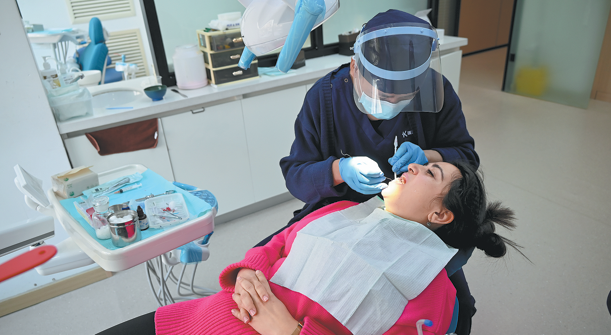
When Amie, a British online content creator, faced a wait of at least two weeks to see a local general practitioner for persistent stomach pain, she made an unexpected choice: booking a flight to Beijing for medical care.
Within five days of her arrival in the Chinese capital — where she once lived — Amie was able to consult a gastroenterologist at a major public hospital and complete a series of diagnostic tests, including a sedated endoscopy. About a week later, she received all her test results and a clear diagnosis of chronic gastritis, along with prescribed medication.
The total medical cost was 2,822 yuan ($405), which is equivalent to around 300 British pounds. Amie said she would have had to pay at least 3,000 pounds if she pursued treatment through Britain's state-run National Health Service.
Including around 1,500 pounds in travel expenses, the overall cost remained favorable, the content creator said in her posts shared last month on the Chinese social media platform Xiaohongshu, or RedNote.
"It feels like a well-oiled machine here. The efficiency and quality of care are outstanding," she wrote. "Even with travel expenses, the peace of mind and efficiency were absolutely worth it. I had a really excellent experience and got my medical treatment sorted swiftly."
Amie's story, widely circulated online, reflects a growing trend of foreigners — often expatriates or former long-term residents of China — seeking timely and reliable medical care in the country's hospitals.
As China's visa-free entry policy does not include visits for medical purposes, many foreigners choose to get medical treatment within the duration of their visa-free stay for tourism, business or other officially valid purposes.
Currently, travelers from 55 countries can take advantage of China's 240-hour visa-free transit policy at 65 different entry ports.
Zhang Jinshan, a researcher at Beijing Union University's Tourism Planning and Development Research Institute, said that compared with some Western countries, China's medical system provides more efficient and affordable care for common conditions.
Guo Xiaojuan, the gastroenterologist who treated Amie at Beijing Tsinghua Changgung Hospital, said that most of her foreign patients are currently based in China.
"The level of efficiency that Amie experienced is standard practice in our department. In fact, her case wasn't the fastest, because she chose a painless gastroscopy and needed to wait for pathology results," Guo said. "The weekend scheduling was to accommodate her personal travel plans. We offer endoscopy services on weekends to serve working people who cannot visit the hospital on weekdays."
Lin Siyong, head of the hospital's medical affairs management department, credited smooth interdepartmental coordination and digital tools for the high efficiency level.
"When a gastroenterologist orders a procedure, the lab quickly runs blood tests, the cardiology department performs an electrocardiogram, and anesthesiology handles preoperative assessment. The whole process is seamlessly integrated," Lin said.
The hospital also provides artificial intelligence-powered patient services, which are available around the clock to assist with triage, pre-consultation, queue management and real-time insurance settlement, further enhancing patient experience, he added.
Growing capabilities
Foreign patients seeking medical care in China tend to visit private hospitals or international medicine departments of public hospitals.
Wang Yiqun, deputy director of Beijing Tsinghua Changgung Hospital's international medicine department, emphasized that the core mission of public hospitals is to meet basic healthcare needs of domestic patients.
To serve foreign patients based in Beijing and support the city's development as an international exchange hub, the hospital has set up the international medical division, Wang said, noting that it has also introduced multilingual services and streamlined commercial insurance settlements for the benefit of such patients.
"In line with national guidelines, international medical services are capped at around 10 percent of our total capacity," she added.
Lin, the head of medical affairs management, said the increasing number of international patients can be attributed to the advances China has made in terms of medical technology and to the growing recognition of local expertise.
"The head of our pediatric surgery department has treated several Mongolian children with Currarino syndrome, a rare disorder that affects the development of the spine, anus and genitalia, while a Peruvian patient with xanthoma disseminatum (a rare skin disease) traveled to China last year for our dermatology treatment after reading a doctor's research published online," Lin said.
Yet another case involved a patient from New Zealand with peritoneal metastasis from gastric cancer, who sought treatment at the hospital's peritoneal oncology department based on its international reputation, Lin added.
Di Yue, an ophthalmologist at Shanghai Children's Hospital, said he has noticed a significant rise in overseas patients in recent years, many of whom are overseas Chinese from countries such as Canada, Singapore, Malaysia and Australia.
The ophthalmologist specializes in treating trachomatous trichiasis, an infectious disease in which the eyelids turn inward. "Including airfare and accommodation, treatment here is often more cost-effective than abroad," he said.
Serving foreign patients also supports hospital revenue and reflects its growing capabilities, Di said."With the expansion of online consultations and social media, I believe the number of international patients will continue to grow," he added.
In recent years, China has piloted inbound medical tourism in several economically developed areas, including Beijing, Shanghai, Guangzhou and Shenzhen in Guangdong province, and Boao in Hainan province.
In September 2023, Shanghai designated its first batch of 13 top-tier public hospitals as pilot institutions for international medical tourism.
An industry report released recently by the Chinese Hospital Association said that over 850 medical institutions across China now provide international medical services, with the market growing at an annual rate of 12.5 percent.
wangxiaoyu@chinadaily.com.cn