Japan's historical amnesia endangers regional peace









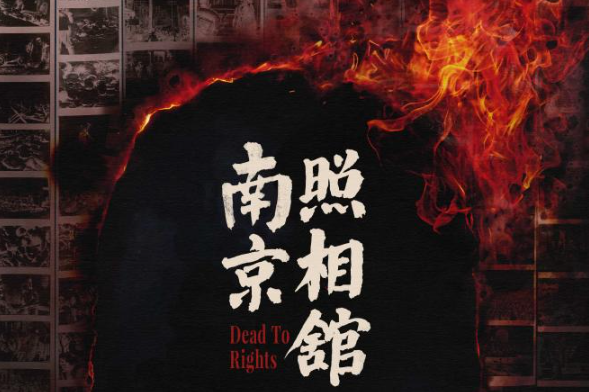
Japan's response to the film Dead to Rights and its recent provocative statements on Taiwan reveal a dangerous pattern: a nation still unwilling to confront its wartime past while increasingly eager to flex its military muscle in the present.
When Dead to Rights, a historical drama set during the Nanjing Massacre, was released in August, Japanese media ran front-page stories dismissing the massacre as a "lie fabricated by China" and warning that the film "could incite anti-Japanese sentiment". This reaction to a film about documented historical atrocities speaks volumes about Japan's continued denial of its World War II crimes.
The pattern continued in September, when China held a military parade in Beijing to commemorate the 80th anniversary of the victory in the Chinese People's War of Resistance Against Japanese Aggression (1931-45) and the World Anti-Fascist War. The Japanese government reportedly used diplomatic channels to discourage European and Asian nations from attending, claiming that the commemorations had "anti-Japanese overtones".
Japan has also kept strengthening targeted military deployment near Taiwan and even claimed it will deploy midrange missiles.
These aren't isolated incidents. They represent Japan's systematic attempt to evade historical accountability while simultaneously pursuing an increasingly aggressive military posture.
Some Japanese politicians seem unable to grasp that the suffering inflicted by Japan on China and other Asian nations during World War II remains deeply etched in the collective memory of Chinese people and those of other Asian nations. Rather than acknowledging their nation's role as the defeated aggressor, these Japanese politicians choose selective amnesia. However, the Chinese people cannot forget this brutal chapter of bloodshed and tears, nor should they be expected to.
Japan has failed to make genuine amends for its wartime crimes or express thorough repentance for the massive civilian casualties and property destruction it caused. Instead, it has moved in the opposite direction: revising textbooks, denying the Nanjing Massacre and even glorifying Imperial Japanese Army atrocities.
These actions inevitably trigger deep historical grievances among the Chinese and Asian people.
Most troubling is Japanese Prime Minister Sanae Takaichi's November remarks in parliament suggesting that any Chinese military action against China's Taiwan province could constitute a "survival-threatening situation" for Japan, possibly leading to military intervention in the Taiwan Strait. When China protested, Takaichi refused to retract her words.
This marked the first time that a sitting Japanese prime minister explicitly raised the possibility of military intervention in the Taiwan Strait. It also confirmed that Japan's recent military buildup is aimed at containing China and exposes the government's willingness to violate its pacifist Constitution to interfere in other nations' internal affairs.
The timing of Takaichi's remarks is particularly galling, coming as Japan continues to deny its World War II crimes. How can a nation that refuses to acknowledge past aggression be trusted with expanded military powers in the present?
These provocative statements on Taiwan don't just infringe on China's sovereignty, but signal to the international community that Japan may be sliding back toward militarism.
Japan's authorities must take immediate steps to express genuine remorse and formally apologize for the suffering inflicted on the Asian people during its wars of aggression, halt constitutional revision efforts and military expansion plans, including any nuclear ambitions, and recommit to the pacifist Constitution that has served as the foundation of regional stability for 80 years.
If Japan cannot honestly confront its past, its military ambitions will rightfully be viewed with suspicion by its neighbors. The path to regional leadership runs through historical accountability, not around it. Japan's current trajectory — denying yesterday's atrocities while preparing for tomorrow's conflicts — endangers the peace and stability that East Asia has worked for decades to achieve.
The international community must not allow historical amnesia to enable future aggression. Japan's neighbors, who remember the cost of Japanese militarism all too well, certainly won't.
The author is president of the Board of Directors of Chinese for Peaceful Reunification-Northern California and deputy secretary-general of the Alliances for China's Peaceful Reunification, USA.