Cooler head means warmer China-ROK ties










Since Lee Jae-myung assumed office as president of the Republic of Korea in June 2025, there has been a significant shift in Seoul's foreign policy. Unlike the previous administration's "values-based diplomacy" which made it subservient to the United States, the Lee administration has adopted a pragmatic foreign policy that prioritizes national interests and strategic autonomy while maintaining diplomatic balance.
The pragmatism is most evident in how the Lee administration is handling relations with countries such as the US,China, Japan and Russia, alongside a renewed outreach to the Global South.
Though relations with the US continue to be of "primary importance", the Lee administration refrains from blindly following the US or taking sides among major countries.
Especially noteworthy is the rational and pragmatic shift in the ROK's approach to China. Lee regards China-ROK relations as "inseparable and destined", anchoring them in economic realism and developing friendly bilateral relations across political, diplomatic and commercial domains.
Three aspects are particularly significant. First, unlike the previous administration, which followed some big powers in interfering in the Taiwan question, the Lee administration has clearly stated that it respects China's core interests. By pledging not to intervene in the Taiwan question and rejecting its so-called "internationalization",Seoul has created an environment conducive to fostering political mutual trust between the ROK and China.
Second, Lee has rejected the "small yard, high fence" strategy aimed at containing China. On the very day he started his visit to the US in August 2025, he sent a high-level delegation to China. It was a clear message that the ROK will not ignore ties with China, and highlighted Seoul's diplomatic independence.
Third, the ROK is exploring ways to balance its ties with major partners. Between the alliance with Washington and the economic partnership with China, Lee is trying to find an effective path that can both strengthen the ROK's security while maximizing the benefits of cooperation with China. This approach injects stability, predictability and certainty into China-ROK relations.
Economic and trade cooperation between China and the ROK are both deep and resilient. Since diplomatic relations were established in 1992, bilateral trade has surged more than 50-fold — from $6.37 billion in 1992 to $328.08 billion in 2024. China has been the ROK's largest trading partner for 21 consecutive years. In 2024, the ROK surpassed Japan and regained its status as China's second-largest trading partner country. Trade volume between China and the ROK is widely expected to cross about $400 billion by the year of 2027.
Investment flow between the two countries is also thriving. The ROK has been investing in China's automotive, chemical and electronics sectors since the 1990s. In recent years, it started increasing investments in semiconductors, new energy vehicles, high-end manufacturing, fine chemicals, renewable materials and artificial intelligence.
Cooperation between the two countries has continuously upgraded. In particular, the China-ROK Free Trade Agreement has further advanced bilateral economic and trade relations, promoting the liberalization and facilitation of trade in goods and services and deepening bilateral cooperation in intellectual property protection and investment. With the second phase of negotiations over the FTA underway, fresh momentum is expected in emerging fields such as biopharmaceuticals, green energy, the silver economy and cross-border data flows.
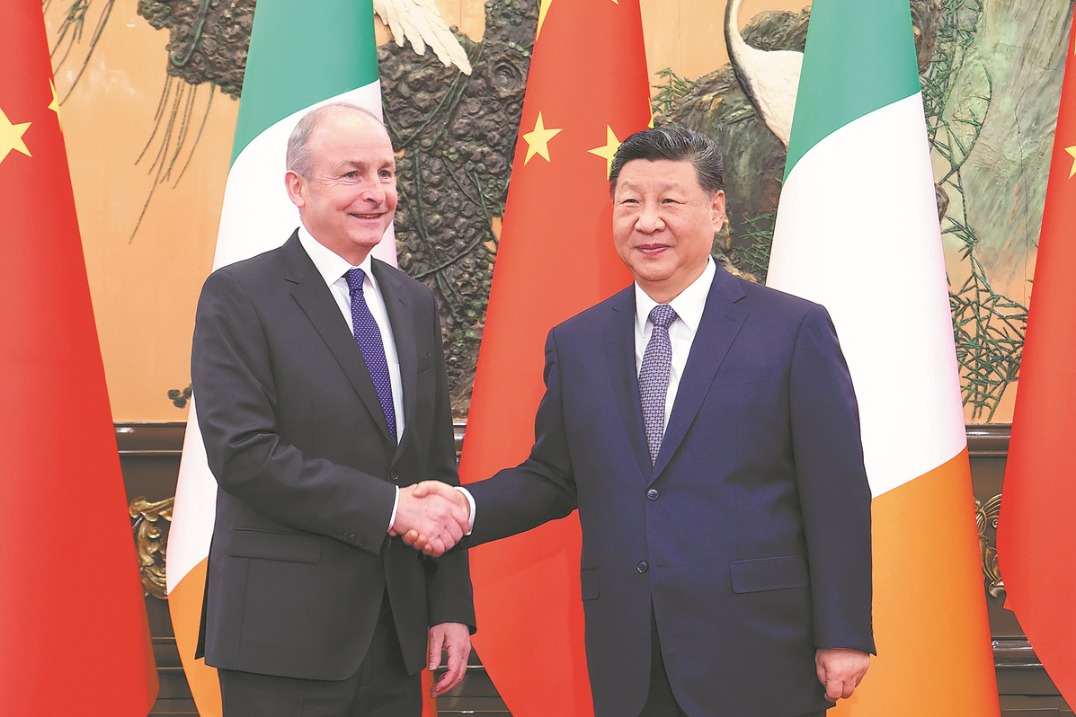
High-level engagement has reinforced this trajectory. The interactions and the important common understandings reached between the heads of state of China and the ROK during the APEC Economic Leaders' Meeting in Gyeongju further strengthened the foundation for cooperation. The influence of China-ROK ties goes beyond the bilateral level. Together, the two countries can help build a Northeast Asian economic circle and an inclusive and open Asia-Pacific economy for all.
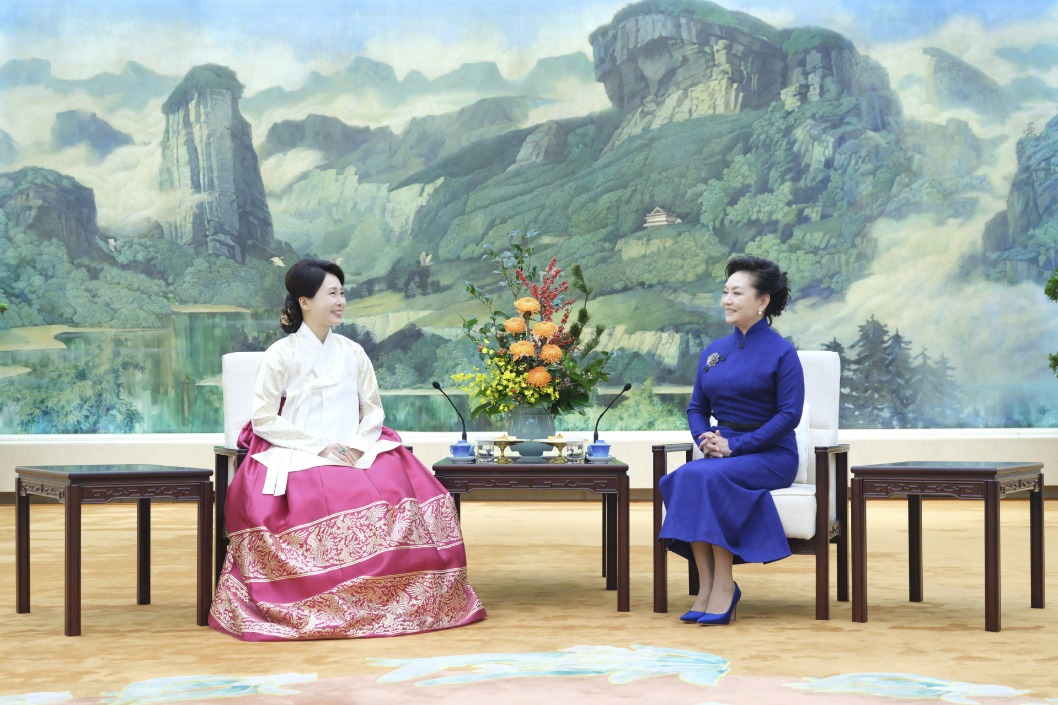
Lee's ongoing four-day visit to China will inject new momentum in the bilateral ties. The promises to enhance the strategic cooperative partnership between China and the ROK will facilitate regional free trade talks and help maintain stability in Northeast Asia and resilience of the global supply chains.
The author is a research fellow at the Institute of Northeast Asian Studies of the Heilongjiang Provincial Academy of Social Sciences and an expert at the China Academy of Northeast Revitalization.
The views don't necessarily reflect those of China Daily.
If you have a specific expertise, or would like to share your thought about our stories, then send us your writings at opinion@chinadaily.com.cn, and comment@chinadaily.com.cn.