Multilateral trading system:Remove or reform it?










For the best part of a century, the world trade has grown exponentially on the back of rule-based multilateral trading system. The year of 2025 witnessed the 30th anniversary of the World Trade Organization (WTO), which the current world multilateral trading system is centered on, whilst the unilateral trade tariff launched by the United States aimed to dismantle it. Amidst the turbulent time, will the world multilateral trading system with the WTO at its core be removed, or it is just the high time to reform it?
The world has prospered under the prior multilateral trading system
The history left painful lessons to the mankind that unilateralism and protectionism couldn't bring peace and prosperity, and multilateralism and free trade are the only way out. The post-WWII multilateral trade order was then led, guided and largely shaped by the United States, which was the sole superpower both militarily and economically in the world. The multilateral trade system was first set up in 1948 with the birth of the General Agreement on Tariffs and Trade (GATT), and carried forward by the establishment of WTO since 1995.
Within the system, trade, services, labors, technologies and investment could flow freely across the world, in line with certain rules and regulations. In this way, American farmers got access to massive new markets for their goods. Silicon Valley, Wall Street and other big corporations hire cheap labor to manufacture products. Meanwhile, American consumers could buy cheaply made products from all over the world. In a grand picture, almost every country in the world benefited from the prior multilateral trading system, featuring with improved efficiency, reduced barriers and open markets. While the second half of the 20th century witnessed the booming of Europe and Japan, the 21st century saw the rising of more developing countries.
The prosperity could only be achieved with the trade rules that the multilateral system was founded upon. Contractually bound tariffs provide the certainty that global trade can take place. The most-favored-nation treatment principle ensures non-discriminatory trade practices, by requiring countries to extend the same trade advantages to all their trading partners. Transparency clarifies the conditions upon which trade can move cross borders. And the dispute settlement ensures trade obligations are enforceable, reliable, and equal to all.
Moreover, considering the different development stages among different countries, and in order to bridge the development gap, special and differential treatment (S&DT) was designed to grant developing and least-developed countries (LDCs) flexibility in implementing their trade commitments. S&DT is not a single policy but a diverse collection of over 150 provisions spread across various WTO agreements. For developing countries and LDCs, it provides longer transition periods, softer obligations, and greater policy space compared to developed countries, so that they could gradually integrate into the global trading system.
The world should never return to a state of mutual isolation and fragmentation
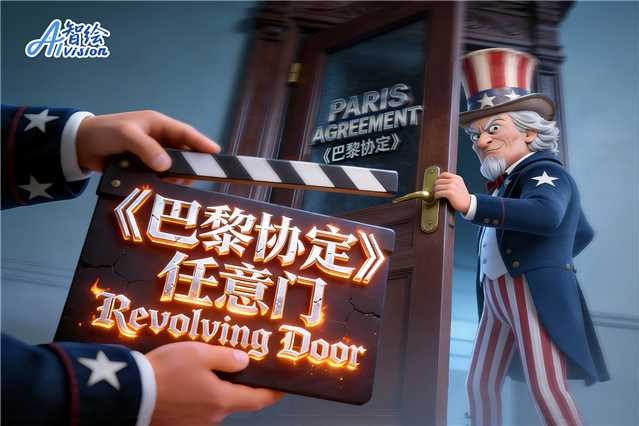
Now the Trump administration has decided that the Unites States will no longer hold the reins, no longer be the champion of free trade, and no longer stand for the multilateralism trading system. It chose to take its trade policies back to the 19th century, ignoring the fact that globalization has brought unprecedented prosperity to itself.
At the same time, the US only accounts for approximately 13 percent of today's world trade. The message from the rest of the world is clear, i.e., to uphold and strengthen the multilateral trading system.
The Prime Minister of Spain Pedro Sánchez warned tariffs and trade wars threaten the engine for development, and called for urgent reform to reaffirm the crucial role of the WTO. The Senior Minister of Singapore Lee Hsien Loong said don't give up the WTO, for it represents a certain idea of a way we could work together. Minister for Science and Innovation of New Zealand, Shane Reti emphasized that the growing disregard for international trading rules and norms is bad for everybody. And for the Foreign Minister of Burkina Faso Karamoko Jean-Marie Traore, supporting the multilateral trading system is a matter of justice. Some comment even suggested a closer trade relationship among countries other than the US can be forged.
Meanwhile, China, growing from the multilateral trading system as the world's largest trading nation in goods, recently defenses the system by announcing it will not seek any new special and differential treatment in the current and future WTO negotiations. The WTO Director-General Okonjo-Iweala hailed this decision as "major news key to WTO reform".
In short, most nations agree that economic globalization is an irreversible trend of the times. It is an objective requirement of social productivity development and technological progress. Free trade enables countries, no matter rich or poor, to leverage their comparative advantages and benefit from the smooth and efficient flow of production factors. The world will never return to a state of mutual isolation and fragmentation, and the multilateral trading system will not be removed by some single country.
The multilateral trading system that fits our times
Benefiting from the era of economic globalization is a universal right of all countries, not the exclusive privilege of a few. Similarly, the reform to the multilateral trading system with WTO at its core should be transparent, inclusive, open, member-driven and broadly representative of the membership.
The discussion on reforming the WTO has been going on for some time. In the year of 2022, at the 12th WTO Ministerial Conference, the members of the organization agreed that the specific steps must be taken toward WTO reform. Then in the year of 2024, at the 13th WTO Ministerial Conference, a forward-looking reform agenda for the WTO was endorsed by the Ministers.
Considering the tariff war and trade war across the world, the 14th WTO Ministerial Conference next year could become a pivotal moment defining the role of the WTO and its continuation as the multilateral trade body governing global trade as per its rules. Obviously, amidst global uncertainty, the reform of WTO is about restoring trust of all members and upholding the rules-based multilateral trade system.
To keep the WTO alive, concrete measures of reform are not desirable, but indispensable. There might be several aspects that we can expect about the reform, such as making its decision-making mechanism more effective, restoring a fully-functioning dispute settlement system, and setting up rules that are development oriented and fit for our times, i.e., balanced, inclusive and shared by all.
To conclude, although the multilateral trading system is being attacked by its founder, the choice of most countries is to uphold and reinforce it. To commit to this cause, inspiring words alone doesn't work. The international community needs to make concerted efforts to fight against unilateralism and protectionism, and to safeguard the multilateral trade system with WTO at its core, which has brought prosperity and peace to the world. An even better future for us all could only be ushered in through promoting a universally beneficial and inclusive economic globalization by all of us.
The author is an observer of international affairs.
The views don't necessarily reflect those of China Daily.
If you have a specific expertise, or would like to share your thought about our stories, then send us your writings at opinion@chinadaily.com.cn, and comment@chinadaily.com.cn.