Vocational education helps youth break the cycle of poverty









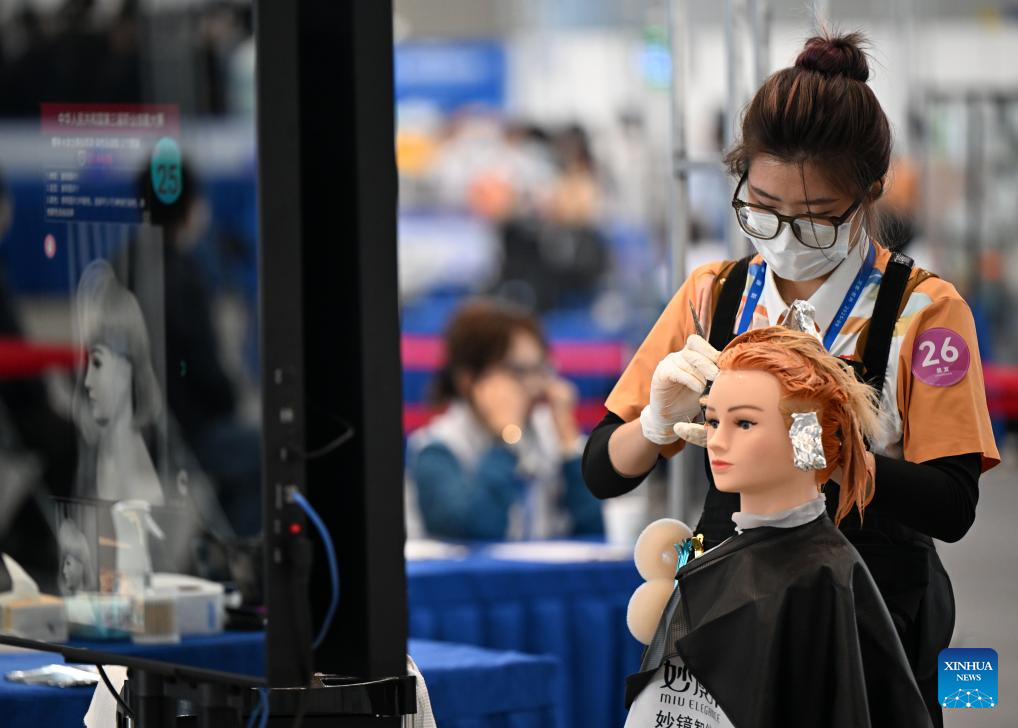
In a small mountain village in Xundian Hui and Yi autonomous county of Yunnan province, the story of Jiang Si shows how vocational education can help young people break through limits and transform lives. A 2022 student majoring in landscape-greening at Xundian county's vocational middle school, Jiang had once stumbled in the high school entrance exam. Weighed down by family hardship, she had felt like a failure.
But vocational education changed her life. Through a dual-track "theory plus practice" model and competition-driven learning, Jiang found her way back on track. She went on to win municipal and provincial skills awards, was named a "Yunnan provincial outstanding student leader", and, through the vocational college entrance pathway, was admitted to Dali Vocational and Technical College of Agriculture and Forestry.
In doing so, Jiang not only changed her life but also broke the intergenerational cycle of poverty at home. She used her skills to serve her community and mobilize peers, and changed from a passive striver to an active creator of wealth. Her story mirrors how China's vocational education led to poverty reduction and enabled common prosperity during the 14th Five-Year Plan (2021-25) period and showcases its strategic value at the national level.
Over the past five years, China's vocational education has focused sharply on two priorities — meeting industry demand and advancing social fairness. In doing so, it became a powerful tool for breaking the intergenerational chain of poverty and consolidating the gains from poverty alleviation. Nationwide, more than 120 million subsidized vocational trainings have been conducted, and over 12 million students from formerly poor households have received vocational education. Young people like Jiang have secured stable jobs on the strength of real skills.
From a macro perspective, vocational education has moved far beyond "skills training". It now acts as a driver of industrial upgrading and a stabilizer of social equity. China is in a crucial period of economic restructuring, with manufacturing upgrades, rural revitalization and the digital economy together pushing up demand for skilled workers. Through "industry-education integration" and school-enterprise partnerships, vocational education is matching this demand with well-targeted supply. Models such as "vocational training plus labor placement" cultivate electricians, welders, and other technical talent so that workers from formerly poor areas can plug into value chains. "Order-based" training links students directly with agribusinesses, helping local specialty products reach national markets. Such innovations are springing up everywhere.
Equally important is the deepening of social fairness. Vocational education breaks the "scores-only" ceiling and offers rural students and youth facing difficulties a genuine chance to get ahead. As the Xundian county vocational middle school made clear to Jiang, "vocational education isn't a fallback — it's a way forward." This inclusive vision — that everyone can succeed — narrows gaps between groups and injects "opportunity equity" into the project of common prosperity.
In the 15th Five-Year Plan (2026-30) period, vocational education will play an even larger role in advancing common prosperity, with a continued push on precision, inclusion and all-round development. Programs should be tuned to match the emerging needs in agricultural modernization, rural culture-tourism and rural digitalization. Mountain counties can add majors in ecological restoration and smart agriculture. Ethnic regions can design courses that blend intangible-heritage preservation with tourism services, keeping training in step with local industry upgrades. Resource supply should be more inclusive by expanding scholarship coverage, deploying training equipment to the countryside, and building shared online course platforms, so that youth from remote and low-income families can access quality programs and the "skills divide" does not widen.
At the same time, "virtue and skill together" should remain a core aim: while teaching craft, schools should cultivate responsibility and a sense of service, encouraging more graduates like Jiang to give back to their hometowns and help form a virtuous cycle of individual success, family uplift and community development.
At a broader level, China's experience also offers an actionable "Chinese solution" for the Global South. Many developing countries face similar challenges of youth employment and intergenerational poverty. China's approach — matching industry needs, government-enterprise-school collaboration and practice-first training — travels well. The Luban Workshops established across Asia, Africa and Europe, with their "engineering plus practice plus innovation plus project" model, have trained large numbers of urgently needed technicians and enabled graduates to move straight into jobs. This skills-based route to poverty reduction avoids the short shelf life of cash-only aid, builds lasting local capacity, and reflects China's sense of responsibility on the global stage.
Vocational education is a vital bridge between individual development and national strategy, as also between domestic practice and international cooperation. In the long march toward common prosperity, it is shining ever more brightly. In the 15th Five-Year Plan period and beyond, we can expect vocational education to keep innovating — becoming more precise, higher quality, and fairer. May more young people like Jiang grow and thrive with the nourishment of vocational learning, realizing their potential and their dreams. And as China's experience continues to spread, it will contribute practical wisdom to global poverty reduction and development, helping to paint a more hopeful picture of a shared future for humanity.
Zhang Qi is the director of the China Rural Revitalization and Development Research Center at Beijing Normal University; and Song Yi is a postgraduate student at the same institute.
The views don't necessarily represent those of China Daily.
If you have a specific expertise, or would like to share your thought about our stories, then send us your writings at opinion@chinadaily.com.cn, and comment@chinadaily.com.cn.