APEC expected to lead global green transition
Asia-Pacific region bears responsibility to drive sustainable future, experts say









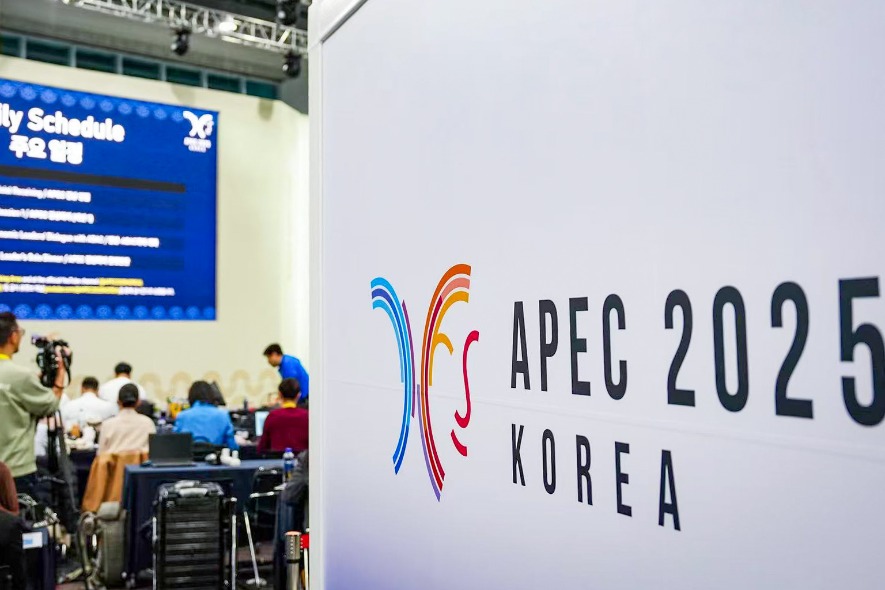
Following the conclusion of this year's APEC Economic Leaders' Meeting in Gyeongju, South Korea, economies in the region reaffirmed their commitment to leading the world toward green development and a low-carbon future.
As the global fight against climate change continues to face resistance in some quarters, the region bears special responsibility to lead the way forward, experts said.
Eleven years ago, the Asia-Pacific Economic Cooperation set an aspirational goal to double the share of renewable energy by 2030 from 2010 levels.
Kazutomo Irie, president of the Asia Pacific Energy Research Centre in Tokyo, said APEC has made significant progress in increasing renewable energy use and is way ahead of schedule in meeting its doubling goal.
Between 2010 and 2022, the renewable energy share in power generation grew 63.4 percent, from 15.58 percent to 25.46 percent, Irie noted. "With eight years remaining, from 2022 to 2030, it is also likely that APEC will meet its doubling goal in the power sector."
The Gyeongju Declaration, adopted at the close of the meeting, called on APEC economies to tackle shared challenges and ensure inclusive growth.
"We will intensify our cooperation and coordination to effectively respond to global challenges, including energy, food security, environment, extreme weather events and natural disasters, to build a more resilient Asia-Pacific," the declaration said.
Shakeel Ahmad Ramay, CEO, Asian Institute of Eco-civilization Research and Development in Pakistan, said the Asia-Pacific has come to recognize the importance of pursuing green development, especially amid mounting global climate pressures and the growing complexity of nontraditional security challenges.
This year's meeting, held under the theme "Building a Sustainable Tomorrow: Connect, Innovate, Prosper", signaled member economies' resolve to confront today's challenges through greater collaboration, he said. It also reflects APEC's growing awareness of the threats posed by climate change and the imperative of pursuing green development, he said.
Lin Boqiang, head of the China Institute for Studies in Energy Policy at Xiamen University in Fujian province, said APEC offers an important platform for Asia-Pacific economies to work together in addressing common challenges.
"The United States' withdrawal from the Paris Agreement once posed a significant setback to global climate governance," Lin said.
Fresh momentum
"Against this backdrop, this year's meeting, centered on building a sustainable future, injected fresh momentum into international efforts to address climate challenges," he added.
The member economies are eager to explore ways to work more closely together to accelerate the shift toward clean energy while safeguarding energy security, Lin said.
"Asia-Pacific economies, including China, have developed advanced green technologies, robust related industries and innovative business models. As a result, they hold inherent advantages in advancing the green transition and are well-positioned to share their experience to help other regions achieve green and low-carbon development."
Despite notable progress, experts said, the Asia-Pacific region's green transition lacks momentum and investment. To tackle these issues, economies must deepen international collaboration to enhance investment, facilitate technological exchange and promote policy coordination.
"At present, Asia-Pacific economies are striving to balance energy security with clean development, yet fossil fuels still occupy a large share of the regional energy mix," Lin said. "So APEC should take proactive steps to encourage its members to optimize their energy structures.
"APEC should work to reduce trade barriers and nontariff hurdles to facilitate the entry of affordable photovoltaic and wind power equipment produced by economies such as China into the Asia-Pacific market. Doing so will help regional economies advance both energy security and clean energy objectives."
Ramay said the greatest obstacle to achieving the green transition is the investment gap and the shortage of accessible, affordable financing.
In the future, "APEC should take the lead in bridging the gap by establishing a green transition fund for developing and less-developed economies. Crucially, such a fund must remain apolitical, goal-oriented, fair in its operations, aligned with the principles of green financing, forward-looking and free from any hegemonic intent."
The market is large enough to accommodate all participants and support the clean energy transition across APEC economies, Lin said.
liujianqiao@chinadaily.com.cn