What China's 15th Five-Year Plan offers the Global South










As developing nations across Asia, Africa, and Latin America search for new paths to growth that prioritize sovereignty, sustainability, and self-reliance, old models of globalization are losing their appeal. The Western-led frameworks that once promised prosperity through liberalization and aid have often left economies vulnerable to debt, dependency, and external shocks. In this shifting landscape, China's upcoming 15th Five-Year Plan (2026–30) is emerging as an alternative blueprint one that offers the Global South a different development story.
Beijing's new plan will extend far beyond economic targets. It envisions a model of "high-quality development" built on innovation, green transformation, and social inclusion. For the Global South, this vision is not merely a domestic roadmap; it is a signal of how China intends to shape the next phase of globalization one that emphasizes shared growth and multipolar cooperation rather than one-sided dependency.
China's plan represents the most significant evolution of its development model in decades. The focus has shifted from labour-intensive growth to one powered by what Beijing calls "new quality productive forces" - science, technology, and human talent. This marks a deliberate move to secure leadership in frontier sectors like artificial intelligence, biotechnology, clean energy, and advanced semiconductors.
Crucially, this push is underpinned by a national effort to build what Chinese planners describe as a "strong education system, a strong science and technology sector, and a strong talent base." The logic is simple but profound: innovation cannot be imported; it must be cultivated. Rather than relying on technology transfer from abroad, China is betting on long-term investment in research and human capital to sustain its rise.
For many developing countries, the lesson is clear. Sustainable progress does not come from external assistance or raw material exports but from building integrated innovation ecosystems that combine education, research, and industry. China's own evolution from "factory of the world" to "innovation architect" offers a template for nations seeking to move up the value chain on their own terms.
This approach ties into China's dual circulation strategy - strengthening its domestic market as a driver of growth while maintaining global engagement. For the Global South, the idea of building internal resilience while staying connected to global trade networks resonates deeply, especially amid growing economic nationalism in the West.
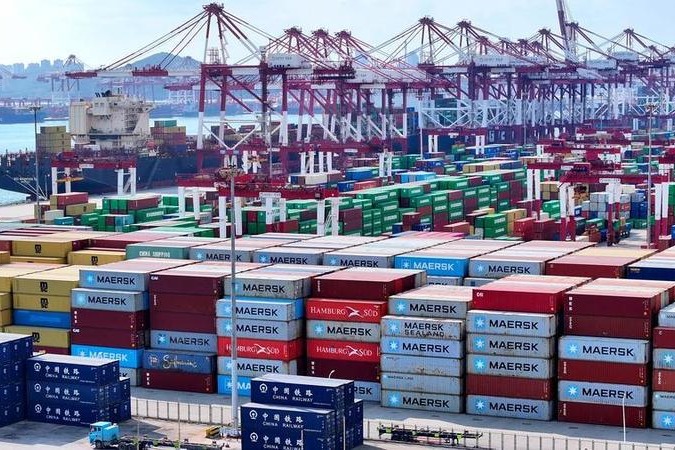
China's engagement with the developing world is also transforming. For years, its presence was synonymous with ports, railways, and highways - the tangible symbols of the Belt and Road Initiative. Now, a more sophisticated form of cooperation is emerging, centered on technology and capacity building.
Across Africa, Asia, and Latin America, Chinese firms and universities are partnering to build digital infrastructure and skills. In Sri Lanka and Rwanda, Huawei has launched digital classroom programs and university collaborations aimed at training the next generation of tech professionals. This goes beyond connectivity - it's about cultivating the human capital that underpins digital economies.
In agriculture, China is introducing smart farming technologies, using AI and satellite data to monitor crop health and improve yields in places like Brazil and East Africa. In energy, Chinese firms are helping countries leapfrog toward renewable power, transferring solar and wind technology at a scale few others can match. And in manufacturing, joint ventures such as the Lekki Free Trade Zone in Nigeria and the Mbale Industrial Park in Uganda are integrating Chinese production expertise with local industry, creating new export hubs and industrial capacity.
What is emerging is a model of cooperation less focused on aid or extraction and more on mutual capacity building - a "teach a nation to fish" approach, rooted in technology and self-sufficiency.
China's growing influence in the Global South is often portrayed in geopolitical terms, but its soft power rests on something deeper than ideology. It is built through institutions and narratives that emphasize solidarity among developing nations.
The recently launched China-UN Global South-South Development Facility illustrates this approach. Established with an initial $10 million pledge and working alongside the UN Office for South-South Cooperation, the facility funds projects in green development, digital transformation, and industrialization. Its message is unmistakable: development cooperation should respond to local needs, not donor priorities.
Alongside this, China's broader initiatives - the Belt and Road Initiative and the Global Development Initiative reinforce the notion of a "community with a shared future." Beijing's rhetoric is paired with tangible programs, training exchanges, and infrastructure that have given many developing nations new leverage in international affairs. By sharing knowledge and technology more openly than traditional powers, China is crafting an image of itself as a partner rather than a patron.
For the Global South, such initiatives hold transformative potential. Digital currency settlements could make trade and remittances faster, cheaper, and less vulnerable to the financial coercion that has long shaped global markets. In regions where dollar shortages or sanctions have stifled growth, the idea of conducting transactions in an alternative, stable digital currency is deeply appealing.
China's 15th Five-Year Plan, then, is more than just another national development program. It is the foundation for a new phase in global development thinking one that places innovation, equity, and sustainability at its core.
For the Global South, this is a moment of choice - an opportunity to draw on China's technological and financial momentum to build lasting capacity and resilience. Those that engage Beijing with clear strategy and sovereignty intact could help shape a new era of globalization one grounded in mutual empowerment rather than dependence.
Maya Majueran is the Founding Director of the Belt and Road Initiative Sri Lanka (BRISL), a pioneering organization dedicated to research, dialogue, and engagement on China's Belt and Road Initiative (BRI). Alongside his leadership role, Maya is a researcher and commentator on international relations, economics, and geopolitics, with a particular focus on Asia and the Global South's evolving role in world affairs. He is a committed advocate for a multi-polar world order and for strengthening the Global South's voice in shaping international systems and advancing economic integration.
The views don't necessarily reflect those of China Daily.
If you have a specific expertise, or would like to share your thought about our stories, then send us your writings at opinion@chinadaily.com.cn, and comment@chinadaily.com.cn.