Gender equality is a path to collective human progress










In China, gender equality is not a slogan; it is a national policy that guarantees the equal rights of men and women, and promotes women's all-round development. The policy recognizes four key dimensions — acknowledging women's central role in economic and social development; promoting equal rights, opportunities, and outcomes for men and women; eliminating all forms of discrimination; and integrating gender awareness into mainstream lawmaking, policymaking and governance.
Taken together, these commitments reveal a vision of equality that is not adversarial, but cooperative.
The ultimate goal of gender equality is the free and full development of human beings as a whole. The liberation of women is inseparable from the liberation of humanity, and women's emancipation is the true measure of universal emancipation. Accordingly, Chinese President Xi Jinping has made it clear that protecting the legal rights and interests of women and children, and promoting gender equality and the comprehensive development of women and children are important aspects of Chinese modernization.
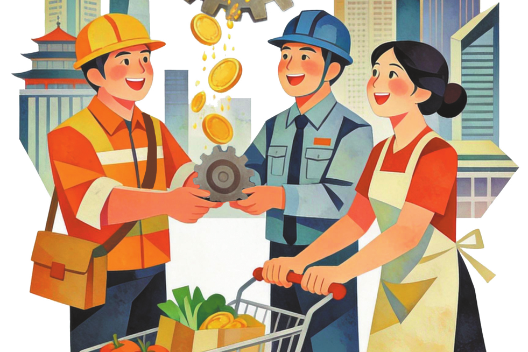
In practice, this means gender equality is not a zero-sum "rights contest" between men and women. Women's progress cannot, and should not, be achieved at the expense of men. Rather, the task is to remove gender-based barriers so that both genders can progress without constraint, contribute to society, and find fulfillment in family life. True equality is about mutual empowerment: men and women advancing together, not competing against each other.
To achieve real equality, one must also reject gender privilege. Equality is about the balanced distribution of rights, opportunities, responsibilities and benefits. Gender privilege, by contrast, means gaining extra rights or not fulfilling responsibilities simply because of one's gender. The two are logically opposed.
A critical distinction must be made here. China's Constitution and laws provide special protection for women — such as maternity rights and workplace safeguards. These are not privileges. They are legal provisions designed to offset the real disadvantages women face and to ensure fairness in practice. International law also supports this distinction: the UN Convention on the Elimination of All Forms of Discrimination against Women explicitly says that temporary special measures to accelerate de facto equality, or protection linked to maternity, must not be considered discriminatory.
In short, rejecting gender privilege does not mean ignoring women's specific needs. It means ensuring that special protection serves justice, and does not increase the advantages of one gender.
More important, gender antagonism should have no place in China's vision of equality. Men and women are not adversaries locked in a zero-sum game. To argue that protecting women's rights must inevitably mean compromising men's interests is to fall into the trap of binary thinking.
The reality is that gender discrimination is harmful to everyone. If women are denied their lawful rights and opportunities, men will also feel the weight of rigid gender norms. If women are told that they must only "do household chores", men are simultaneously pressured to "be the sole breadwinner". Such stereotypes shackle both men and women, restricting choices and compounding stress. Protecting women's rights, therefore, is not only just; it also frees men from restrictive expectations and opens up space for a healthier, better life.
Besides, rejecting gender antagonism does not mean ignoring real differences or avoiding difficult debates. It means refusing to frame equality as confrontation. It means recognizing that the fundamental interests of men and women align — and eliminating discrimination benefits society as a whole.
China's approach to gender equality is not about "you lose, I gain". It is about building a society where both men and women thrive, where everyone contributes to society, everyone benefits, and no one is made to suffer because of outdated norms. Opposing gender privilege and gender antagonism is not a minor issue; it is essential to transforming equality from words on paper into lived reality.
The future lies in cooperation, shared responsibility, common development and prosperity. In this sense, gender equality is not only a women's issue — it is a path to collective human progress.
The author is a professor at China Women's University and vice-president at the China Association of Marriage and Family Studies.
The views don't necessarily represent those of China Daily.
If you have a specific expertise, or would like to share your thought about our stories, then send us your writings at opinion@chinadaily.com.cn, and comment@chinadaily.com.cn.