Court ruling on tariffs a blow to US administration









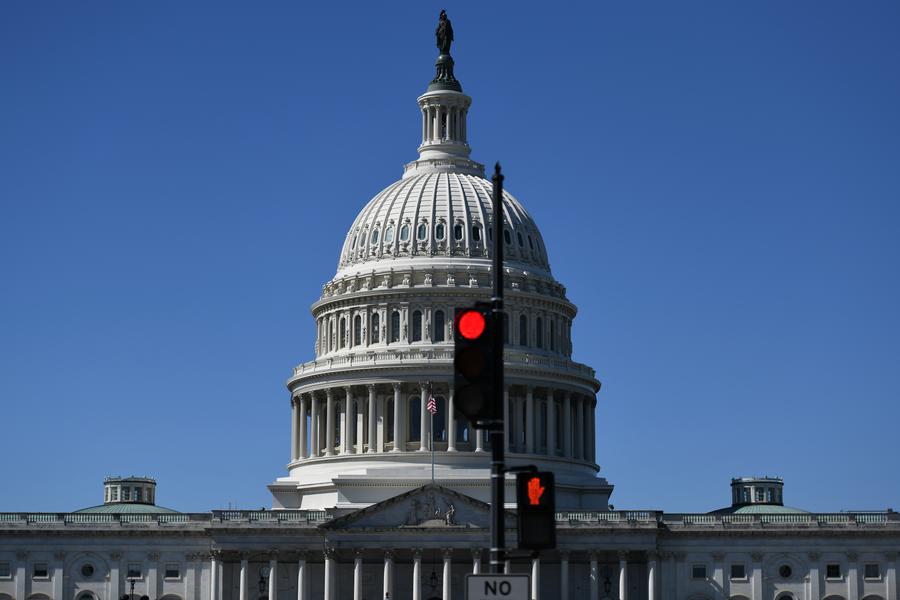
As the US Supreme Court prepares to review the legality of the White House's flagship "reciprocal tariff program" next month, the incumbent administration faces mounting troubles both at home and abroad.
A ruling by the US Court of Appeals for the Federal Circuit in late August found that the tariff program exceeded presidential authority under the International Emergency Economic Powers Act — a decision that, despite being temporarily stayed, has cast serious doubt on the administration's trade agenda.
Introduced earlier this year (hailed as "Liberation Day" tariffs), the program has ignited protests across the country and prompted at least 12 US states and many small businesses to file lawsuits against it. The Supreme Court is expected to hear the case in November.
Nevertheless, the ruling delivers a blow to the incumbent administration. Since taking office in January, it has repeatedly expanded the use of executive power while sidestepping checks and balances, a trend now directly challenged by the judiciary.
On the global front, the unilateral tariffs have been vehemently opposed by major trading partners including China and the European Union. The "reciprocal" framework has forced most US trade partners to either enter negotiations or face punitive tariffs widely viewed as violating WTO rules.
In the face of the US' tariffs and bullying tactics, many affected countries bowed to the administration's demands or turned to the World Trade Organization Dispute Settlement Mechanism for justice, well aware that the US tariffs violate WTO rules.
China has stood up to the US' reciprocal tariff policy. Even after three rounds of negotiations between China and the US in Geneva, London and Stockholm, the US couldn't force China into a deal.
The Chinese government's stance on the issue is clear: it demands that the US side provide a fair, open and nondiscriminatory market environment for Chinese enterprises. A spokesperson for the Ministry of Foreign Affairs emphasized that if the US side continued to impose punitive tariffs on Chinese goods, China will take appropriate countermeasures in accordance with the law.
While the US Circuit Court ruling has dealt a blow to the administration, leaving it embarrassed before the international community, it also unwittingly lent support to Beijing in the recent fourth round of Sino-US trade negotiations in Madrid.
As a matter of fact, even before the fourth round of Sino-US trade talks, the administration had shown signs of backing down, as it had lost much of its advantage. One notable change was the unusual silence of the US' leaders before the talks — no tweets or public remarks to exert pressure on China ahead of the talks. This shift in attitude reflects a subtle psychological change, indicating that the White House has realized that exerting pressure through public opinion or adopting a tough stance is ineffective against China, and could even backfire.
Faced with these challenges at home, the White House has one real option, that is, to withdraw the tariffs. Unfortunately, the White House has already shut this door by insisting that the tariff authority has been lawfully exercised to "protect the nation" and safeguard economic security against foreign threats. The US tariffs remain in effect.
The administration has vowed to continue the reciprocal tariff policy and the agreements it has reached with the affected countries, and already moved to appeal the Circuit Court's ruling to the Supreme Court. The final tilt of the US judicial system in this matter remains to be seen.
But irrespective of the Supreme Court's ruling, the incumbent administration will certainly be seen as the destroyer of the multilateral trading system.
The author is the dean of the Academy for the Foreign-Related Rule of Law, China University of Political Science and Law. The views don't necessarily represent those of China Daily.
If you have a specific expertise, or would like to share your thought about our stories, then send us your writings at opinion@chinadaily.com.cn, and comment@chinadaily.com.cn.