Support network










The Global Governance Initiative seeks to generate concerted efforts to improve and reform the UN system, which is being undermined by hegemonism
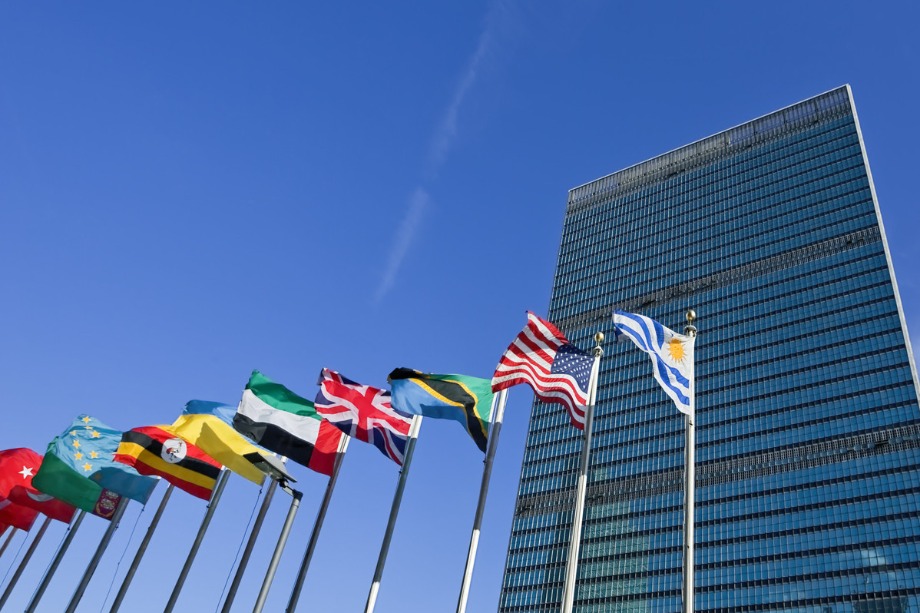
The United States played an important role in the founding of the United Nations. However, from the early postwar years, Washington gradually deviated from the original course, attempting to pursue a superpower hegemonic path outside the UN system. In contrast, China has always respected international norms within the UN framework. In October 1971, all the lawful rights of the People's Republic of China were restored at the UN and the PRC was recognized as the only legitimate representative of the Chinese people. Yet countries such as the US and Japan have continued to interfere in China's internal affairs, especially over the Taiwan question, in complete disregard of the principles and norms of international relations. In this sense, one reality of the postwar world is an intense contest between the UN system and hegemonism.
The US' disruption has extended beyond politics into culture, trade and economy, where it has repeatedly undermined international rules in the name of self-interest. The much-vaunted Western notion of a "rules-based international order" in essence reflects a Western-centered bias. Nevertheless, the vast majority of developing nations have held the line, working to reinvigorate a UN system in crisis and to pursue the ideal of peaceful coexistence.
At the Shanghai Cooperation Organization Tianjin Summit, Chinese President Xi Jinping proposed the Global Governance Initiative, responding to the common concerns of the international community. The initiative's core ideas are rooted in the purposes and principles of the UN Charter, laying out the principles, methods and pathways global governance can follow. Its most notable feature is its repeated emphasis on the UN, the UN Charter and international law as the cornerstones of global governance. Far from abandoning a UN system that has shown cracks and dysfunction, the initiative seeks to improve and reform it on the basis of upholding the UN Charter and practicing the principles of extensive consultation, joint contribution and shared benefits, aiming to build a more equitable global governance system. This reflects China's consistent call for reform and improvement of the UN system and shows its deep concern for the future of humanity.
China's emphasis on the UN system stems from its conviction that only by fully reviving the principles and values established at its creation can the world rebuild a just and equitable global governance system. This understanding is grounded in China's own development experience and also mirrors the shared aspirations of developing countries seeking independent paths of development. China's efforts to advance mutually beneficial cooperation with other developing countries have become an important driver for building an equitable global governance system.
As early as the 1950s, China began wide-ranging cooperation with Africa and other regions in fields such as infrastructure, agricultural technology, manufacturing, healthcare and transportation. These partnerships reflected values long rooted in China's approach: upholding the principle of sovereign equality cherished by newly independent states, pursuing a peaceful order based on multilateral cooperation and safeguarding human dignity. These practices were later distilled into the eight principles governing China's foreign economic and technical assistance, announced by the late Chinese Premier Zhou Enlai in 1964.The principles of equality and mutual benefit, respect for sovereignty and self-reliance were developed from the Bandung Spirit in 1955. China's model of horizontal aid, without attaching political or economic conditions, emphasizes the recipient's sovereignty and independent development, offering elements that can be seen as essential to global governance. Landmark projects such as the Tanzania-Zambia Railway in the 1970s created jobs, fostered industrial linkages, raised living standards along its route and strengthened China-Africa cooperation — all of which showcase the unique role of China's vision and actions in international affairs.
Following the launch of its reform and opening-up policy in 1978, China's economic and technical cooperation with developing countries deepened. By strengthening support for and solidarity with other Global South countries, China helped foster a virtuous cycle of growth and development, raising the visibility and influence of developing nations. The Belt and Road Initiative proposed in 2013 emerged as a natural extension of this trajectory.
In sharp contrast to the traditional Western aid model, which sustained a vertical "developed-to-developing country" relationship and trapped recipients in low-growth cycles, China's model has demonstrated that genuine economic and social progress and stability come only from respecting sovereignty, preserving national autonomy and encouraging horizontal cooperation that draws on each country's unique strengths. Projects such as the China-Pakistan Economic Corridor and the China-aided Laos Poverty Reduction Demonstration Cooperation Technical Assistance Project have improved local living conditions through training and infrastructure while providing fresh momentum and new paths for development. Over time, China's approach has proved durable, injecting lasting momentum into efforts to build a fairer and more equitable global governance system.
The Global Governance Initiative has gained broad recognition internationally, particularly among the Global South countries, precisely because it is rooted in China's long record of practice. Its foundation in multilateralism, equal partnerships and peaceful development has shown the world its viability and made it a guiding light for the future. By stressing the importance of greater representation for the Global South, the initiative underscores that a just and equitable global governance system — namely the UN system — serves not only the interests of the developing world but also the cause of peace and development for all humanity.
With its wealth of accumulated experience, the initiative lays out five core principles: staying committed to sovereign equality, international rule of law, multilateralism, the people-centered approach and real results. These principles align closely with the spirit of the UN Charter, while also highlighting deep concern and responsibility over the erosion of the UN system's foundational principles and values by power politics.
Confronting the major changes taking place in the world, the initiative delivers stark warnings: Unilateral sanctions, among other practices, have violated international law and disrupted the international order, and issues such as climate change and digital divide are becoming more salient. Under the distorted power structures dominated by the West, these challenges cannot be addressed effectively and may even spiral into shared decline. The current crises have surpassed the ability of any single major power or bloc to control. The way forward lies in upholding the core principles enshrined since the UN's founding — transcending differences of ideology, social systems, religions and ethnicity to pursue genuine fairness, peace and coexistence.
Long constrained by unilateral power, China is now calling on the world to respect the values embodied in the UN system and practice genuine multilateralism. Only by fully recognizing the essence of humanity's shared future — across North and South, East and West — can the vision of better global governance be achieved.
The author is an associate researcher at the School of Humanities at Shanghai Jiao Tong University and a visiting researcher at the International Peace Research Institute at Meiji Gakuin University, Japan. The author contributed this article to China Watch, a think tank powered by China Daily.
The views don't necessarily reflect those of China Daily.
Contact the editor at editor@chinawatch.cn.