'Soul Ferryman' of Taiwan Strait: Liu De-wen's 22-year mission to bring veterans home









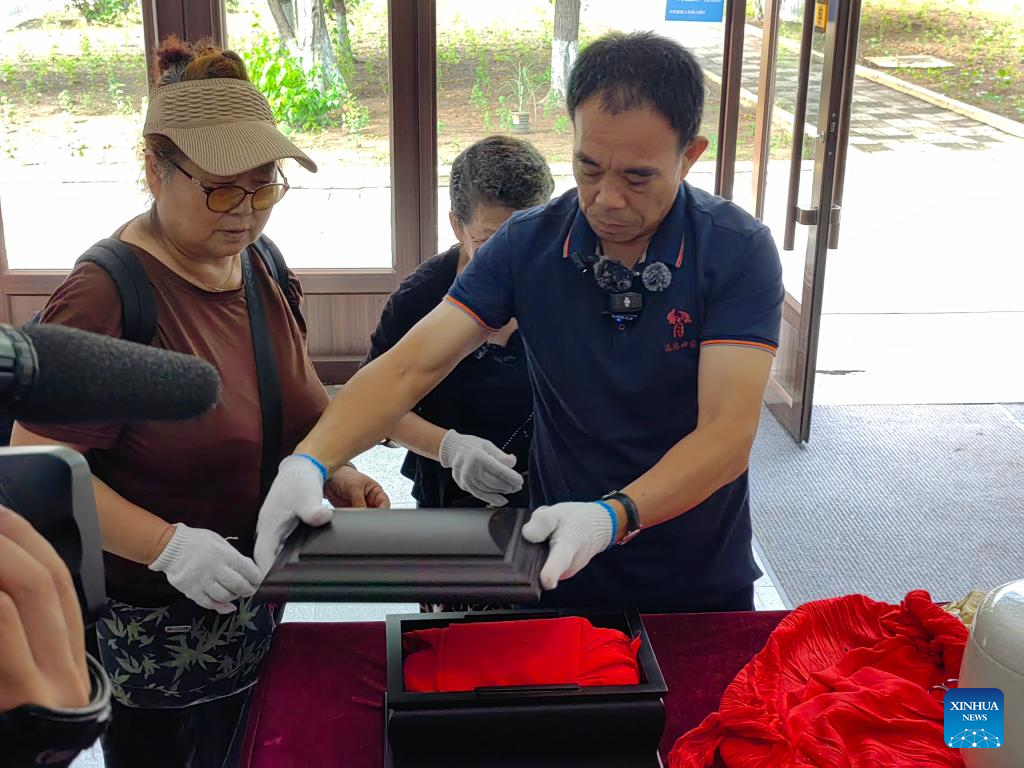
HARBIN -- Inside the bustling Harbin Taiping International Airport in the northeast of China, Liu De-wen, a man from Kaohsiung in China's Taiwan region, dropped to his knee and unzipped the backpack slung across his chest.
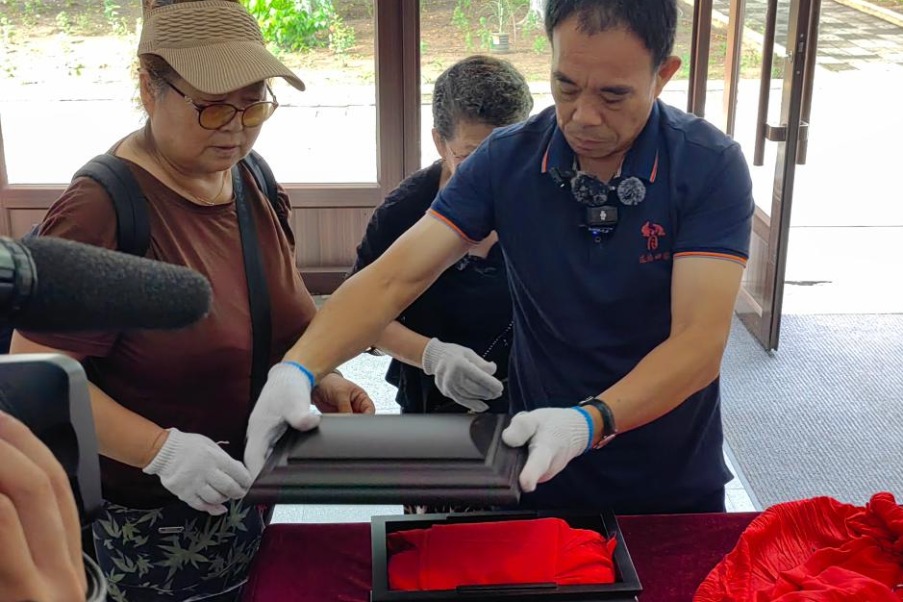
Liu carefully removed an urn wrapped in soft yellow cloth, which contained ashes of Zhang Hongkui, a veteran originally from Harbin, capital city of Heilongjiang province. "Uncle, we're home," said Liu, gently announcing the deceased elder's eventual return to his hometown after 76 years.
Liu is the chief official of Xianghe Community in Kaohsiung. Since 2003, he has volunteered to carry the ashes of over 300 deceased veterans on the island of Taiwan back to their birthplaces on the mainland, fulfilling their final wishes -- to lie at last in the soil of their dearest hometowns.
Contrary to many assumptions, Liu, now hailed as a "soul ferryman" for mainland-born veterans, is not a descendant of them but a native of Taiwan.
Raised in Pingtung county, Liu built a successful career in banking before moving to Xianghe Community in 1997. This community is where mainland-born veterans settled in clusters. It was there that he first stepped into the world of such people, many of whom have faded into oblivion.
Liu recalled that when he first visited the veterans, he was intrigued by their diverse accents -- and he soon noticed that most of them lived lonely lives.
Xianghe Community is one of many "military dependents' villages" scattered across Taiwan. The settlements are home to those veterans who arrived in Taiwan with the defeated Kuomintang (Nationalist Party) regime in the Chinese civil war.
For decades, as the two sides of the Taiwan Strait were trapped in protracted political confrontation, the veterans were unable to return to the mainland to care for aging parents or reunite with siblings or wives. Many of these men, hindered by language barriers and considered outsiders on the island, remained unmarried and childless.
Liu began helping such veterans tidy their homes, and quickly befriended these elder "uncles." He gradually gained insight into their deepest longing -- a yearning for home.
"Returning to one's roots and reuniting with family are the most sincere desires of the Chinese people -- and this longing burned especially painfully in these veterans who lived out their lives in solitude," Liu said.
Although the Taiwan authorities lifted the ban on visiting relatives on the mainland in 1987, many veterans did not make the trips due to their age or health conditions. Those who made mostly did not move back to their hometowns, due to various reasons.
Liu remembered being invited by an 80-year-old veteran for dinner at his home. Seeing two extra pairs of chopsticks on the table, he was puzzled and asked if these chopsticks were for his veteran comrades.
"The veteran replied softly, saying they were for his parents, as he always held out hope that one day they'll be together again," Liu said, recalling the profound sorrow which filled his heart that night.
"Of the over 1,800 veterans in my community, more than 1,100 had fought the Chinese people's war to resist Japanese aggression in the 1930s and 1940s," Liu noted. "They shed blood for their country and nation. Their later years deserved better than this."
From that point on, whenever a veteran passed away, Liu would see them off as a son might -- carrying their portraits and escorting their remains to the final resting "home."
In a year that saw the passing of many veterans, he ended up escorting over 100 of them "home," even if this "home" was just a humble grave.
Liu noted that it was a request from a veteran in 2003 that guided him to his current path.
Born in Central China's Hunan province, the old man asked if Liu could help bury his ashes in his hometown, and Liu agreed. It was his first trip to the Chinese mainland to fulfill such a wish, and he set off apprehensively yet determinedly.
From Kaohsiung, he traveled over a thousand kilometers -- by plane, train and bus -- to deliver the urn to the old man's ancestral village in Taoyuan county, Hunan.
"They never got to reunite with their parents and never got to watch their children and grandchildren grow," Liu said. "That regret weighed on them all their lives. By helping them realize their dreams of returning home, no matter how hard it gets, my heart is filled with relief."
After returning to Taiwan from Hunan, more and more veterans came to him, expressing their wish to be buried in their hometowns.
Whether they were veterans he had known for years or strangers he had never met, Liu's response was unwavering -- "Don't worry. I'll take you home."
This is how Liu ended up becoming the "soul ferryman" for mainland-born veterans in Taiwan -- a title he has held for 22 years.
On every trip escorting a veteran's ashes home, he would wrap the urn in cloth of auspicious colors and carried it close to his chest.
"In Chinese culture, we honor and revere our elders," Liu explained. "Carrying the urn on my chest is like asking the elders to walk ahead, with me carefully following them on their journey home."
Liu hopes that when his children and their descendants speak of him in the future, they'll remember this commitment and carry forward the Chinese people's devotion to hometown and reunion.
Liu brought home the ashes of Zhang Hongkui in August -- a veteran who had resisted Japanese aggression -- ahead of China's Sept 3 commemorations marking the 80th anniversary of the victory in the Chinese People's War of Resistance against Japanese Aggression.
He said he wished Zhang could "see" how the land he had defended all those years had become so strong and prosperous.
"The land of Harbin is steeped in the courage of heroes who fought against Japanese aggression. They left home in their youth, giving their best years to the national cause. Helping them return to their birthplaces fills me with both joy and pride," he said.
For Liu, whether it's in Harbin or Taiwan, the resolve of patriots to defend their country has never wavered.
"This spirit, like the longing to return to our roots, is etched deep in the hearts of all Chinese, and it will be passed down through generations," he said.

- 6 dead, 3 injured in road accident in Northwest China's Gansu
- China, Australia vow to strengthen trade connections
- Archives detail wartime labor atrocities
- Chinese police proposes international alliance to counter telecom, cyber fraud
- Karamay marks decades of sustaining energy security
- High-tech drives nation's innovation capabilities