Teacher bridges cultures through Tibetan language









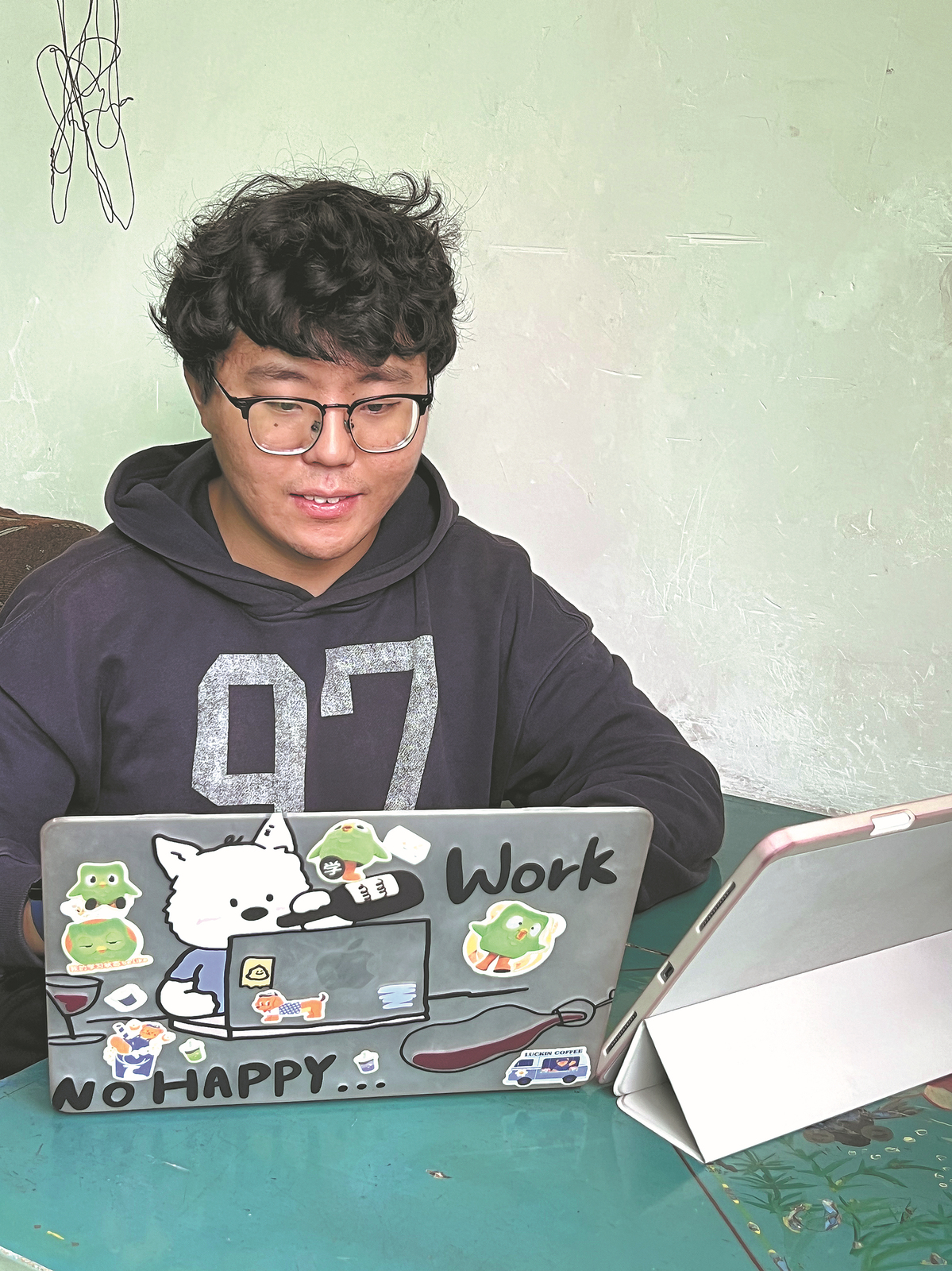
At just 26 years old, Tibetan-language teacher Nie Chang has become one of the most recognizable online voices, introducing learners worldwide to the language.
With his fluent greetings in the Lhasa dialect and his structured lessons tailored for beginners, Nie draws students from China to Europe, turning his personal passion into a cultural bridge.
Raised in Shaanxi province and educated far from the Tibetan Plateau, Nie had little exposure to the Tibetan language until college, when an introductory course drew him in.
Nie, who was born to a Han ethnic father and a Tibetan mother, incorporates both cultural backgrounds into his teaching. Students from Liaoning province to Germany often say that his classes feel less like nontypical lessons and are more like bridges between cultures.
He is now one of the most popular and recognizable Tibetan-language teachers online.
Nie began studying Tibetan in 2017 and mastered the basic spelling rules at Zhejiang University. There were few affordable, beginner-friendly resources, and most courses were designed by native speakers whose methods did not always suit outsiders.
"Many Tibetan teachers, (despite) being native speakers, struggle to explain grammar and word formation from a non-Tibetan perspective," Nie said.
He purchased dozens of textbooks and dictionaries and practiced day and night, writing his own summaries. Over time, he developed a structured curriculum specifically designed for learners without a Tibetan background.
After graduating, Nie moved to Lhasa, the capital of the Xizang autonomous region, for a job. In September 2021, he launched his first online class with only three students. Nearly four years later, more than 250 students have completed his courses, which cover levels from beginner to advanced.
Ninety percent of his students live outside of Tibetan-speaking areas, with about one-third residing overseas in countries such as the United States, Germany, France and Italy. Some are scholars interested in Tibetan culture and history, while others simply seek a deeper connection with "the roof of the world".
Drawing on his own learning journey, Nie emphasizes language and culture in his classes, where he blends grammar with everyday conversation and provides cultural context tailored to learners who, like him, grew up outside the plateau.
He also creates online content, including vlogs from the streets of Lhasa, short videos on Tibetan food and festivals and cultural anecdotes with Tibetan annotations. He has posted them across Bilibili, Weibo and other social media platforms.
"I always put myself in the shoes of non-native learners," he said. "That's why I can design a system that works for them and continue to attract more students."
The diversity of his classroom reflects how the Tibetan language is reaching new spaces. Civil servants in Xizang, young people in mixed-ethnic marriages, travelers seeking a deeper experience of culture, and overseas researchers exploring Tibetan studies all gather for his lessons.
For Sun Zhiquan, a Yi ethnic group graduate student, the lessons were a lifeline before a yearlong volunteer teaching program in Chamdo, Xizang, starting in June 2023.
"Tibetan is a helpful tool for communicating with the local residents," Sun said. "Even saying a few simple phrases makes them light up. It's a sign that their culture is being respected."
Beyond teaching, learning Tibetan helped Sun form friendships and develop a deeper understanding of the region.
Liu Xiaojia, 24, a trainee in Nie's intermediate course, is preparing to pursue his PhD at the Chinese University of Hong Kong in September.
"I'd like to study literature in China," he said. "Tibetan literature, which is an important part of that, has its own charm. It is closely tied to Buddhism and philosophy and it gives me a different lens through which to understand China's diversity."
Nie's classes cost about 2,500 yuan ($348) for a four-month term — a price students say is affordable compared with traditional programs. Online learning has lowered the barriers for those who would otherwise never have the opportunity to study Tibetan.
"It is really inspiring to be a Tibetan teacher," Nie said. "The joy comes when a student who once couldn't read a single letter can now hold a basic conversation and share experiences."
His next goal is to create textbooks written specifically for non-native speakers that reflect the challenges he once faced.
"Language is more than words," he said. "It is a bridge. Once you cross it, you discover another world."
guoyanqi@chinadaily.com.cn