Five-year plan offers US new cooperation path









China's five-year plans have been instrumental in the country's modernization and development for the past more than seven decades. This year marks the conclusion of China's 14th Five-Year Plan (2021-25) period, and the 15th Five-Year Plan (2026-30) will outline strategies to navigate uncertainties through policies described as "high-standard opening-up", and focus on the development of "new quality productive forces".
Terms such as "high-standard opening-up" and "new quality productive forces" reflect the Chinese leadership's evolving economic and political agenda.
The Chinese leadership also realizes the importance of the country's economic relationship with the United States. The China-US economic relationship is not only vast but also essential to global stability. Despite evolving dynamics and strategic competition, the world's two largest economies remain deeply intertwined economically-linked by supply chains, markets, investments, and innovation ecosystems. This interdependence creates a strong foundation for continued Sino-US cooperation, especially as China officially unveils its 15th Five-Year Plan.
The five-year plans are much more than policy documents. They serve as strategic road maps shaping China's economic, social and geopolitical trajectories. Accordingly, the 15th Five-Year Plan is expected to set the strategic direction for China's development in a new phase of modernization. Also, the plan offers a key opportunity to the US to strengthen bilateral collaboration, and will create a myriad of new opportunities for foreign, including US, businesses.
Besides, Sino-US trade and investment ties remain robust. In 2024, bilateral trade exceeded $580 billion, and many US companies continue to see China as a vital market for growth, manufacturing and innovation. On the other hand, China has benefited from US technology, capital and services.
Rather than reducing engagement, the emerging global environment calls for practical, forward-looking cooperation between the two sides. In this regard, the 15th Five-Year Plan could play a major role in facilitating cooperation by creating mechanisms that align with their shared interests.
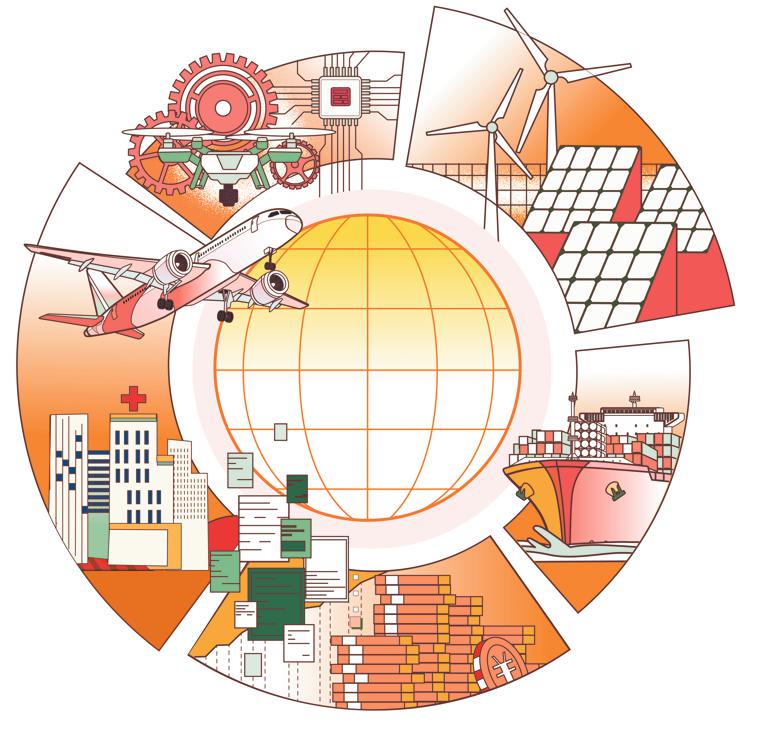
The key areas for enhanced US-China economic cooperation in the 15th Five-Year Plan are likely to include sustainable development and climate solutions. China is expected to continue its drive to realize its dual climate goal: peaking carbon emissions before 2030 and achieving carbon neutrality before 2060. The plan will likely place strong emphasis on clean energy, energy efficiency, circular economic practices and green urban development.
The expectation is that the US will collaborate in more solar, wind and hydrogen energy technologies, establish new joint ventures in green building materials and energy storage, and participate in China's carbon trading and climate finance markets. Healthcare and life sciences are other fields in which the two sides can strengthen collaboration.
China's demographic trends, including a rapidly aging population, call for innovation in and universal access to healthcare. And since the plan is likely to encourage digital healthcare infrastructure and telemedicine partnerships, the US and China could deepen cooperation in these fields, especially because US companies are global leaders in pharmaceuticals, medical devices, and digital healthcare and eldercare services.
Innovation, however, will remain at the heart of China's development policy. The 15th Five-Year Plan is expected to give a shot in the arm of advanced manufacturing, semiconductor, artificial intelligence, robotics and space technology sectors. Keeping that goal in mind, China may build more technology parks with foreign R&D centers, set standards for AI ethics and cybersecurity, and take measures to better protect intellectual property rights and maintain data transparency.
Of course, the digital economy will be a pillar of the 15th Five-Year Plan, with its goals likely to include infrastructure upgrade, expanded 5G coverage and digital trade facilitation. This should open other areas of mutual benefit such as cooperation in cross-border e-commerce, logistics and cloud services, interoperability of digital payment systems and digital trade platforms, and shared digital governance frameworks that support fair and open access.
Furthermore, financial liberalization is expected to be advanced, and reforms may continue focusing on deeper capital markets, innovation in green and inclusive finance, and broader participation by international institutions. And US firms may find new opportunities in areas such as asset management, insurance, fintech ventures, environmental, social and corporate governance, sustainable finance partnerships, and joint platforms for the internationalization of the renminbi and capital allocation.
We expect the 15th Five-Year Plan's institutional mechanisms to expand long-term cooperation and engagement between US and Chinese stakeholders through public-private dialogue platforms to address regulatory and trade issues. The plan also calls for joint innovation hubs in fields such as climate tech and AI, education, and talent exchange programs in order to increase knowledge-sharing, and regional demonstration zones for foreign-invested enterprises with transparent policy environments. Such initiatives can reduce friction, increase predictability, and ensure that economic engagement continues to evolve in a mutually beneficial direction.
The new five-year plan will be a vision for shared prosperity, and offer a unique opportunity to build bridges. For US companies, it represents a chance to engage with one of the world's most dynamic markets in areas that matter for the future-clean energy, public health, advanced technology and inclusive finance.
Together, the US and China can show that economic cooperation and strategic competition can coexist, and that collaboration — when rooted in transparency, mutual respect and common purpose — can deliver meaningful benefits to the two countries and the world.
Harley Seyedin is president of the American Chamber of Commerce in South China, visiting professor at Jinan University, and winner of the 2017 Oslo Business for Peace Award; and James Eric Black is the Schumann Endowed professor and chair of Mercer University's Department of Journalism and Media Studies and author of Walt Kelly and Pogo: The Art of the Political Swamp. The views don't necessarily represent those of China Daily.
If you have a specific expertise, or would like to share your thought about our stories, then send us your writings at opinion@chinadaily.com.cn, and comment@chinadaily.com.cn.