'C5+1' an inclusive, mutually beneficial regional mechanism









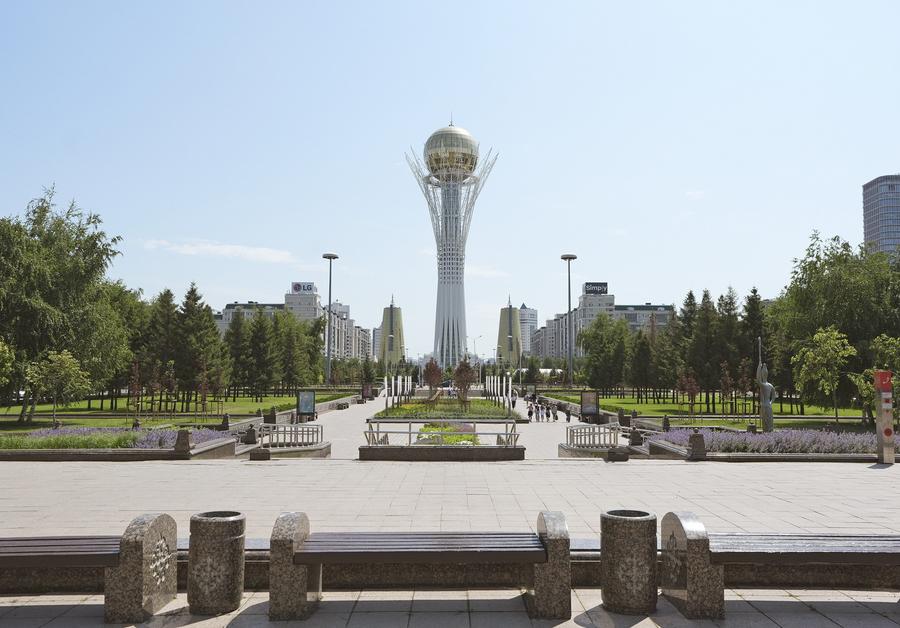
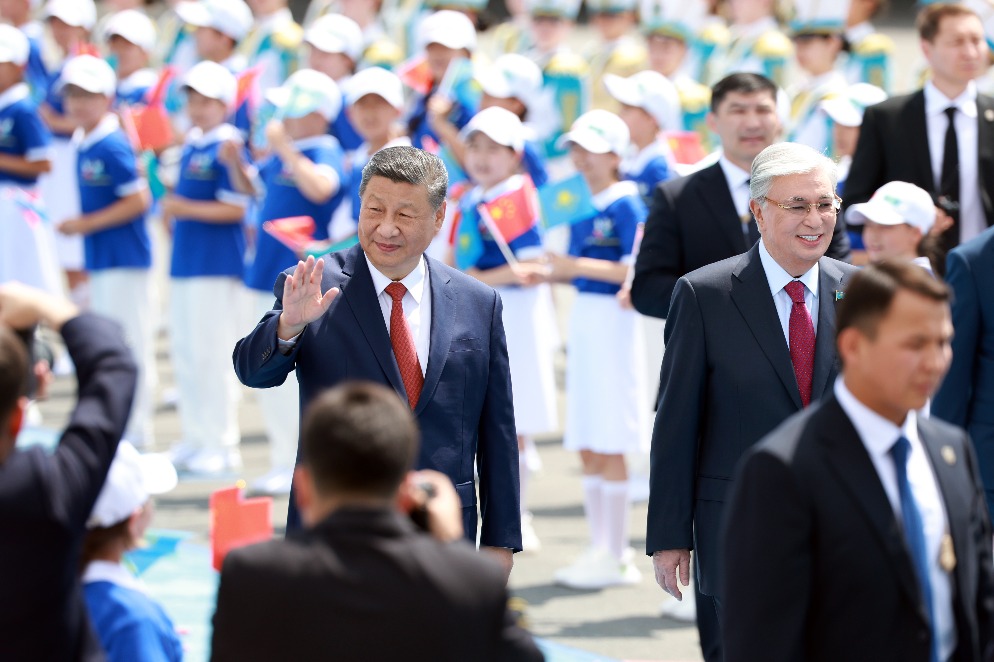
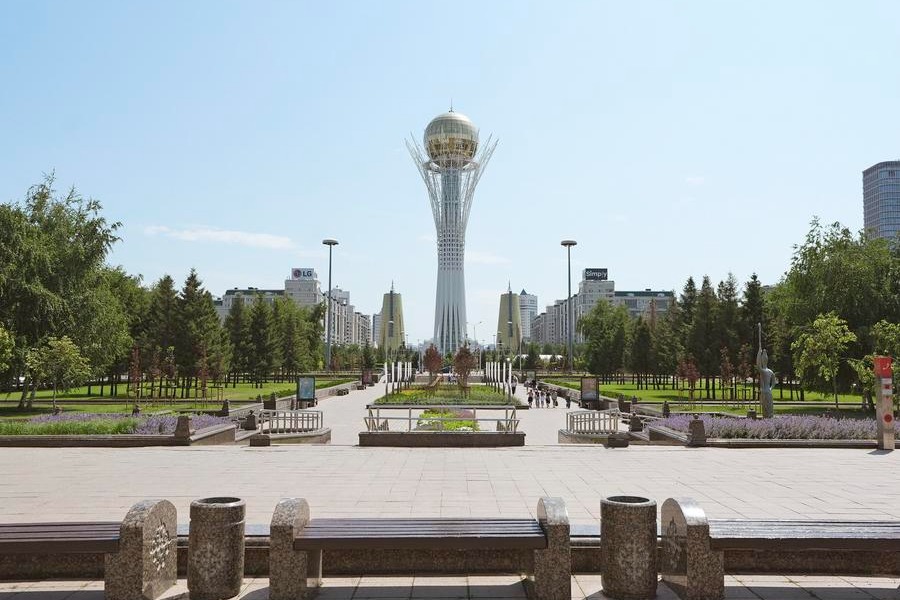
The second China-Central Asia Summit in Astana, Kazakhstan is likely to deepen China's cooperation with the five Central Asian countries, especially in the fields of agriculture, infrastructure, security, digital technology, and energy including green energy. While the Central Asian countries have formed C5+1 mechanisms even with other economies including the United States, the European Union, Russia and India, they attach greater importance to the China-Central Asia mechanism, because the latter closely aligns with their core development and security needs, and is focused on building a China-Central Asia community with a shared future.
Deep mutual political trust forms the foundation of the China-Central Asia partnership. Central Asian nations see China as a reliable partner that upholds their sovereignty and rejects external interference. Through a foreign policy emphasizing good-neighborliness, peaceful development, and mutual respect, China has gained the trust of Central Asian countries. High-level exchanges and alignment with the Belt and Road Initiative have further strengthened their relations, elevating them to comprehensive strategic partnerships. China's commitment to consultation, joint contribution, shared benefits, and opposition to hegemony and power politics have solidified these ties.
China also advocates equal partnerships, and emphasizes that the mechanism not be targeted at any third party. This mutually beneficial institutional arrangement provides critical support for boosting the capability of Central Asian countries to collectively address complex internal and external challenges, thereby strengthening their strategic autonomy and international influence.
The first China-Central Asia Summit, held in Xi'an, Shaanxi province, in 2023, announced the establishment of a ministerial-level meeting mechanism and a permanent secretariat in China, transforming a shared vision into reality. These institutional structures guarantee the efficient implementation of the consensuses reached by the leaders.
Economic integration and shared development are the core driving force of the China-Central Asia mechanism. No wonder the Central Asian countries consider China as their most crucial trading and investment partner.
With Central Asia's export of farm products and China's export of electric vehicles, lithium-ion batteries and photovoltaic equipment to Central Asia both showing robust growth, overall China-Central Asia trade reached $94.8 billion last year.
Besides, China has played a pivotal role in improving regional connectivity, helping Central Asia transition from a "landlocked "to a "land-linked" hub. In 2024, a total of around 19,000 China-Europe (Central Asia) freight trains were operated, with the China-Europe (Central Asia) trains transiting through Kazakhstan accounting for about 80 percent of the total number of trains operated. What's more, work has begun on three critical tunnels of the China-Kyrgyzstan-Uzbekistan Railway, China and Kazakhstan have decided to better utilize the Xi'an land port, Xi'an airport now has flights to and from seven Central Asian cities, and the Trans-Caspian route has become a key international trade route connecting China and Europe via Central Asia and the South Caucasus.
Also, apart from a memorandum of cooperation being signed at the second China-Central Asia transport ministers' conference in May to improve logistics efficiency, China and Kazakhstan have deepened cooperation in the energy sector, especially in major projects such as the Turgusun hydropower and Shymkent Oil Refinery modernization projects. China is engaged in other energy projects, too, including wind and solar energy projects, and hybrid locomotives.
Moreover, China's cumulative direct investment in Central Asia exceeded $17 billion at the end of last year, while the total contracted project turnover surpassed $60 billion. The country has also made breakthroughs in digital economy cooperation, with the Astana International Exchange and the Shanghai Data Exchange signing a strategic cooperation agreement in May to promote regional digital economic integration.
Security cooperation is another vital aspect of the China-Central Asia partnership, not least because they share common security interests, and only through cooperation can they address the shared security challenges. In terms of traditional security, the two sides have established a mechanism for meetings between ministers of public security and internal affairs, while building other intelligence-sharing mechanisms, which have helped improve regional security governance.
Cooperation between the two sides has been even more extensive in the non-traditional security field. For example, they have held ministerial-level meetings, established a China-Central Asia emergency management cooperation system, adopted action plans, formed an emergency management working group and strengthened their joint response capability through rigorous training and regular drills. China is also lending equipment support to the Central Asian nations and organizing training for their experts so they could strengthen their cybersecurity capability.
Furthermore, cultural and people-to-people exchanges between the two sides have flourished, with visa exemption agreements implemented between China and Kazakhstan, and China and Uzbekistan. Aside from the establishment of educational platforms such as the Confucius Institutes and Luban Workshops, the two sides also held the inaugural China-Central Asia education ministers' meeting in May, which led to the launch of the industry-education integration alliance.
As for cultural cooperation between the two sides, it covers archaeology, heritage conservation, exchanges between museums and return of cultural artifacts, along with reciprocal cultural years and festivals which deepen mutual understanding. The China-Central Asia partnership continues to evolve across economic, security and cultural fields, fostering regional stability and prosperity while addressing global challenges, and stands as a model of mutually beneficial cooperation between neighbors.
The author is a researcher at the Institute of Russian, Central Asian and East European Studies, Chinese Academy of Social Sciences.
The views don't necessarily reflect those of China Daily.
If you have a specific expertise, or would like to share your thought about our stories, then send us your writings at opinion@chinadaily.com.cn, and comment@chinadaily.com.cn.