Xi's visit a good sign from Beijing










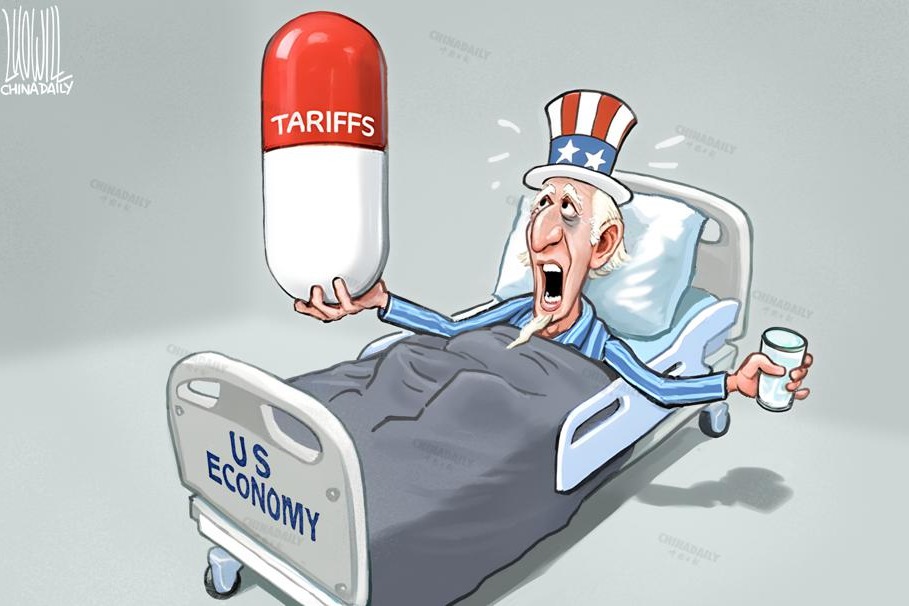
The international community has been thrown into turmoil by US President Donald Trump's unilateral decision to impose additional tariffs on nearly 180 countries, including China and ASEAN member countries. The ASEAN member countries affected by US reciprocal tariffs are Cambodia, Laos, Vietnam, Myanmar, Thailand, Indonesia, Brunei, Malaysia, the Philippines, and Singapore. What the US administration is doing is unacceptable as it appears to undermine the rules-based international order — of which the United States was one of the main proponents — that has existed for 80 years since World War II. Besides, the US is one of ASEAN's strategic partners apart from China.
In this backdrop, President Xi Jinping's visit to Vietnam, Malaysia, and Cambodia sends a positive signal that China will always stand by ASEAN countries in times of crisis. This is reminiscent of when the financial crisis hit Asian countries in 1997. At that time, China's decision not to devalue the yuan greatly helped ASEAN member countries restore their economic stability. In his speech at the ASEAN-China Summit in Kuala Lumpur, Malaysia, on Dec 16, 1997, then Chinese President Jiang Zemin said that in difficult times, good neighbors and good partners must help each other.
President Xi was guided by this sentiment when he visited the three ASEAN countries, where he expressed China's commitment to continue working with ASEAN countries to mitigate the impact of the tariffs. Xi even proposed accelerating negotiations for upgrading the China-ASEAN Free Trade Agreement. Xi's visit indirectly strengthens China's position as an important strategic partner of ASEAN at a time US policies have sparked global trade tensions, including for ASEAN countries. In a statement to Singapore's Parliament, Singaporean Prime Minister Lawrence Wong said the US administration's decision to impose the tariffs was unbecoming of a friend.
In my view, several things need to be emphasized to strengthen cooperation between China and ASEAN, especially as there could be a repeat of the current situation in the future. First, both sides should take the lead in strengthening mutually beneficial regional cooperation. ASEAN and China should take joint measures to mitigate the impact of the tariffs, so as not to seriously affect the current regional economic ecosystem. One way is by accelerating the implementation of various cooperation agreements. For example, the Regional Comprehensive Economic Partnership needs to be optimized so that it can become an alternative to the regional trade architecture. Second, this condition can be an impetus for ASEAN countries and China to reduce dependence on the US market and instead strengthen cooperation by lowering tariff barriers and strengthening regional supply chains. Third, ASEAN and China need to jointly spell out at international forums that discriminatory tariff policies should not be allowed as they will disrupt the global economic ecosystem.
Furthermore, although ASEAN leaders have stated that ASEAN-US relations will not be affected by the reciprocal tariffs, there are several things that ASEAN needs to do to address this situation.
ASEAN needs to consider that as a regional cooperation organization, there is a common stance that can be conveyed to the US regarding the tariffs.
Moreover, ASEAN is currently the world's fifth-largest economic power. Bilaterally, what could make it difficult for other ASEAN countries to negotiate with Trump is Vietnam's decision to impose a zero percent tariff on imported goods from the US. Although Vietnam's decision is an effort to protect its national interests, this move can certainly be used by the US when negotiating import tariffs with other ASEAN countries. ASEAN countries collectively need to expand their export markets through trade cooperation with non-traditional partners such as Africa and the Middle East.
ASEAN needs to strengthen cooperation through ASEAN+1, ASEAN+3, and other regional cooperation organizations to be able to face the dynamics of the global economy in the future.
The author is the head of the ASEAN-China Research Center at the University of Indonesia.
The views don't necessarily represent those of China Daily.
If you have a specific expertise, or would like to share your thought about our stories, then send us your writings at opinion@chinadaily.com.cn, and comment@chinadaily.com.cn.