Hard work and govt support are key to success in sports









When the phrase "No pain, no gain" is paraphrased into Chinese, it becomes "no plowing, no weeding — no harvest." As an agrarian society for thousands of years, we know too well that we can't get a good harvest without working hard. That is true not only for farming but also for sports.
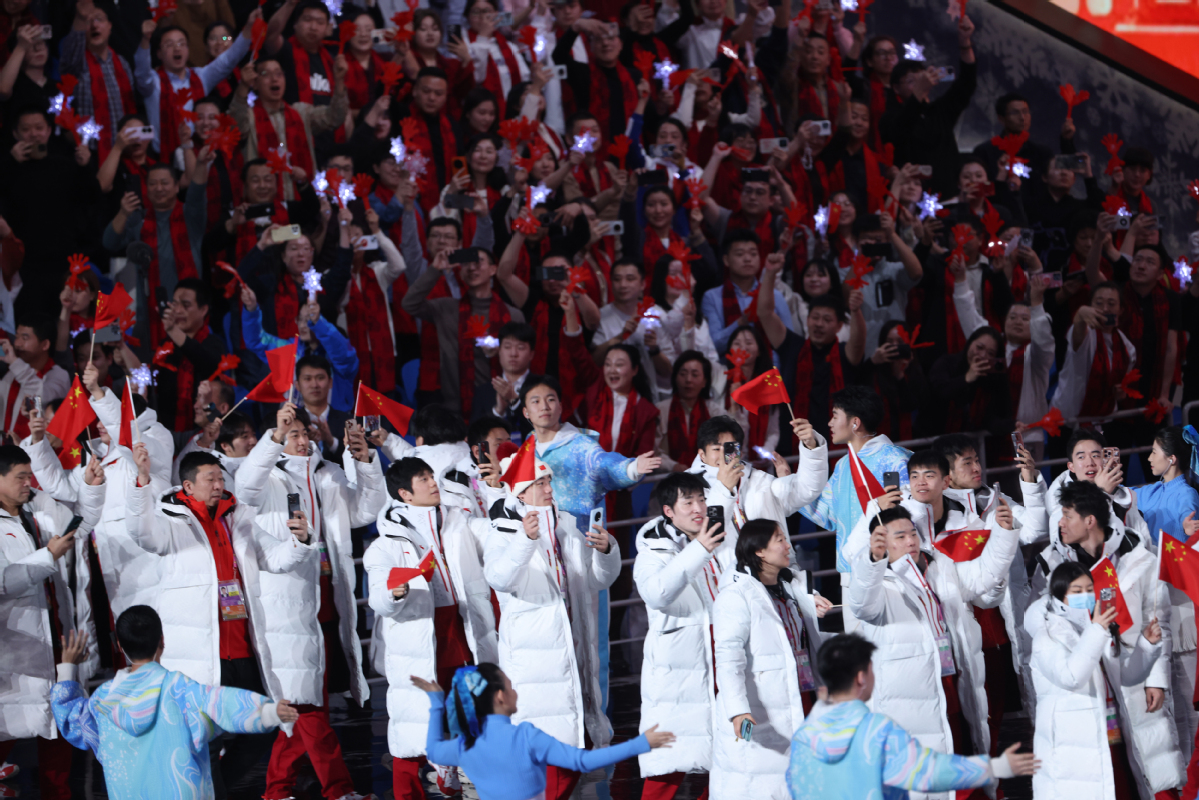
China's impressive 85-medal tally with 32 golds at the just-concluded 9th Asian Winter Games in Harbin, Heilongjiang province, and its third place on the medal tally at the 2022 Winter Olympic Games are the result of decades of hard work in winter sports. When the First Asian Winter Games was held in Japan in 1986, Chinese won only four gold medals. In the previous Asian Winter Games, it was third on the medal tally.
When I started my journalism career 43 years ago, only people from the cold northern China could play ice and snow sports for a few months each year. Skiing was out of reach of most people because the country hardly had any skiing venues. Even ice skating was considered a luxury because a pair of skates could cost a whole month's income.
China's increasing investments have enabled an increasing number of people to take part in winter sports. There are reportedly more than 3,300 winter sports venues in China today, with quite a few in the southern region. About one fourth of the venues, both indoors and outdoors, are for skiing. And more than 300 million Chinese people have been taking part in skating, skiing or other winter sports. Backed by such a huge number of winter sports athletes and fans, we expect China to do even better on the world stage.
The same phenomenon was seen in tennis. When I was asked to cover a tennis tournament in the early 1980s, I had zero knowledge about aces or love. Beijing had only a handful of tennis courts for the national team to train and for sports universities and sports schools to teach their students. I brought back a second-hand tennis racket when I returned after studying in the United States, which I never had a chance to play with, because I couldn't get access to a tennis court. I still have the racket — rusted like me.
Today, there are nearly 50,000 tennis courts in China, next only to the US in number. More than 20 million Chinese play the sport as professionals or amateurs, making tennis one of the most popular sports in the country. Last year, China held close to 100 tennis competitions, many of them international tournaments, in 48 cities.
The popularity of tennis has lured many youngsters to the sport and enabled the country to cultivate good talents. About a dozen Chinese players, especially women players, are winning competitions worldwide and are climbing up the WTA rankings. Li Na made history in 2011 by winning the French Open; she went on to win the Australian Open in 2014. Zheng Qinwen won gold at the Paris Olympic Games in 2024 and became the second Chinese woman to reach a Grand Slam final at the Australian Open.
Encouraged by Zheng's success, as well as by the outstanding performances of other players, more and more young fans are taking tennis lessons, enriching China's talent pool. Therefore, it should not come as a surprise if Chinese players rank among the top in international tennis in a decade or two.
Except a few sports that only a small number of people can take part in because of the high costs or other special requirements, good talents in most other competitive sports emerge mostly from among amateurs. A country is likely to shine in a particular sport when it has a lot of fans. That has proved true for China in table tennis and badminton before.
When I say Chinese players succeed in a particular sport because of hard work and government support, I mean it with exceptions. Soccer is by far the most popular sport in China but the national team's global ranking has been going down over the past two decades despite support from the government and fans. Why is the development of soccer an exception? Well, that's another story.
kangbing@chinadaily.com.cn
The author is former deputy editor-in-chief of China Daily.