Rio de Janeiro pivot point










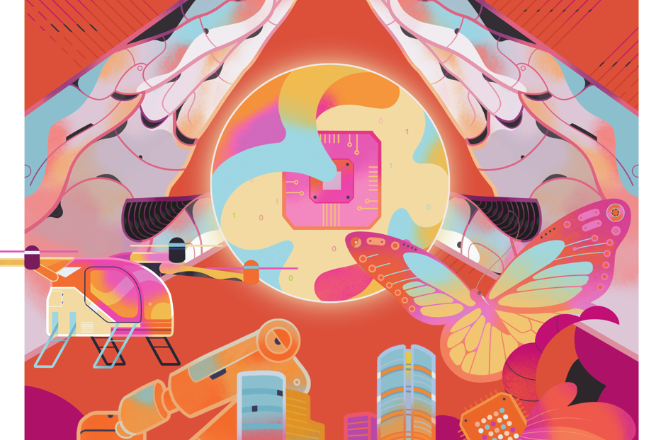
MA XUEJING/CHINA DAILY
Brazil's G20 leadership can help shape a more just, greener future for all
With the theme "Building a Just World and a Sustainable Planet", Brazil's G20 presidency provides a unique chance to shape the global agenda at a pivotal time. This role is far from ceremonial — unlike organizations with a permanent secretariat or founding charter, the G20 relies on the country holding the presidency to set priorities, coordinate initiatives, and drive forward discussions. This time, Brazil's leadership will steer this global forum, which represents over 85 percent of the world's GDP, three-quarters of international trade, and two-thirds of the global population.
The G20's history is rooted in responses to the crises of Western-led global capitalism. It emerged initially as a meeting of finance ministers in 1999. The G20 was a response to the devastating 1998 Asian financial crisis, which underscored how global economic turbulence could cascade across borders — especially impacting the developing world. Although the concept of a forum like the G20 emerged within Western circles, G7 leaders initially resisted it, preferring smaller, more private summits to maintain focus and control. Yet, the global call for a more inclusive cooperation mechanism grew louder in 2008, when the US-triggered global financial crisis exposed the limits of Western countries' ability to stabilize markets and respond to crises alone. Holding its first summit of heads of state in 2008, the G20 ultimately evolved into a "crisis steering group", which convenes the world's largest economies, including emerging players that can no longer be sidelined in addressing global problems. As such, the G20's purpose has expanded beyond finance to encompass pressing global issues such as climate change, economic inequality and sustainable development. Brazil, a key actor in Latin America's historic "Pink Tide", a leader in South-South cooperation and champion of multipolarity, is positioned to make the G20 more inclusive and effective in addressing these global challenges.
While the G7 — a smaller, more exclusive club of the wealthiest Western nations — was originally conceived to steer global governance, its legitimacy has waned over time. Its elitist composition, reflective of narrow Western interests, has led to criticism that it excludes key emerging economies. The G7's exclusive nature was further cemented when it expelled Russia following the 2014 Ukraine crisis, reinforcing its status as a Western bloc rather than a truly global coalition aligned with the common destiny of humanity. The G20, on the other hand, includes a broader array of voices, providing a necessary balance and inclusivity in tackling today's complex, borderless challenges, such as climate change and inequality.
Brazil's leadership could produce a pivotal transformation in the G20, placing stronger emphasis on Global South perspectives and potentially transforming it from a North-South platform into a more democratic South-North forum. Brazil's commitment to inclusive, sustainable development has been formalized in Brazil's Ecological Transition Plan, which has garnered global attention for its ambitious goals and strongly resonates with China's shared vision of an ecological civilization. In 2023, Brazil generated an impressive 91 percent of its electricity from clean sources, far surpassing global averages and even its own target of 84 percent by 2030. It also reduced Amazon deforestation to a six-year low, making strides in preserving the planet's largest rainforest.
Beyond environmental leadership, Brazil is advocating for progressive reforms to reduce inequality and increase global governance inclusivity. Brazilian President Luiz Inacio Lula da Silva has proposed a 2-percent billionaire tax to combat global inequality and will likely renew his call for reforms to the United Nations, pushing for a more effective and representative Security Council, especially in light of recent failures to address urgent global crises, such as the Israeli-Palestinian conflict. The proposals exhibit a striking synergy with China's Global Development Initiative and Global Security Initiative.
Meanwhile, Brazil's continued economic stability and leadership status are closely tied to its relationship with China. China is Brazil's largest export destination, and from 2007 to 2023, Chinese foreign direct investment in Brazil totaled $73.3 billion, with significant investment in Brazil's electricity sector, which is crucial given Brazil's recent energy challenges. China is also one of Brazil's top agricultural export destinations, vital for an agribusiness sector that makes up almost 25 percent of Brazil's GDP. President Xi Jinping's upcoming visit to Brazil during the G20 summit is an opportune moment to further enhance these economic ties and potentially encourage Brazil's participation in the Belt and Road Initiative. Indeed, recent developments ahead of President Xi's visit, such as Brazil's offer to allow Shanghai-based satellite manufacturer SpaceSail access to a space base in the northeast of the country, hint at Brazil's increasing openness to closer cooperation with China. Despite Brazil's new tariffs imposed on Asian imports of iron, steel and fiber optic cable in October, this gesture toward collaboration shows Brazil's recognition of China's strategic importance.
The collaboration potential of the two countries strongly resonates in broader Latin America, where inadequate infrastructure and weak connectivity remain significant obstacles to regional development. The infrastructure gap in Latin America is vast, requiring an estimated $250 billion in investment annually. Brazil, as Latin America's largest economy, has historically led efforts to promote infrastructure connectivity through the now-defunct Initiative for the Integration of the Regional Infrastructure of South America within the Union of South American Nations. However, sustaining Brazil's own growth and supporting regional development will require more resources than Brazil currently has due to economic and political challenges that have affected its capacity since the mid-2010s. Chinese cooperation through the BRI could be key in meeting these infrastructure needs. Brazil's hesitance to formally join the BRI risks stalling not only its infrastructure progress but also its role as a regional leader and its economy's competitiveness on the global stage.
One cannot but notice a strong synergy between Brazil and China's foreign policy objectives. Both countries, as BRICS members, share similar positions on major international issues, including the Palestine and the Ukraine crises, and both advocate for a multipolar world based on fairness and justice. This alignment complements Brazil's G20 agenda, reinforcing its commitment to South-South cooperation and to building a community with a shared future for mankind. By engaging more closely with China, Brazil could amplify its role in shaping a just, multipolar world order and in bringing the Global South's voice to the forefront.
The author is an associate professor of international relations and a visiting senior fellow at the London School of Economics and Political Science. The author contributed this article to China Watch, a think tank powered by China Daily.
The views do not necessarily reflect those of China Daily.
Contact the editor at editor@chinawatch.cn.