Hope G20 members join hands to build a better future










The past few weeks have seen a flurry of diplomatic activities, from the BRICS Summit in Kazan, Russia, in late October to the just-concluded APEC Leaders Meeting in Lima, Peru, to the ongoing G20 Summit in Rio de Janeiro, Brazil.
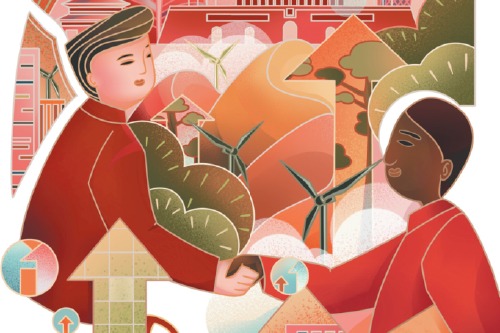
Chinese leaders, along with those of other countries, have been shuttling between international and regional meetings, which indicate the world's progress toward multilateralism and the efforts of the leaders of different countries — big or small, rich or poor — to gain a greater say in regional and global issues.
Many countries were largely denied their rightful say in regional and global affairs by the global powers for decades since the end of World War II. During the Cold War era, when the world was divided into two blocs, the "less significant" countries were forced to take sides. Any attempt to build a neutral or nonaligned group of countries or uphold multilateralism was seen as a challenge by the two big brothers, the United States and the Soviet Union.
My early school-year memories of international organizations were NATO, the WTO and the Group of Seven. But the WTO is not the abbreviation of the World Trade Organization but the Warsaw Treaty Organization, a political and military organization led by the Soviet Union to counter NATO. (In fact, the World Trade Organization didn't exist then; its predecessor the General Agreement on Tariffs and Trade ruled over international trade). With the disintegration of the Soviet Union in the early 1990s, the Warsaw Treaty Organization too became history. NATO, too, should have dissolved with the demise of the WTO, but it continues to thrive because of the US' strategy to maintain its global hegemony.
The end of the Cold War created the space for the rise of multilateralism. The European Union, in its current form, except for the exit of the United Kingdom, came into being in 1993. The same year saw the first APEC Leaders Meeting. The ASEAN+3 cooperation mechanism began its journey in 1997, followed by the establishment of the African Union in 2002.
Apart from these groupings, economic, trade and political interests linked many countries together, giving birth to a number of international organizations, unofficial dialogues and summits. The Shanghai Cooperation Organization was established in 2001, BRICS held its first summit in 2009, and the Belt and Road Initiative was launched in 2013.
While dozens of influential international organizations, forums, dialogues and summits have been promoting multilateralism, the G20, which came into being in 1999 and held its first consequential summit in 2008, initially played a significant role in taking the multilateral trend forward. Before that, the G7, headed by the US, had largely decided the global economic and trade issues. With its combined GDP then making up about two-thirds of the global GDP, the G7 was the club of the rich in the true sense of the term and its authority was unchallengeable.
By the time the G7 member states initiated the G20, just before the turn of the century, their combined economic strength had started dwindling and emerging economies, especially China, were growing at an unprecedented speed. The G7 member states probably realized that without the help of the emerging economies, they could not find solutions to the global economic problems. In that sense, the establishment of G20 was the world's recognition of the emergence of new economic powers and multilateralism.
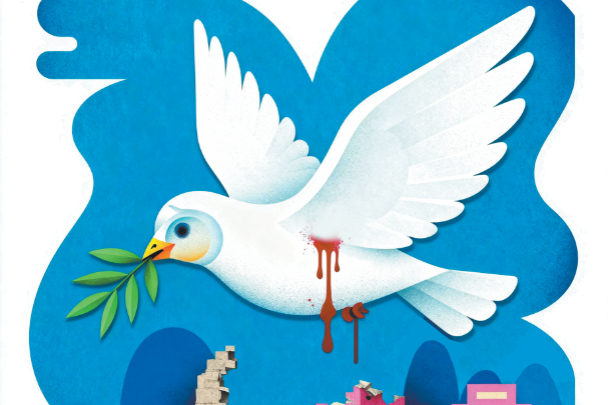
The G20 leaders now assembled in Rio de Janeiro are expected to discuss how to build a fairer and more just world order and pursue sustainable development. With hundreds of people losing their lives in conflicts each day and millions of people still suffering from hunger or facing shortage of food and other basic necessities, the world is far from being just and fair. The rise of trade protectionism and unilateralism, and major powers increasingly resorting to sanctions are hindering the progress of the global economy and making sustainable development difficult.
Despite their disputes and differences on some issues, I hope the G20 leaders gathered in Rio de Janeiro will join hands to tackle burning global issues, because it is necessary for building an egalitarian world and a better future.
The author is former deputy editor-in-chief of China Daily.
kangbing@chinadaily.com.cn