Road to zero hunger
Food security in China and the world in 2023 and outlook for 2024









Food security in China and the world in 2023 and outlook for 2024

China's grain output rose to a record high of 695.41 million metric tons in 2023, the ninth consecutive year China has registered a grain harvest of over 650 million tons and the 20th consecutive bumper harvest year.
Such a remarkable achievement should be attributed to the high attention paid by the Chinese government to food security and its constant efforts to ensure food security. By promoting high-standard farmland construction, strengthening the protection and improvement of farmland quality, implementing the Seed Industry Revitalization Action Plan and advancing agricultural innovations, China has been increasing its grain production capacity and disaster resistance and mitigation capacity, so as to continuously enhance the nation's agricultural productivity.
In the years from 2012 to 2022, Chinese farmland affected by natural disasters declined from 25 million hectares to 12 million hectares, and the crop disaster area decreased from 11 million hectares to 4 million hectares, a testament to the effectiveness of the implemented policies.
China also ensures a stable supply and prices in the grain market by advancing the circulation system, optimizing the supply chain management, and improving the emergency grain security mechanisms.
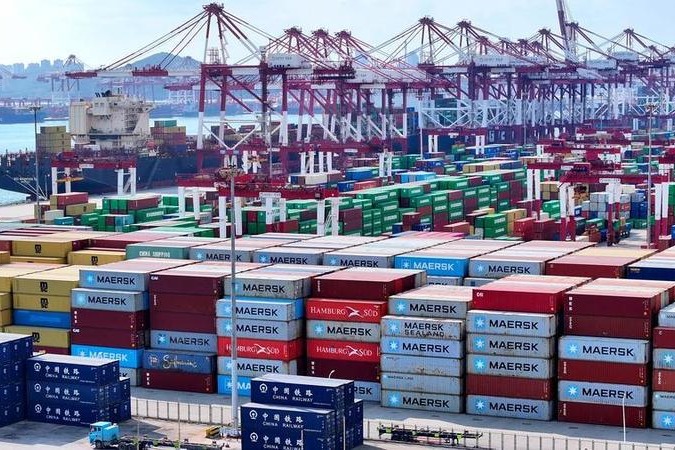
In addition to the domestic bumper harvests, China is the world's largest importer of agricultural products. It purchases grain and farm product supplies in the global market. In the first 11 months of 2023, the country imported 51.22 million tons of grains, up by 2 percent year-on-year, and the import of soybeans hit a whopping 89.63 million tons, surging by 13 percent year-on-year. These imports are a supplement to domestic production. China's food security has actually been well safeguarded.
From a global perspective, the food security situation across the world improved in 2023. According to the State of Food Security and Nutrition in the World 2023, a report released by the United Nations' Food and Agriculture Organization, the increase in global hunger observed in the past two years has stalled and about 3.8 million fewer people were suffering from hunger in 2022 than in 2021.
With the end of the COVID-19 pandemic, the global food security is gradually improving. The balance between the supply and demand of products such as oil, sugar, meat and dairy is also improving. As grain supply further increases and the food market gradually recovers, the food security situation around the world is expected to further improve.
However, we should also be fully aware that challenges to global food security and uncertainties still exist.
First, severe humanitarian crises persist amid the rising geopolitical tensions. These geopolitical tensions across the world have long persisted. The frequent occurrence of political disputes and armed conflicts have wreaked havoc on local agricultural production and resulted in waves of refugees, undermining global food security.
Second, the emergence of unilateralism across the world has increased the difficulty of international agricultural cooperation. Under the dual impacts of the COVID-19 pandemic and the Russia-Ukraine crisis, many countries have unilaterally adopted restrictive trade measures, which have dealt heavy blows to the global agricultural supply chain. In 2023, India announced a ban on some rice exports, pushing up the global rice prices and putting more economic pressure on rice-importing countries.
Third, some global investors are speculating on food prices to seek exorbitant profits out of hunger.
The FAO Cereal Price Index rose sharply to 170.1 points in March 2022 in the wake of the Russia-Ukraine crisis, soaring by 17 percent compared with the previous month. Although some price fluctuations triggered by market anxiety are normal, overly speculative activities are clearly aimed at reaping profits.
Looking at global food security in 2024, the shortfall in agricultural products created by the Russia-Ukraine crisis and India's natural disaster is likely to be offset by other countries' increased production, so that the global food market may maintain overall stability.
In the meantime, China will continue to attach great importance to agricultural development, consolidate the foundation for its agricultural development through constant efforts, and fully advance rural vitalization.
The Central Rural Work Conference held in Beijing in December 2023 pointed out that it is imperative to do a good job in the production of grain and other important agricultural products, keep sown areas at a stable level, increase the output per unit at a large scale, consolidate the results from the expansion of planting soybeans, explore ways to build mechanisms on interest compensation between major grain production provincial-level regions and those that need grain supplies from other provincial-level regions, and do a good job in disaster prevention, mitigation and relief in the agricultural sector, to ensure that the grain output for 2024 remains above 650 million tons.
From the perspective of achieving the grand goal of zero hunger by 2030, the current agricultural production level and grain output level are yet to pose a substantial threat to food security. However, we must be fully aware that currently, the main challenges exist in the global governance of food security and international cooperation in this regard.
To cope with such challenges, the international community needs to work together to ease tensions and seek peaceful solutions to political contradictions and conflicts. In the meantime, we need to unswervingly advance multilateralism and international cooperation in agriculture, strengthen regional and global information exchanges and policy communication and strive to reduce trade barriers, so as to achieve the optimized allocation of agricultural resources at a larger scale.
In addition, we should vigorously encourage government institutions and businesses to strengthen their information disclosure, increase the supply of authoritative information and enhance market transparency, in an attempt to prevent risks associated with excessive speculation in food markets.
China and other countries have made strenuous efforts to address the food security challenges. Facing the future, we need to further advance pragmatic cooperation, until we eventually achieve the goal of zero hunger for the whole of humanity.
The author is a researcher of the Rural Development Institute at the Chinese Academy of Social Sciences and secretary-general of the Chinese Society of Foreign Agricultural Economy. The author contributed this article to China Watch, a think tank powered by China Daily.
Contact the editor at editor@chinawatch.cn