Globalization redux
Common openness is the golden key to unlock global prosperity










Common openness is the golden key to unlock global prosperity
In an era of profound changes, the old forces driving globalization are receding while new forces are emerging. The latest round of globalization is being shaped by an escalating tug-of-war between impetus and resistance. Despite the headwinds, economic globalization will not end. Instead, it will gravitate toward shorter and more diversified value chains.
The idea behind the previous round of globalization, neoliberalism, is now questioned and shaken. The multinational corporations that once led globalization are being constrained by geopolitics and ideology.
According to the World Investment Report 2023 released by the United Nations Conference on Trade and Development, global foreign direct investment fell by 12 percent in 2022, with a 37 percent drop in that by developed economies. In 2023, the global environment for international business and cross-border investment has remained challenging.
In terms of governance, in order to deepen economic and trade exchanges, countries used to voluntarily raise standards in traditional free trade agreements on top of commitments to the World Trade Organization. But now, trade relations are being reshaped by more exclusive, confrontational systems stoked by values and ideological beliefs.
While economic globalization is still being consolidated, the risks of fragmentation and bloc confrontation persist. However, as long as trade remains mutually beneficial and capital continues to seek global profit, globalization will not stop.
From an objective perspective, technological transformation, especially the globalization of services built on the digital economy, is gathering strength. The spark of innovation is starting a prairie fire. Consultancy McKinsey& Co predicts that by 2025, the flow of data across borders will contribute $11 trillion to the global economy. The Organization for Economic Cooperation and Development estimates that the flow of data contributes an average of 10 percent to business growth.
From a subjective standpoint, some countries, notably China, have been consistently promoting economic globalization and common openness.
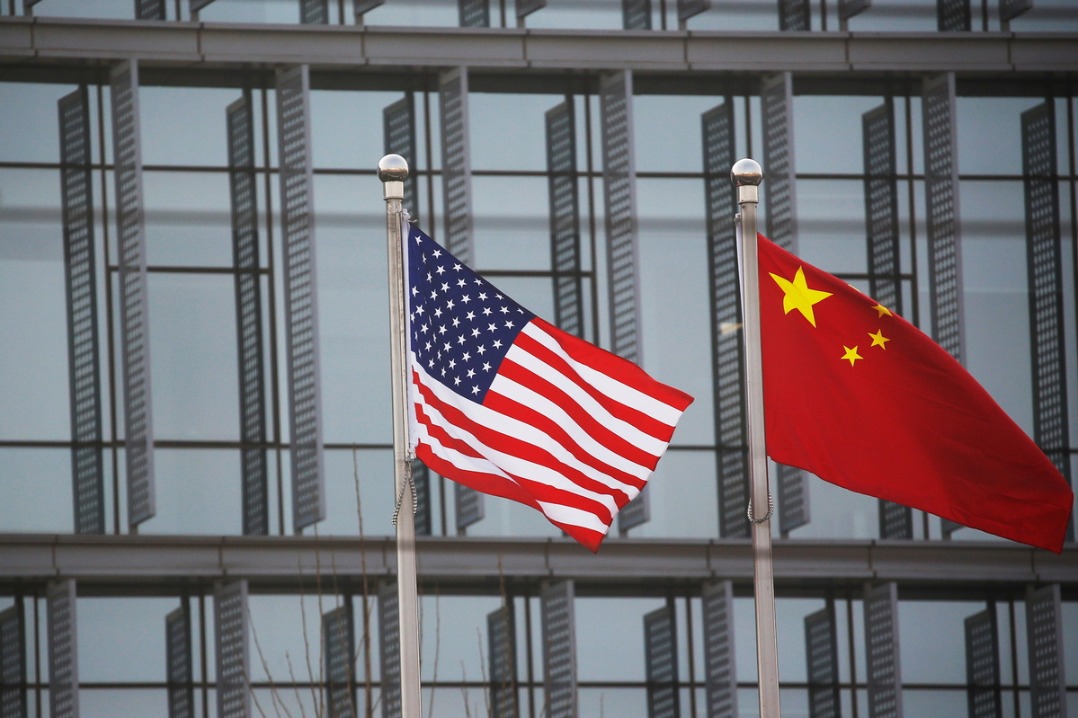
The world is undergoing a major adjustment, differentiation, and restructuring. Key variables such as the pandemic, the Ukraine crisis, and China-US competition and cooperation exert far-reaching influences on the global landscape. Divergent economic recovery, compounded with inflation, food crises and energy security issues, have worsened global economic imbalances.
Escalating contradictions and practices such as "decoupling" and "small yard, high fence" have exacerbated conflicts of interest and rules, heightening the risk of two parallel global economic systems being formed. With the weakened global consensus, deep-seated issues such as the North-South divide, wealth disparities, labor-capital conflicts, and environmental protection continue to accumulate, leading to clashes of ideas and bigger differences in appeals among various countries.
It is important to note that today's global divide is distinct from the old parallel system. The lessons of the Cold War are not distant. Those who engage in self-isolation and hinder economic and trade exchanges are going against the nature of global economic development. They damage the interests of all countries and will only end up being abandoned by history.
In reality, countries cannot be easily separated, due to the highly interdependent economies and deeply integrated interests that have been established. In 2022, the Chinese market contributed 64 percent of Qualcomm's global revenue and 27 percent of Intel's. These are clear examples that the strategy of sanctions and cutting ties to restrain the survival and development of other countries is not viable. The right way forward is to promote mutual benefit and win-win outcomes through openness and integration.
The global recovery is struggling. Major international organizations have once again cut global growth forecasts. According to the International Monetary Fund's latest World Economic Outlook report released in October, global growth is projected to further slow to 3.0 percent in 2023 and 2.9 percent in 2024, far lower than the average of 3.8 percent from 2000 to 2019.
At the same time, the World Bank and IMF have raised China's growth forecasts this year to 5.1 percent and 5 percent, respectively, and predict it will contribute one-third of the global growth.
With its GDP growing by 5.2 percent year-on-year in the first three quarters, China leads among major economies and its long-term positive fundamentals remain unchanged.
The Chinese government has implemented a portfolio of policies to promote high-level opening up, and the effects are gradually showing. In the first half of the year, China's share in international exports reached 14.2 percent, up 0.4 percentage points from the same period last year. The number of newly established foreign-funded enterprises in China has surged by 35.7 percent and investment in high-tech manufacturing by 28.8 percent.
China still promises enormous growth potential, providing broad opportunities for companies worldwide. China is driving high-quality development through high-level openness and promoting global openness by opening up its own market, injecting certainty into a volatile world.
Global openness entails shared responsibility, shared governance, shared benefits and shared security. When global challenges hit, no one can come out unscathed by standing in silo. Countries should work together to find solutions. By building more bridges and fewer walls, we will create a synergy for open collaboration and mutual development.
The author is former minister of commerce. The author contributed this article to China Watch, a think tank powered by China Daily. The views do not necessarily reflect those of China Daily.
Contact the editor at editor@chinawatch.cn.