Multilateralism the way forward
The world needs more economic corridors such as BRI to bring shared prosperity and civilizations closer









The world needs more economic corridors such as BRI to bring shared prosperity and civilizations closer

More than 2,000 years ago, great Chinese entrepreneurs and explorers, trekking across the vast steppes and deserts, opened a transcontinental route connecting Asia, Europe and Africa. Navigating through the rough seas, Chinese seamen created a Maritime Silk Road linking the East with the West. These ancient routes served as vistas of friendly engagement between the nations. They added a splendid chapter to the history of human progress and prosperity. These pioneers won their place in history not as conquerors with warships, guns or swords. Rather, they are remembered as friendly emissaries leading camel caravans and sailing treasure-loaded ships.
Generation after generation, the Silk Road travelers have built a bridge of peace and East-West cooperation. These routes enabled people of different civilizations, religions and races to interact and embrace each other with an open mind. In the course of the exchange, they fostered a spirit of mutual respect and were engaged in a common endeavor to pursue prosperity. These interactions boosted flow of knowledge and learning. The Chinese civilization generously shared its know-how and skills at that time. Today, a rejuvenated China has achieved technological and economic progress at a speed unprecedented in human history. Most Asian countries count China as their top trading partner.
To share its progress and prosperity with the world, particularly the Global South, China gave a new 21st century version of the 2,000-year-old Silk Road. This vision was outlined in 2013 by President Xi Jinping when he proposed the Belt and Road Initiative. This initiative was based on China's historical experience that in this increasingly interdependent, multipolar, economically globalized and culturally diversified world, economic growth and development need to be more inclusive and balanced. The BRI aims to promote inter- and intra-regional connectivity, through industrial, economic and infrastructure development. It will help reduce the widening gap between the rich and the poor in the world.
The China-Pakistan Economic Corridor is one of its flagship projects. Completed and functioning, the CPEC projects include multiple road infrastructure, transport, energy plants and a deep-water port. Plans are being finalized for a high-speed train line from Karachi to Peshawar and construction of industrial zones. This makes the role, scale and scope of the initiative a massive global win-win proposition. By altering the balance of global economic power and transforming the prospects for many developing countries, the BRI has proven to be a bold and decisive global economic project ever conceived.
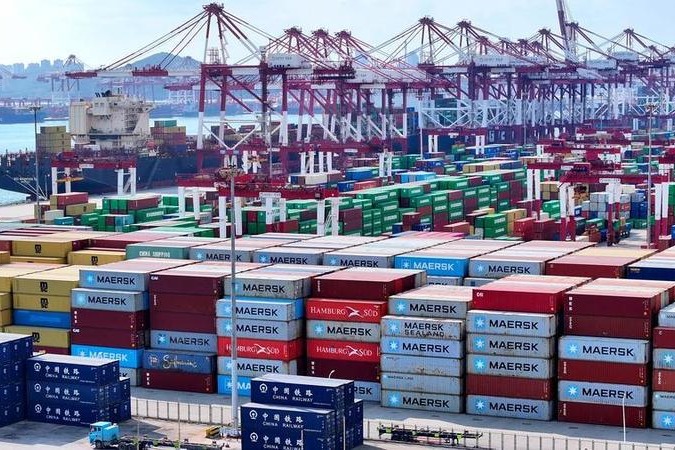
The BRI moves fast across the Asian and African landmasses, as well as the waterways of the Indian Oceans and the Mediterranean. It involves multiple economic corridors all over the planet. It comprehensively connects the Eurasian landmass through huge railway networks spanning Russia, Central Asia and Mongolia to Europe. The BRI also creates a new route to the sea through the CPEC connecting Southeast Asia by land through new railroads going through Laos as well as a route which spans West Asia through Turkiye.
Washington and former colonial powers seem extremely uneasy at the rise of China, apart from China's role in the creation of powerful regional and cross-regional groupings such as BRICS, the Shanghai Cooperation Organization, and support for the African Union. They fear that the Global South would increasingly view China as a successful role model for their economic development. They regard these developments as a threat to their centuries-old geoeconomic and geopolitical global hegemony — more so because China's economic resurgence and rise is unique. It achieved all this while being in full command over its sovereignty, its foreign and domestic policies.
The end of the Cold War generated new hopes for a peaceful global order. It was felt that the world would now single-mindedly focus on addressing issues affecting the welfare of entire humanity, particularly those affecting the countries in the Global South. But it wasn't to be so. Washington abused its unipolar moment and uncontested primacy, as a result of forever wars, particularly after the Sept 11 attacks. There is no need to go into details of Islamophobia and consequent wars and destruction in Iraq, Afghanistan, Libya and Syria. There is lot of talk within the United States and the world on how the US' wars nourish its military-industrial-corporate-political complex.
The revival of polarized geopolitics, great power competition, risky military confrontation have a real danger of escalating into a nuclear war or fights over resources. These geopolitical risks are colliding with complex new challenges such as climate change, pandemics, financial turmoil, global supply chain issues and nuclear proliferation. There is a need to work together on these challenges. The issues of rising and declining powers should not necessarily become a zero-sum game. Multilateralism rather than unilateralism is the best means of finding solutions to the world's increasingly complex problems. In any case, whether we like it or not, the world now lives in a new reality. With lasting shifts in the global economy and technology, the world is moving toward a transformed geopolitical landscape and a much-needed multipolar order which creates due and legitimate space for the Global South. Today, we need more and more economic corridors such as the BRI to bring shared prosperity and civilizations closer and closer.
The author has been ambassador of Pakistan to Russia, the Netherlands, Indonesia and Iraq. He is currently on the Governing Board of the Center for International Strategic Studies Sindh, Karachi, Pakistan. The author contributed this article to China Watch, a think tank powered by China Daily.
Contact the editor at editor@chinawatch.cn