



US inflation and the warnings of Richard Cantillon









Inflation in the US has once again reared its ugly head. The cost of food is skyrocketing. Cities are experiencing large increases in debt, meaning they must offer higher coupon rates to attract future buyers of their bonds. And gasoline prices have been rising for some time.
In an attempt to prop up the economy, the Federal Reserve has been printing dollars for years while keeping interest rates very low. But this posture of "kicking the can down the road" through money printing will only magnify the harm that will explode on the scene later—when the US dollar will be so devalued that no nation will want to buy US Treasury bonds.
So why is it that with each new round of money printing, the average US consumer feels like they are further and further behind? Richard Cantillon (1680-1734), a Dutch economist, offers a simple answer to this very question.
What Cantillon found in his research was that the upper class is always first to receive newly established money—and thereafter the money trickles down to each layer of a nation's social strata so that by the time it reaches the middle and working classes and retirees, it will already have lost significant face value due to inflation at each step of the way.
In the case of the Fed, this means new money will flow directly to big bank executives and their politician friends—and then from there to owners of big business, to officers in those businesses, to small businesses and line and service workers, and finally to retirees and the unemployed. At each step, inflation takes a bite out of the newly printed money.
In other words, Cantillon provides a persuasive argument that each decision by the Federal Fed to print new money will further widen the gap between rich and poor.
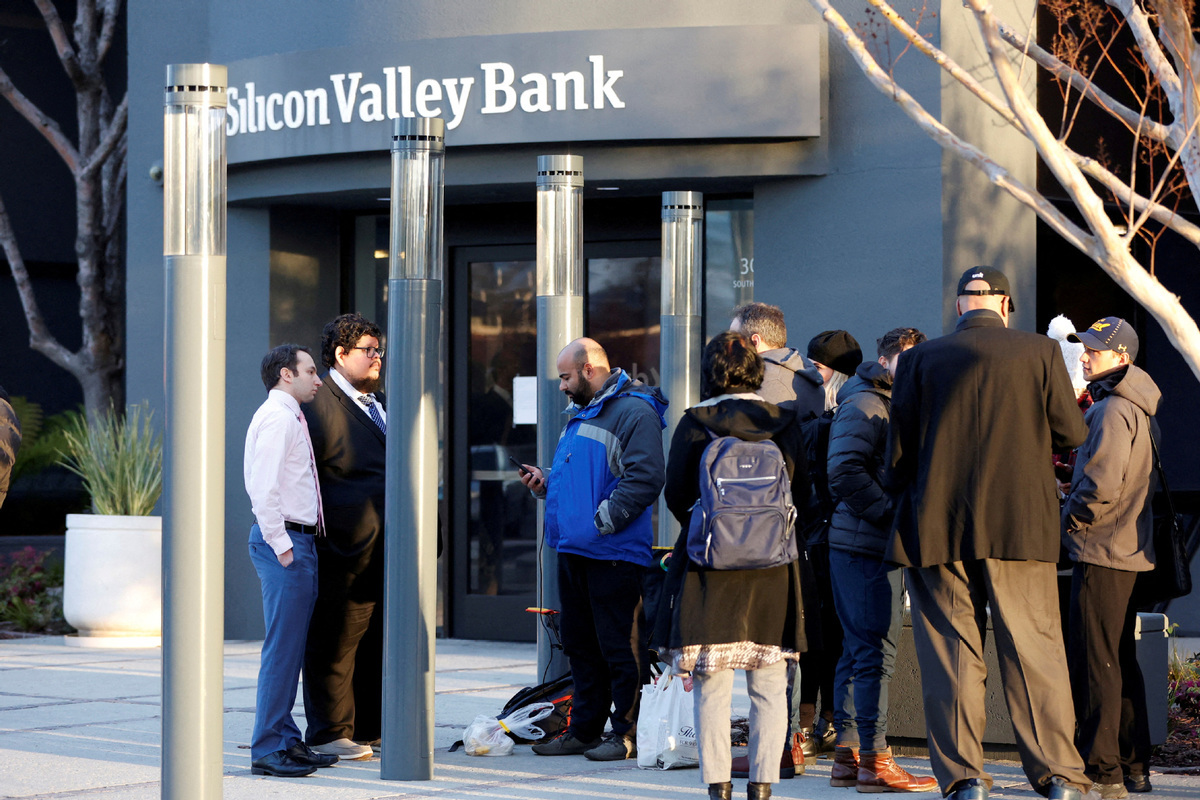
But there is a second cause for concern. The recent failure of Silicon Valley Bank is destined to magnify the harm already being felt by members of the working and middle classes and retirees. The failure of SVB—the second-largest bank failure in US history—will lead the Fed to print large batches of new dollars in an attempt to staunch the bleeding in the banking industry. Financial reverberations from the SVB crisis will then spread quickly to large insurance companies and real estate developers.
In other words, the new money printing by the Fed will not be enough to staunch the bleeding. So just as in 2008-2010, the banks will feel compelled to go to Congress with hat in hand.
Posing the specter of imminent financial collapse, the banks will tell Congress it has no choice but to entertain another massive and immediate "bailout." Despite vociferous voter opposition to a second bailout, Congress will find itself caving in to the banks once again. Simply put, a deep recession or economic depression caused by bank failures will undermine the chances that sitting Congressmen and Senators will be re-elected.
And where would Congress even get the money to pay for this? Either the US government will have to go deeper into debt—which will in turn raise interest rates and further increase the inflation—or it will have to levy higher taxes on US taxpayers to cover that debt. The problem is that since 2008-2010, US taxpayers have become savvy about the tendency of Congress to rescue financial institutions "with an open spigot." Voters are very likely to raise a stink about a second bailout.
So now two sources of harm will be foisted upon US taxpayers due to the present financial crisis: (1) the Fed will print reams of new dollars to flood the system with money, provide limited help to the banks, and trigger inegalitarian inflation that Richard Cantillon once warned us about and (2) Congress will pass legislation awarding the big banks massive bailouts.
Each such action will inflict significant harm on the everyday American, in the first instance from inflation that cheapens their take-home pay while raising their costs of living, and in the second by raising taxes on Americans to pay for another round of bank bailouts.
The author is formerly a law school dean and bank president, is the author of Systemic Collapse and Renewal: How Race and Capital Came to Destroy Meaning and Civility in America and Foreshadow the Coming Economic Depression (Peter Lang Publishing).








