It's US that wants Ukraine crisis to last









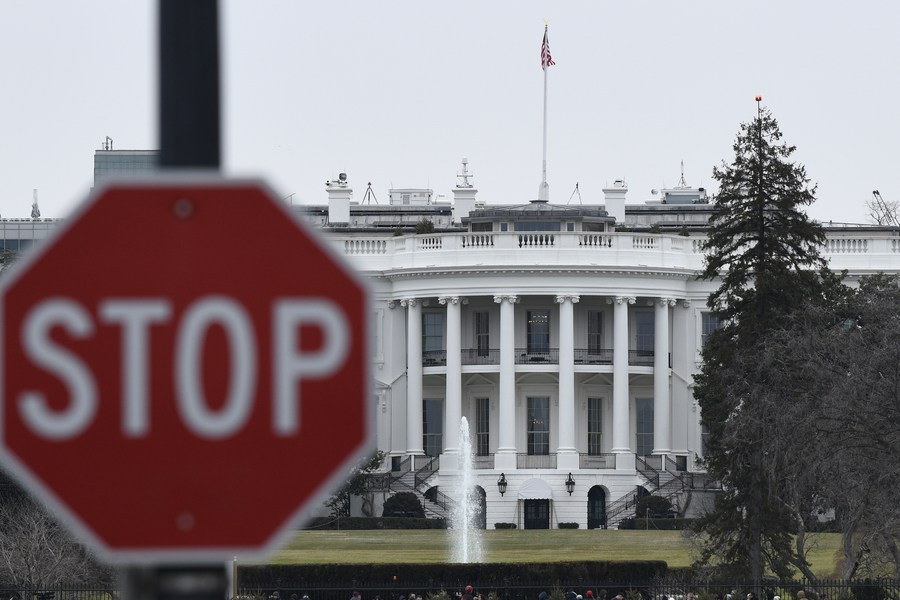
It comes as no surprise at all that on the first anniversary of the Russia-Ukraine military conflict, some Western media outlets and politicians are blaming China for failing to persuade Russia to end the conflict. On Thursday, US Secretary of State Antony Blinken reiterated his contention that Beijing was toying with the idea of providing military support to Russia, which is nothing but a malicious lie.
Instead, in a 12-point paper released on Friday, China has made clear its position on the political settlement of the crisis, including respecting the sovereignty of all countries, resuming peace talks, resolving the humanitarian crisis, protecting civilians and prisoners of war, and keeping nuclear power plants safe.
As China's newly published Global Security Initiative Concept Paper says, "War and sanctions are no fundamental solution to disputes; only dialogue and consultation are effective in resolving differences." So the highest priority of Russia and Ukraine should be to look for a "political settlement" of the conflict through "dialogue and consultation".
However, it's the United States that benefits from a continuing Russia-Ukraine military conflict and wants the crisis to never end.
According to reports in the US media, in less than a year US military and financial aid to Ukraine has exceeded $100 billion, with more on the way. What's more, the US will provide Ukraine an additional $2 billion in security assistance, White House National Security Adviser Jake Sullivan said on Thursday.
Why is the US sparing no effort in its support of Ukraine against Russia?
First, the Russia-Ukraine conflict is helping the US consolidate its transatlantic partnership with the European Union, although EU countries such as Germany and France opposed former US president George Bush's plan to invade Iraq in 2003, and in recent years, European countries have distanced themselves from the US to devise their own trade policy, continue EU-Russia cooperation and take an independent stance on many issues.
The US-EU relationship can be described as lacking in momentum, with the cracks in their ties becoming apparent. By hyping the "Russian threat" rhetoric, the US is projecting itself as an "umbrella" for European countries while trying to resurrect the transatlantic partnership damaged by previous US president Donald Trump's capricious EU policy, in a bid to prevent some EU states from adopting independent foreign policies.
Second, the Russia-Ukraine conflict has helped the US to strengthen its military hegemony, which is essential for it to maintain its global hegemony and military alliances with NATO as the core.
After the disintegration of the Soviet Union, international observers expected NATO, the antithesis of the Warsaw Pact, to be disbanded. But that didn't happen. In recent years, however, NATO has been wracked by controversies and criticism, with some EU countries questioning the functions and the future of the transatlantic military alliance. In fact, Trump’s allegation that EU countries contribute too little to NATO upset the latter so much that French President Emmanuel Macron said in an interview that NATO is "brain dead".
Yet the US has once again succeeded in coercing EU countries to jump on to its war bandwagon and used the West's hatred and fear of Russia, triggered by the conflict, as an excuse for NATO's existence.
Third, the Ukraine crisis has helped the US to stamp its authority on the global energy sector. The shale revolution has transformed the US from a major oil importer to a major oil exporter. But the fall in global oil prices has hit hard US shale gas production, because it is relatively more expensive to extract.
Washington has been using sanctions against Moscow to cut off Russian oil and gas supply to EU countries, so as to end their dependence on Russia for energy. This will have a dual effect. On the one hand it will weaken Russia's economy, as energy export is a big revenue-earner for Moscow. On the other hand, it will allow US energy companies to reap handsome profits by exporting more oil and gas to Europe, possibly at higher prices. As a matter of fact, crude oil shipped from the US to Europe in 2022 was 70 percent higher than the previous year, according to oilprice.com.
Finally, hyping up Russia's so-called aggressive role in the conflict and supporting Ukraine both militarily and strategically will earn the Joe Biden administration a lot of political advantage, notwithstanding the fact that the conflict has proved lucrative for a host of US energy companies and the military-industrial complex, which are the very entities the US politicians are trying to please.
Also, by supporting Ukraine, the politicians can not only say they are "politically correct" but also claim the moral high ground in the name of protecting "freedom", and gain more votes in elections. It is for this reason that the US administration has been openly supporting Ukraine — President Biden even visited Kyiv a few days ago — while playing down more important events like the giant chemical fire and "toxic mushroom cloud" in East Palestine, Ohio, following a railway derailment, which has left residents worried about long-term health consequences.
Whether the US admits it or not, it has benefited enormously from the Russia-Ukraine conflict. This shows the Biden administration's support for Ukraine has nothing to do with defending "freedom" and "democracy", but rather with promoting the US' own interests. However, military assistance will not restore peace in Eurasia, nor will it help safeguard EU countries' security.
The author is a professor at the Shanghai Academy of Social Sciences and a council member of the Shanghai Society of International Relations.
The opinions expressed here are those of the writer and do not necessarily represent the views of China Daily and China Daily website.
If you have a specific expertise, or would like to share your thought about our stories, then send us your writings at opinion@chinadaily.com.cn, and comment@chinadaily.com.cn.