Driving sustainable and inclusive growth









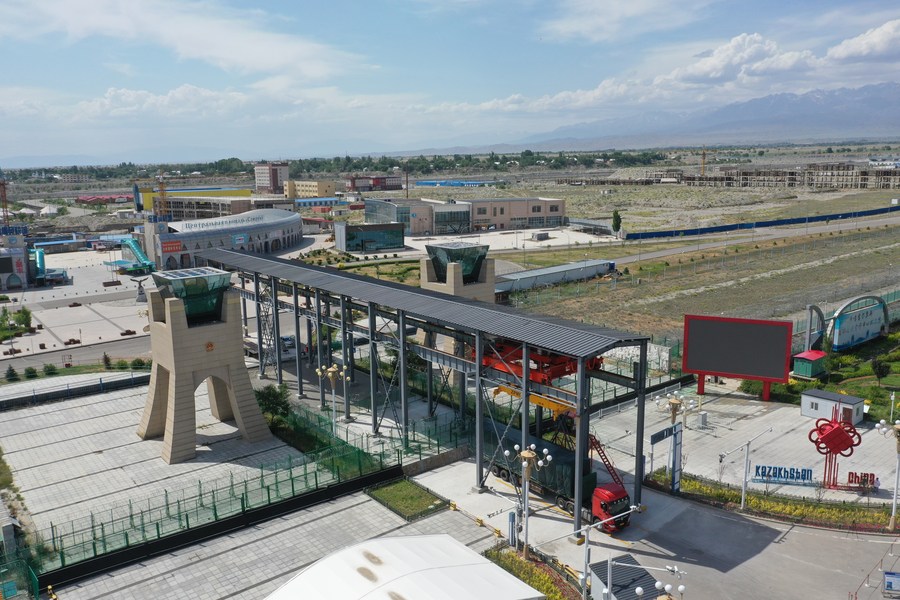
Rapid development in Asia and the Pacific has propelled the region to become a key engine of growth for the global economy, yet this prosperity has not reached everyone. And with the region not on track to achieve the Sustainable Development Goals by 2030, much work lies ahead of us.
As societies chart future paths, there are promising opportunities for driving sustainable and inclusive growth. Countries in Asia and the Pacific will discuss these issues, and more, as they convene this week at a regional United Nations forum on trade, investment, enterprise and business innovation.
Digital trade and the digitalization of trade processes in recent years are opening up new possibilities, facilitating access to new markets, lowering the costs of cross-border transactions, and easing participation in global and regional value chains, on top of reducing carbon emissions from trade and business.
More than ever, digital trade offers a springboard to foreign markets for less advantaged groups within countries. By linking businesses to a wider pool of consumers, e-commerce platforms enable more inclusive participation in the market, particularly for micro, small and medium-sized enterprises, women-owned businesses and those in remote locations. Furthermore, advances in trade facilitation help reduce setup and administrative costs, which can disproportionately impact smaller businesses.
Similarly, as one of the largest sources of financial flows into developing countries, foreign direct investment presents untapped prospects for scaling up projects that contribute to gender equality, empower small businesses and bridge digital divides. Asia and the Pacific has been the leading destination and source of FDI globally since 2020. However, quantity has not necessarily meant quality. Investor practices must shift toward investing for social and environmental impact, beyond investing solely for economic gains.
At the same time, government agencies responsible for investment promotion require support to incorporate and encourage this change in investment behavior. More resources and greater prioritization should be dedicated to attracting and working with foreign partners who focus on people and the planet alongside profit.
Within countries, the emergence of innovative business models such as social enterprises and inclusive businesses is enabling inclusive and sustainable growth. These models tackle social and environmental challenges through their business operations and provide livelihoods, products, and services to those at the base of the economic pyramid. Across the region, governments are also starting to implement supportive policies such as tax incentives and wage subsidies for social entrepreneurs and inclusive businesses, as well as provision of public advisory services and training courses.
In all these efforts, partnership between the public and private sectors is crucial, particularly for infrastructure development in transport, energy and health, which are critical for participation in economic and social spheres. Such public-private partnerships and networks can bring stakeholders together and facilitate much-needed support. Importantly, they can serve as platforms for learning and sharing experiences and best practices in promoting sustainable development and building resilience to shocks such as pandemics and economic crises. Particularly for smaller businesses, which often lack capacity and resources, networks are a valuable avenue for obtaining new knowledge and know-how, seeking technical assistance, and building connections with public and private sector actors.
The benefits of these myriad opportunities will, however, not manifest automatically. Turning potential into reality calls for decisive policy action to foster an enabling environment and to take the necessary steps forward, underpinned by greater commitment, collaboration, and regional cooperation. Together, we can build a more inclusive, resilient and sustainable future for our region.
The author is under-secretary-general of the United Nations and executive secretary of the Economic and Social Commission for Asia and the Pacific. The views don't necessarily reflect those of China Daily.
If you have a specific expertise, or would like to share your thought about our stories, then send us your writings at opinion@chinadaily.com.cn, and comment@chinadaily.com.cn.