Excessive consumer credit not good to boost consumption









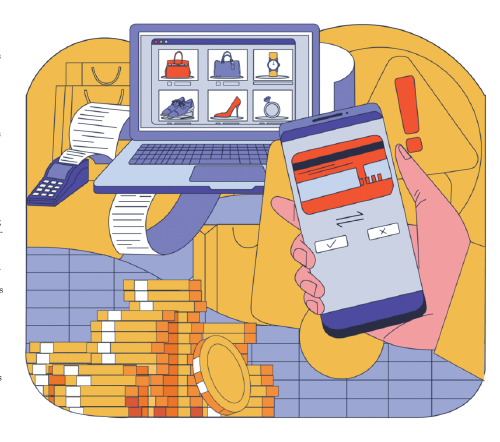
The Central Economic Work Conference which was held in December said that boosting domestic demand will be a key task of the government in 2023, which means the government will take measures to help increase Chinese people's consumption and create favorable conditions for sale of consumer goods.
Given that the global economy is likely to fall into recession this year, weakening external demand could hurt the Chinese economy. Therefore, stimulating consumption is important to promote China's economic recovery. And many claim that developing consumer credit is a good way to expand consumption.
Consumer credit is a financial service provided by both financial and non-financial institutions to help consumers enjoy intertemporal consumption. In recent years, thanks to the popularity of digital technologies such as cloud computing, big data and artificial intelligence, China's digital consumer credit has seen rapid development.
Compared with traditional consumer credit, digital consumer credit has a wider ambit, and can ensure the delivery of consumer credit services to lower-tier markets and effectively allocate credit resources so as to better promote the development of the real economy.
True, consumer credit has played a key role in increasing residents' consumption. But can consumer credit be used to facilitate rapid consumption growth?
As far as the consumer credit mechanism promoting residents' consumption is concerned, its most important role is to support effective intertemporal fund allocation. Consumer credit can provide consumers with funds to maintain their existing consumption level even if their income is insufficient for the time being, because in case a consumer's income declines unexpectedly, consumer credit can supplement that income gap, allowing the consumer to maintain his/her optimal consumption level in accordance with his/her normal income.
But irrespective of the situation, only if consumers repay the credit, for which they have to raise their income in the future, can the increase in consumption due to consumer credit be sustainable. From this perspective, consumer credit is only a tool to ensure intertemporal allocation of funds. The most important factor that can boost consumption is increased incomes of residents.
In the long run, however, excessive consumer credit will crowd out the funds needed for real investment, while insufficient investment could inhibit consumption growth if residents' incomes do not increase.
More important, international experience shows that consumption supported by consumer credit is full of risks. The "credit card" crises in Japan and the Republic of Korea, and the subprime mortgage crisis in the United States all reflect that rapid development of consumer credit, especially short-term consumer credit, cannot ensure the sustainable growth of consumption. Instead, it could cause serious negative impacts on the entire economy.
Personal consumer credit services such as digital consumer credit and credit payment are related to a wide variety of consumption scenarios, and risks such as excess debt and irrational consumption cannot be ignored. Also, since individual consumer credit institutions pursue profits when promoting consumer credit products and services, they can at times induce consumers to spend beyond their means.
For young people and low-income groups, once they form the habit of relying on credit consumption to maintain their consumption level, they can be over-burdened with debt within a relatively short time.
As an important tool to encourage consumption and inject new vitality into the consumer market, moderate consumer credit can better release the consumption potential of residents. On the other hand, excessive consumer credit may prevent the smooth, sustainable growth of consumption, and slow macroeconomic development.
Thus balancing the relationship between boosting consumption and controlling risks is essential for consumer credit to play a positive role in the economy. So measures need to be taken to promote the healthy development of consumer credit.
It is also necessary to establish an effective mechanism for consumer credit self-compensation and a system to punish people for dishonesty and cheating, and help consumers enhance their knowledge about "responsible lending".
As for consumer credit institutions, they should ensure that the consumer credit products and services they provide are well within the repayment capability of the consumers. They can also use cloud computing, big data, artificial intelligence and other digital technologies to get a more accurate idea of the real economic condition of the consumers, improve the applicability and accuracy of credit services, and further reduce the risks associated with credit funds.
And consumers should honestly evaluate their own economic condition, how much credit they can repay, and make efforts to increase their incomes and reduce expenditure. In short, they should rationally use the intertemporal allocation of consumer credit, and refrain from blind borrowing and blind consumption.
The author is vice-president of Central University of Finance and Economics. The views don't necessarily represent those of China Daily.
If you have a specific expertise, or would like to share your thought about our stories, then send us your writings at opinion@chinadaily.com.cn, and comment@chinadaily.com.cn.