Military diplomacy aims to help sustain international peace









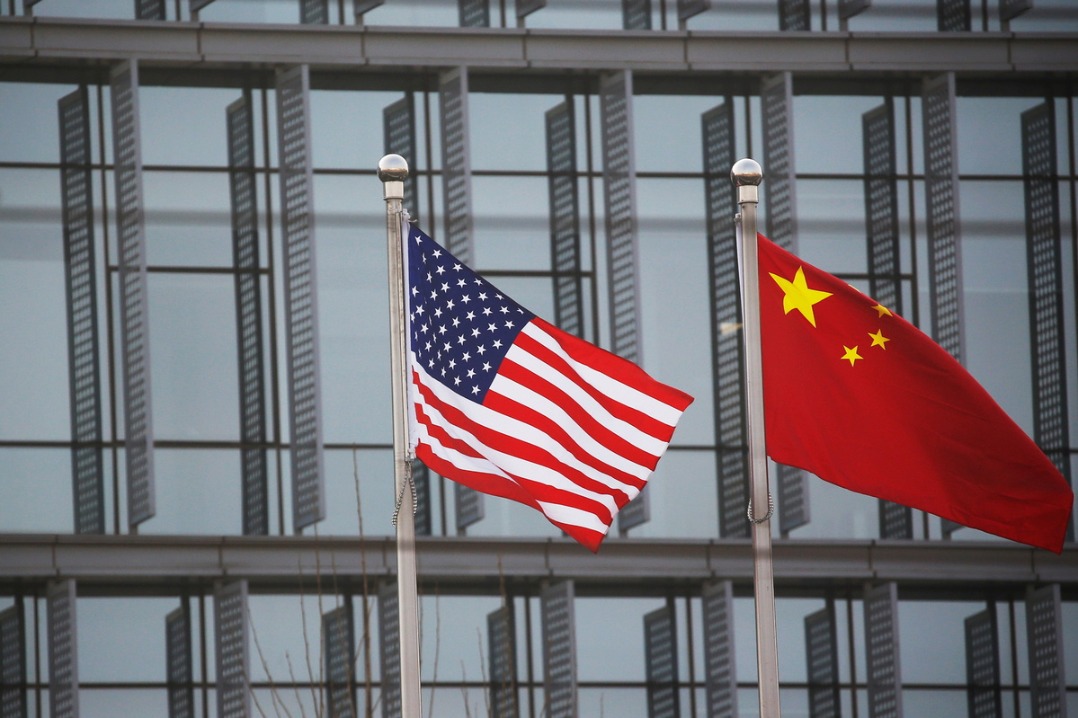
China's military diplomacy has made remarkable progress since the 18th National Congress of the Communist Party of China in 2012 because of the arduous efforts of the country's leadership, the use of innovative means and implementation of reforms. However, the challenges for China's military diplomacy have increased due to the Cold War mentality of the United States and its allies, which has driven them to label China as a strategic competitor.
First, the upgrading of military diplomacy and traditional statecraft in an effort to make them more proactive has helped China to establish military-to-military relations with other countries and reshape its security environment.
Second, through military diplomacy, the Chinese armed forces have increased interactions and exchanges, deepened cooperation, and held training and drills with their counterparts from other countries with the aim of building a community with a shared future for mankind.
Third, China has expanded military-to-military communication, by extending exchanges and interactions from that between high-ranking military officers to junior officers and soldiers, consolidating the foundation of military diplomacy.
Fourth, China has strived to strike a balance between safeguarding national security interests and cooperating with international military and security mechanisms, with increasing efforts to protect mutual interests and deepen mutual understanding and trust which have helped it deepen cooperation with other countries.
And fifth, China has not only maintained bilateral military ties but also established multilateral military ties, by creating military cooperation networks to boost regional security.
The comprehensively improved military diplomatic practices have promoted China's overall diplomacy and helped it to better safeguard national security, maintain world peace and strengthen international security cooperation.
While the effectiveness of military diplomacy has improved, defense and security consultation mechanisms have been established and security dialogue platforms such as the Beijing Xiangshan Forum upgraded, military exchanges and joint training programs have increased from year to year, and military-to-military cooperation with other developing countries has deepened. Also, China has been participating in more and more diverse dialogues and cooperation mechanisms, as well as United Nations peacekeeping operations.
However, the "China threat" theory bandied about by the US-led West has been disrupting the progress of China's military diplomacy. The West, the US in particular, claims China is modernizing its armed forces to expand its domination across the world and establish hegemony. Such unfounded allegations have had a severe impact on China's efforts to promote mutual trust and win-win cooperation with other countries.
And the lack of mutual trust has resulted in rising confrontations, fuelling the Cold War mentality of some Western politicians and media. The US-led West's provocative moves against Beijing including interference in the Taiwan question, which is an internal matter of China, pose a serious threat to China's sovereignty and territorial integrity, and heighten the fear of military conflict.
Besides, the fact that China has to shoulder excessive international responsibilities is a burden on its military diplomacy. The US hyping up the "China threat" theory and asking it to fulfill more "international responsibilities" are two sides of the same coin, with both aimed at debilitating China.
The US has also been spreading rumors about China disobeying international rules and norms since the Barack Obama administration took office, leading to the weakening of China's soft power. The fact is, the "rule-based international order" the US talks about is actually a US-led international order based on US rules that obviously are meant to favor the US and its allies. And if China disagrees with them, it is branded a strategic competitor, a rival, even an enemy and a potent threat.
Even though China is committed to a national defense policy that is defensive in nature, has been reiterating it over the years and has proved it through its actions, the US-led West continues to question China's military transparency and criticize its military diplomacy. Yet no country's defense policy is absolutely transparent.
Moreover, rising nationalism and populism around the world have put additional pressure on China's military diplomacy.
Nationalism is a double-edged sword. While healthy nationalism reflects the rationality and confidence of a country's people, narrow-minded nationalism can lead people toward conservatism and xenophobia.
As such, China should accord more importance to military diplomacy's role, and overcome the challenges, as it is an important way of promoting the soft power of a country's military.
China should use military diplomacy to maintain global peace, by developing it into a channel to make friends, a platform to dispel doubts and enhance mutual trust, a bridge for technological communication, and a means to safeguard the country's sovereignty, territorial integrity and social development, as well as promote the modernization of the armed forces, so it can contribute more to world peace, stability and security.
The views don't necessarily represent those of China Daily.
The author is the director of the academic council of, and a senior research fellow at, the Shanghai Centre for RimPac Strategic and International Studies.
If you have a specific expertise, or would like to share your thought about our stories, then send us your writings at opinion@chinadaily.com.cn, and comment@chinadaily.com.cn.