Inner strength










China's economic recovery is expected to continue in 2022, with the driving force shifting to domestic demand
The global economy started to recover from the major impacts of the COVID-19 pandemic in 2021. China was among the first economies to resume domestic production thanks to effective pandemic control. It was the only major economy to register positive economic growth last year, and it has maintained the momentum of recovery this year. However, while China's foreign trade registered robust growth in 2021, its domestic demand has remained weak.
As China's economy continues to improve, the macroeconomic policies that were loose during the pandemic have been tightened. As a result, the two-year average growth of fiscal expenditure in the first three quarters of this year fell to 0.2 percent, lower than the average in previous years. In the same period, the public fiscal deficit totaled 1.5 trillion yuan ($235 billion), a significant drop from the previous two years, reflecting weaker fiscal support.
Meanwhile, growth of broad money (M2) and social financing has also slowed significantly. The government has stepped up the supervision of sectors such as real estate, extracurricular tutoring, platform companies and industries with high energy consumption. The growth rates of infrastructure and real estate investment have dropped. In the second half of the year, China's growth momentum has slowed.
Looking ahead, China's economic recovery is expected to continue next year, with the driving force shifting from external factors to domestic demand. China's GDP is expected to grow by 8 percent this year and 5.2 percent next year.
China's exports have maintained rapid growth in 2021, reaching $2.7 trillion in the first 10 months of this year, surpassing the total for 2020.China's exports are mainly driven by electrical devices and machinery, which accounted for 24.4 percent and 13.6 percent of exports during that period, respectively.
The global economic recovery in 2022 should strengthen enterprises' willingness for capital goods investment and support China's exports. With the COVID-19 vaccination rate still relatively low and production gradually recovering in some emerging economies, China is expected to continue to play an important role in global exports. However, the insufficiency of containers, port congestion and high shipping costs have put pressure on China's exports. As consumption recovery in developed economies shifts from goods to services, China's exports are expected to remain robust but the growth rate will slow in 2022.
Meanwhile, China's coal and natural gas imports are expected to increase due to the increased energy demand in autumn and winter and production restrictions to meet the country's carbon peaking and neutrality goals.
The pandemic has affected the implementation of the first phase of the China-US trade deal. Our research shows that China had met around 56 percent of its goods import target in the deal by October. During a meeting via video link on Nov 16, the leaders of both countries discussed ways to improve economic and trade relations. China's imports will continue to increase next year.
Investment in technological innovation and green transformation of the manufacturing industry will rise. In the first 10 months of 2021, the profits of industrial enterprises above designated size with annual business revenues of at least 20 million yuan increased by 42.2 percent year-on-year, higher than the pre-pandemic level.
The high utilization rate of China's industrial capacity has increased the willingness of enterprises to invest. The 14th Five-Year Plan (2021-25) promotes green, intelligent and high-end manufacturing. Financial institutions have also strengthened support for the real economy by increasing the proportion of medium- to long-term loans to manufacturing industries, increasing credit for emerging industries and supporting equipment upgrade and technological transformation. In recent years, investment in China's high-tech manufacturing industry has maintained more than 10 percent of year-on-year growth, significantly higher than in the overall manufacturing industry.
The newly established Beijing Stock Exchange will also focus on providing better financing support for innovation-oriented small and medium-sized enterprises.
The central bank launched a new monetary tool in November to support financial institutions issuing loans to help enterprises boost the development of clean energy and carbon emissions reduction technologies. It has set aside another 200 billion yuan of refinancing to support the clean and efficient use of coal. China's major power suppliers have also increased investment in hydropower, nuclear power and wind power. The share of renewable energy in total power investment has increased from 63 percent in 2011 to nearly 80 percent so far, outpacing the growth of investment in thermal power.
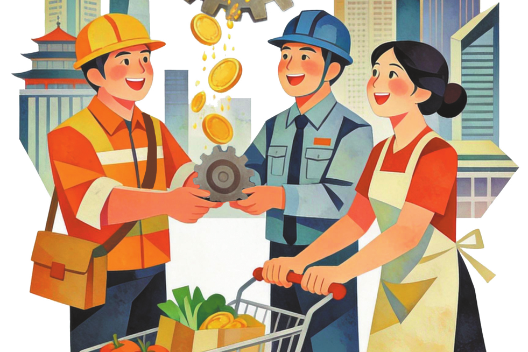
Because of the pandemic, consumption, especially offline shopping, has recovered slowly and residents' shopping willingness has not returned to the pre-pandemic level. Although China's consumption recovery will still be affected by pandemic containment in the short term, its large market and improving incomes have laid solid foundations for consumption recovery. From January to October this year, China created 11.33 million new urban jobs, completing the annual target of creating 11 million new jobs ahead of schedule. The urban surveyed unemployment rate has dropped and residents' incomes have improved, which can support consumption recovery next year. From a long-term perspective, the advance of China's urbanization, common prosperity and promotion of social welfare such as pensions and medical insurance will boost domestic consumption and make it a major driving force for economic growth.
China's new homegrown brands have risen rapidly amid the consumption recovery. Cost-effective homegrown products with high quality, fine appearances and personalized design have caught the fancy of Generation Z consumers. A survey shows that Chinese consumers give three times the attention to domestic brands than they do foreign brands. During this year's Nov 11 online shopping spree, Chinese clothing, cosmetics and baby care products registered high sales. Emerging Chinese brands are becoming a new driving force for domestic consumption.
The author is chief economist of KPMG China. The author contributed this article to China Watch, a think tank powered by China Daily. The views do not necessarily reflect those of China Daily.