All systems go










China should seek to improve its existing development cooperation mechanisms with the RCEP members to help ensure smooth implementation of the agreement
When the Regional Comprehensive Economic Partnership agreement, the world's largest free trade agreement, comes into effect on Jan 1, it is expected to boost regional cooperation worldwide and provide developing countries a platform to engage in the reshaping of the global trading system.
However, the disparities among the member states should be factored in when promoting facilitation and liberalization of trade and investment.
The China-Indochina Peninsula Economic Corridor passes through eight countries-China, Myanmar, Thailand, Vietnam, Cambodia, Malaysia, Laos and Singapore. Some countries along this corridor are economically underdeveloped and have poor infrastructure. China is supporting these countries' capacity building through development cooperation.
The Kyaukpyu deep-water port in Myanmar, the China-Myanmar railway, and China-Myanmar expressway are some of the key projects supported by China to drive local development. Linking Laos with its neighboring countries, the China-Laos railway, an important section of the pan-Asia railway network, is a project of historical significance. In addition, China-invested economic and trade cooperation zones on the Indo-China Peninsula are also contributing to improving local industrial systems and people's livelihoods.
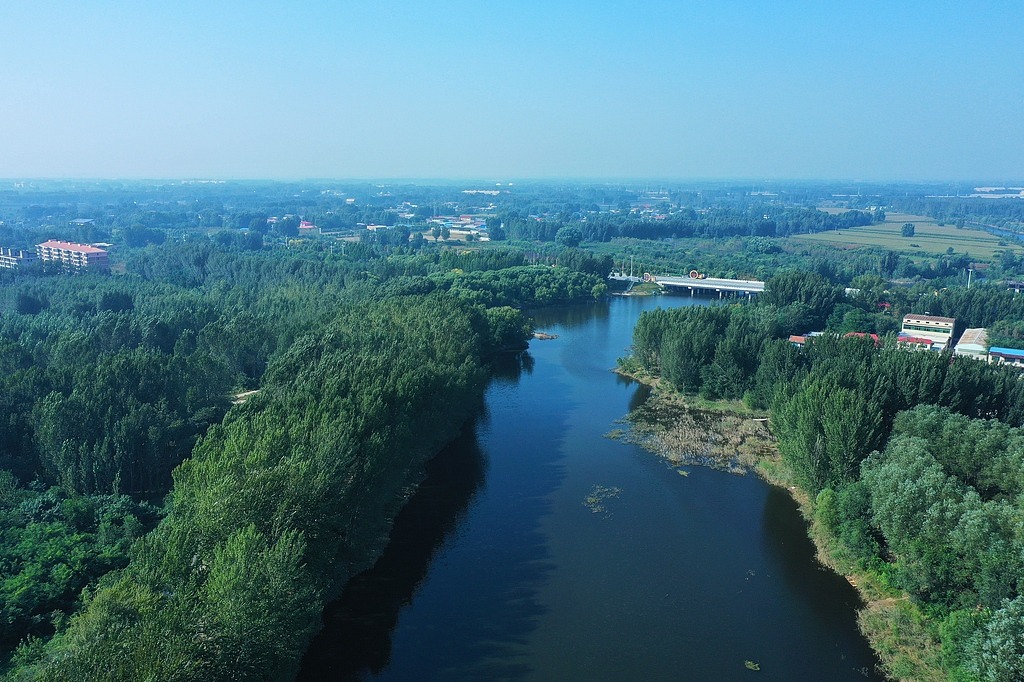
The Lancang-Mekong Cooperation mechanism, which involves China, Vietnam, Myanmar, Cambodia, Laos and Thailand, is a sub-regional partnership proposed by China. It has yielded notable results since being established. So far, China has helped construct more than 40 major projects, including the Siem Reap New International Airport in Cambodia.
China has also taken the lead in sharing its flood-season hydrological data on the Lancang River, the upper section of the Mekong River that flows through China, with five downstream countries.
China has provided training sessions in health and education for more than 40,000 people through over 400 programs. In the first half of 2020, China's trade with countries in the Mekong River basin area weathered the storm of the COVID-19 pandemic, increasing by 8.7 percent year-on-year in volume, while investment in the region rose by 33.5 percent. In 2020, China's trade volume with the five countries along the Mekong River reached $332.1 billion, up 66.3 percent compared with 2015.
On the flip side, while both the China-Indochina Peninsula Economic Corridor and the Lancang-Mekong Cooperation mechanism are designed to promote sustainable development of regional countries, the two platforms operate separately with some overlapping functions. As the two platforms are supervised by different government departments in China, and there is no alignment between them, there is inefficient use of resources in regional cooperation, hindering effective cooperation between China and the other RCEP member states.
Here are a few suggestions for China to promote development cooperation among the RCEP members.
The Lancang-Mekong Cooperation mechanism, which is intended to build a community with a shared future for Lancang-Mekong countries, should focus more on international development assistance cooperation, so that it will have a positive outcome on follow-up negotiations on the RCEP agreement.
The China-Indochina Peninsula Economic Corridor should enhance connectivity building and put infrastructure construction high on the agenda through preferential investment cooperation. Countries such as Myanmar, Laos and Vietnam still require large amounts of investment for infrastructure.
To welcome more third-party cooperation, Japan, the Republic of Korea and Singapore can provide public goods in international development cooperation and China needs to win recognition and support from these economic powerhouses to promote the RCEP's integration. Since Japan and the ROK have gradually retreated from international cooperation in recent years, a new cooperation model should be created to encourage the two countries to proactively participate in development cooperation with a larger scale and wider influence.
Third-party market cooperation has gained traction in recent years as it can lower the overall risks for each participant. China and Japan have already begun cooperation in third-party markets. For example, they have joined hands with Thailand to launch a development project in the East Thailand Economic Corridor. China can also combine the strength of Japan in advanced engineering, the edge of the ROK in chemical industry and the experience of Singapore in urban management to promote international cooperation among the RCEP countries.
To explore international cooperation patterns in China's border areas, the Guangxi Zhuang autonomous region and Yunnan province, as the two provincial-level regions that have the longest land border with other RCEP countries, received approval to build pilot free trade zones in 2019. The idea behind the two pilot free trade zones is to forge close partnerships with China's neighboring countries.
Once the RCEP comes into effect, Guangxi and Yunnan will give more attention to the markets of other RCEP countries. This year, they released blueprints on facilitating RCEP cooperation, drawing up solid action plans for cross-border trade and industrial cooperation.
With the RCEP all set to come into effect soon, Guangxi and Yunnan could take advantage of their own strengths as pilot free trade zones to tap the potential of regional cooperation, and explore new models of cross-border collaboration. As their preliminary cooperation, they could offer education and training assistance to other RCEP countries to boost their trade and economic cooperation capacity, help improve their business environments, and smooth the trade cooperation between China and other RCEP countries. This would help China gain experience in promoting an equitable and fair global trading system.
The author is a research fellow at the Chinese Academy of International Trade and Economic Cooperation. The author contributed this article to China Watch, a think tank powered by China Daily. The views do not necessarily reflect those of China Daily.