First online premiere shakes film industry









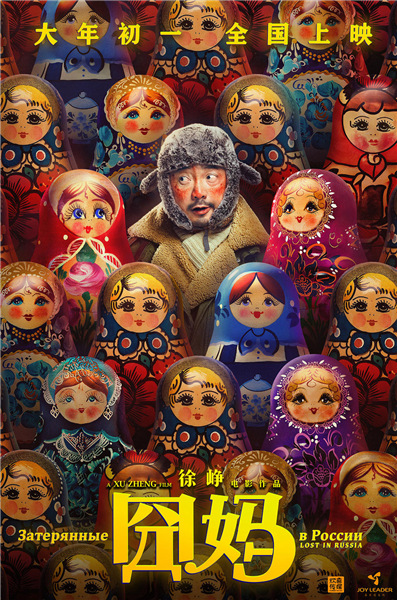
On Jan 23, it was announced that seven movies scheduled for release during the Chinese New Year holiday were to be pulled from cinemas because of the novel coronavirus outbreak. However, just one day later, on the eve of the lunar New Year, some domestic online platforms, such as Douyin (the Chinese version of TikTok), Ixigua Video, Toutiao and Huanxi Media, announced that one of the seven films, Lost in Russia, would be available for viewing at midnight on the first day of the New Year, free of charge.
In the afternoon of the same day, the film industry of Zhejiang province issued a statement, saying that the online premiering of Lost in Russia bypassing the theater channel was dishonest behavior that broke the industry's basic rules and would bring great losses to cinema chains. Most of the Chinese cinema chains even jointly raised an "urgent request" to the authorities asking for a regulation to put an end to any online premiering.
The cinema chains lashed out at the online premiering of Lost in Russia claiming that not only would it damage their own economic interests, it would also violate the industry rules and be detrimental to the development of the film industry as a whole. However, as far as the law is concerned, this is at most a civil dispute between the two parties to the contract, and a third party has no standing to claim an interest, let alone the right to request the film regulators to urgently "put an end" to this activity. Unless a contract has been broken, the law does not take sides, nor does it guarantee that every market player can make money.
To fully understand this dispute, we need to look at it from outside the perspective of existing interests and focus on the future development of the film industry from the perspective of open market and fair competition. This touches on the key issue of this dispute: the cinema chains play a dominant role in the entire movie distribution and exhibition system in China.
The cinema channel is the core channel for China's film industry and has been in place for nearly two decades, and the online showing of Lost in Russia bypassing traditional theaters has threatened a core regime that has guaranteed the interests of cinemas over the past years.
But while cinemas are currently the primary distribution and exhibition channel for the Chinese film industry, this has not always been the case. It is a product of the reform of China's film management system in late 2001. The reform in this direction reflects the basic model of Chinese film industry, in which the construction of theaters dominated by the large cinema chains has driven the growth of the film market and the development of upstream and middle-stream industries by expanding the downstream industry chain.
The cinema chain regime is based on the licensing of film distributors and exhibitors, who thus have an influential say on the whole film industry. This is especially reflected in the profit ratio between the film producers and the cinema chains. The film producers would like to negotiate with the cinema chains to improve their profit margins, but the established profit distribution model does not allow them to do so, and has remained basically unchanged.
As far as legal regulations and industry norms are concerned, there is no specific rule that a movie is only allowed to be released in theaters or can be legally premiered online. Cinema chains want to maintain and consolidate the established order between cinemas and other distribution channels so that audiences pay money at the box office. But the legal status of the online premiere by the online platform companies is still uncertain.
China's leading internet companies have already disrupted many industries, including the film industry. In the past, internet technology enterprises were involved in the film industry in the upper-and middle-stream of the industry chain. The great significance of the film Lost in Russial lies in that it is directly connected to the downstream of the industry, thus having a subversive impact on the cinema release system. The Lost in Russia incident completely exposes the structural imbalance of the profit sharing under the current cinema-led distribution system.
This event is not only a crisis for the Chinese cinema chains, but also touches the key interests of the worldwide film industry. If it leads to online premieres becoming more popular and clearly legal in China, the war Netflix is fighting against AMC, Regal, and Cinemark may have a new frontier in the US as well.
The author is a professor of Peking University Law School.