Complete national reunification a historical reality









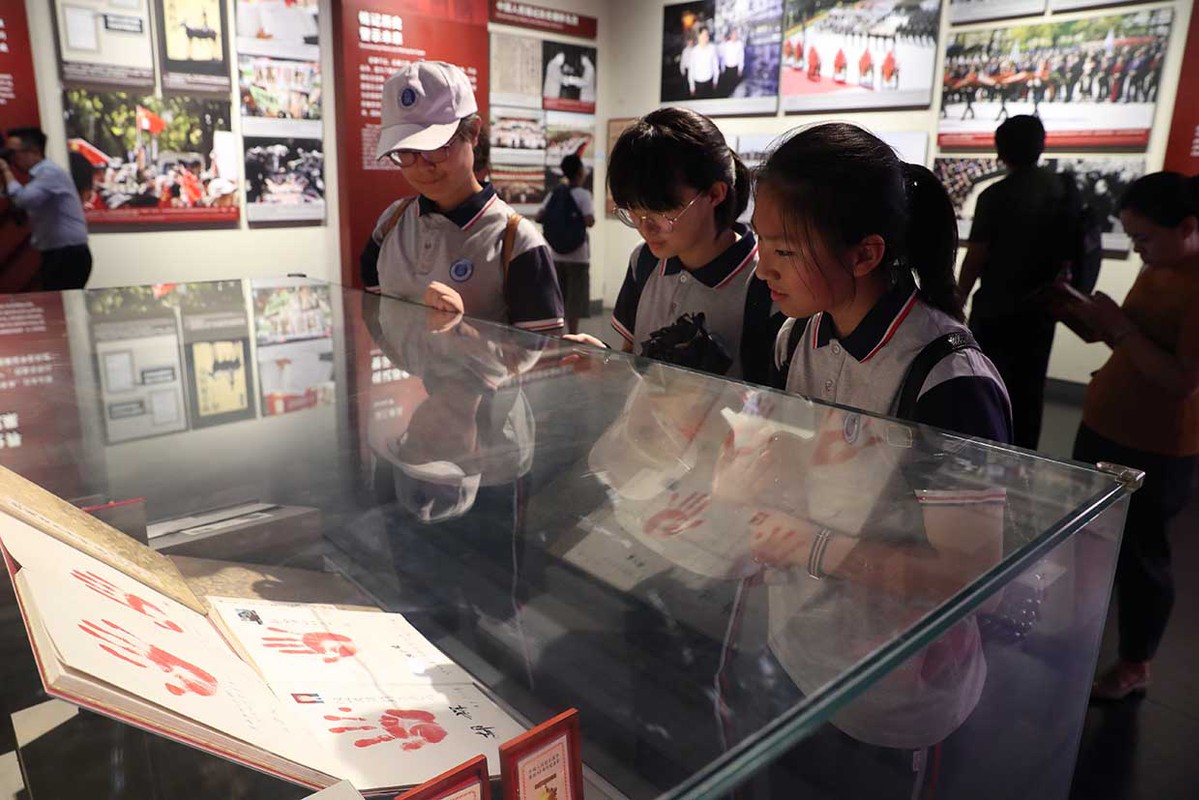
Taiwan was under Japanese occupation from 1895 until Japan surrendered to the Allied forces in 1945 which ended World War II. Yet the island's reunification with the motherland didn't last long as the Kuomintang leadership fled to the island when the Communist Party of China defeated Kuomintang in the civil war in 1949.
Henceforth, due to some political factors including foreign intervention in China's internal affairs, the island has remained separated from the motherland. For 70 years, Beijing has made the complete reunification of the Chinese nation one of its principal tasks.
Thanks to the untiring efforts of all compatriots, including those across the Taiwan Straits, the country has made great achievements on the economic, social and political fronts. And the Chinese mainland has become the world's second-largest economy and cross-Straits relations have made major breakthroughs in peaceful development.
First, the mainland and Taiwan have established fruitful economic relations, and during the rule of Kuomintang leader Ma Ying-jeou on the island from 2008 to 2016, the two sides deepened cross-Straits relations by establishing "three direct links" for mail, trade and transportation.
Second, Taiwan accepted the 1992 Consensus that there is only one China and started political negotiations with the mainland, which expanded trade, political and people-to-people exchanges. Cross-Straits relations reached a new height when the leaders from the two sides met in Singapore in 2015 for the first time since 1949.
Third, the mainland propounded the "one country, two systems" principle for the peaceful reunification of the Chinese nation, which among other things boosted cross-Straits ties and prompted compatriots on both sides to make efforts for national rejuvenation in the new era.
Fourth, the one-China principle has won increasing support from the international community, helping Beijing to thwart the designs of the "pro-independence" forces on the island.
That the two sides of the Straits are part of one China is a fact that even the United Nations and the international community unconditionally accept. It's a fact that cannot be changed by any force. It's a fact that will facilitate the peaceful reunification of the Chinese nation.
But if cross-Straits ties turn sour, outside forces will exploit it to fulfill their ulterior motives and create obstacles for China's peaceful rise and national rejuvenation. So compatriots on both sides of the Straits should work together to achieve national reunification, in order to heal the historical wound of the Chinese nation.
Complete national reunification is in the best interest of people on both sides of the Straits, especially compatriots on the island. Given the mainland's rapid economic growth and increasing prosperity, the island too will enjoy lasting peace and prosperity, and wider international space after national reunification.
Besides, "one country, two systems" is the best tool to realize complete national reunification. Compared with using force to reunite the nation, peaceful national reunification will not only help maintain national sovereignty and security, but also avoid unnecessary chaos caused by possible conflicts.
Also, "one country, two systems" allows the socialist and capitalist systems to co-exist in the same country, and therefore will help the two sides to learn from each other, ensuring the interests of compatriots on both sides of the Straits are protected.
Compatriots on both sides of the Straits should follow the historical trend and work together to strengthen cross-Straits relations and thus facilitate peaceful reunification. If the two sides pursue peaceful reunification and the island accepts "one country, two systems", they can foil the attempts of the outside forces to split the country and instead promote the integrative development of the mainland and Taiwan and end the political confrontation between the two sides.
The author is the deputy director of the Taiwan Research Center, Xiamen University. The views don't necessarily represent those of China Daily.