Next year must be one of deepening reforms









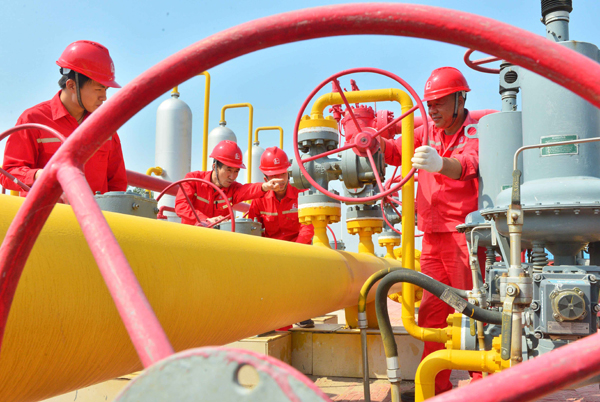
China's economy gathered strength in 2017, with one of the drivers of growth being exports which took advantage of surging global trade. The other driver was domestic consumption boosted by buoyant job creation and rising incomes.
Xiao ayi, or aunt surnamed Xiao, works for my family-two overworked parents and a toddler-in Beijing. She is 46, married and has a daughter who is a university student. Asked what went well for her in 2017, she cheerfully replied: "I recently took up a new job. My 3-year old charge and I get along just great. Oh, and my salary went up by 10 percent!"
Almost 11 million new urban jobs were created between January and September this year, compared with 10.7 million during the same period last year. Growth in household incomes, both in urban and rural areas, picked up and it is once again faster than the growth rate of the overall economy. This means more income was in the hands of consumers than investors, and the transition toward more consumption-led growth has regained momentum.
Amid the favorable domestic and international economic environment, the authorities made substantial progress on important reforms. These include efforts to reduce excess capacity and to better enforce environmental standards. And fiscal and financial reforms were implemented to contain financial sector risks.
If 2017 was characterized by economic resilience and regaining of reform momentum in China, what about next year?
The World Bank forecasts 6.4 percent growth in 2018, when household consumption will remain the driving force of the economy. Certain important policies, such as continued efforts to restructure the economy and to rein in credit growth, are expected to weigh on investment.
Slightly slower growth in the near term would help China avoid more significant economic pain later. For example, high debt levels imply a large burden of future interest payments, which may reduce companies' incentives to invest and grow. This is why limiting debt accumulation is rightly a key government priority.
In response to policy and regulatory measures, credit growth began to slow down this passing year. Nevertheless, debt continues to grow considerably faster than output, and total credit to the non-financial sector, including government debt, was 242 percent of GDP last month, about 100 percent higher than before the global financial crisis.
What would it take for China to sustain robust and inclusive growth beyond 2018?
While sharing the benefits of growth with everyone is one of the twin goals of the World Bank, it was also emphasized at the 19th National Congress of the Communist Party of China in October. And it would be encouraging to see the policy agenda emphasize the quality, not quantity, of economic growth.
One such reform is improving local governments' finances as part of the ongoing effort to modernize China's fiscal system. A successful implementation of the budget reform would help overcome the challenge of large debt, and allow available investment resources to be used more productively.
Another area of reform is the pension system. Past policies were effective in increasing participation to a relatively high level by international standards. However, if a worker pays pension premiums in one province, in practice she or he finds it difficult to transfer the pension rights to another. Benefits for most beneficiaries are also not adequate to cover the cost of living. These and other challenges are well understood by policymakers.
Xiao ayi admits she doesn't know much about government finances. But she is clear about what she would do with her salary increase: "I would save it." Why? Her life is much better today than it was in the past. But she worries about her future income. She is saving for retirement. She is also concerned about healthcare expenses. Her father-in-law got sick recently and his medical bill was rather high.
The World Bank expects economic conditions, both at home and abroad, to remain favorable next year, and the world economic recovery is firmly underway, offering China's authorities the right conditions for accelerating reforms.
The author is a senior economist with the World Bank.