



BRI has led to common growth, not debt trap









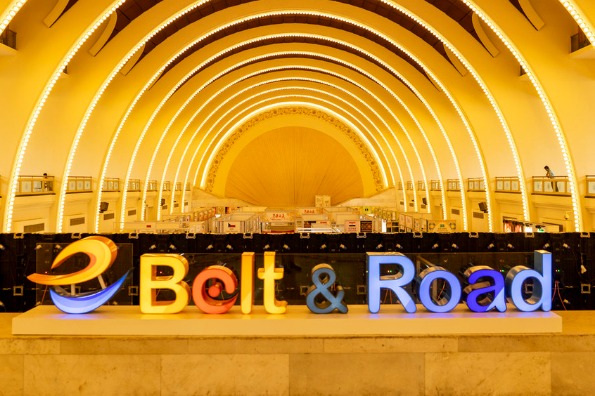
Ever since its launch 10 years ago, the Belt and Road Initiative has been widely welcomed by the global community as a bridge that supports international cooperation. Yet, there have also been baseless accusations that BRI projects lead to debt traps for its participants. This is merely a misperception, and has damaged the reputation and high-quality development of the program.
Boon for all
In fact, there have been few serious, research-based proofs that verify the Western narratives. Most of these are a result of the politicization of economic issues by scholars, government officials, think tanks and media outlets from countries such as India, the United States and Australia.
For instance, Indian scholar Brahma Chellaney published an article in January 2017 saying that China was pursuing a policy of "debt-trap diplomacy" through the BRI. In the narrative, China was pictured as an insidious lender that ensnares developing countries in unsustainable debt and attempts to take advantage of their military and natural resources when these countries are unable to repay their debts.
Such attempts at politicization have been strongly refuted by various parties.
Apart from the Ministry of Foreign Affairs and Chinese scholars, leaders and officials from a slew of BRI participating countries have publicly rebuffed the fallacious claims regarding China's "debt-trap diplomacy". Some US scholars and think tanks have also published reports based on thorough research data to refute these groundless accusations.
Deborah Brautigam, a professor of political economy at Johns Hopkins University in the United States, has used the example of Montenegro, Kenya and Zambia, among others, to prove that some Western media outlets had vigorously propagated the debt-trap narrative without supporting evidence.
RAND Corp, a renowned US think tank, has also published a research report saying that railway connectivity as a result of the BRI has led to a 2.8 percent increase in exports for countries involved in the initiative.
Besides, various studies have shown that transportation infrastructure projects under the BRI have reduced logistics time by an average 1.2 percent to 2.5 percent in the surveyed countries, lowered global trade costs by 1.1 percent to 2.2 percent, and contributed to a global income increase of 0.7 percent to 2.9 percent. These findings are solid proof of the positive economic effects of Chinese investments in recipient countries as a result of the BRI.
More opportunities
Through extensive research on the so-called "debt-trap diplomacy", we have found that the BRI has led to opportunities and common growth, rather than a trap, for the participating economies, and some unique phenomena have resulted from the initiative.
First, some of the political figures who sensationalized the "debt-trap "myth in countries involved in the BRI have eventually opted to strengthen cooperation with China.
Quite a few opposition parties in countries involved in the BRI had employed the debt-trap diplomacy rhetoric as a political tool in their election campaigns to challenge political rivals in order to garner votes. However, they have swiftly turned to China for loans and investments once they took power.
Second, China has focused on bringing long-term economic benefits to recipients when it invests in countries involved in the BRI. There have been frequent power shifts in many Western countries, where the new governments often fail to honor agreements signed by their predecessors. In contrast, China has been consistently committed to its cooperation agreements with recipient countries, especially those concerning infrastructure investments despite their long payback cycles.
For instance, according to Indonesian official estimates, the Jakarta-Bandung High-Speed Railway built by China at a cost of about $8 billion is projected to generate over $23.1 billion in revenue over the next 40 years. This not only results in returns for both Chinese and Indonesian companies, but deepens economic and trade relations between the two countries.
Third, some countries involved in the BRI have actually aimed to repay their debt to Western governments and multilateral financial institutions by borrowing from China to build infrastructure, since infrastructure projects, which account for about 70 percent of BRI projects, can help them develop their economies and accumulate capital.
The Western governments and institutions have largely refused to lend to such infrastructure projects given their long payback cycles, but China has helped those countries develop their economies and gain access to higher tax revenues so that they have the money to repay their debts to Western entities and improve domestic livelihoods.
Last but not least, the relentless interest rate hikes by the US Federal Reserve, coupled with the impact of the COVID-19 pandemic, have posed unprecedented challenges to debt management and governance in countries involved in the BRI. The recent aggressive interest rate hikes by the Fed have pushed countries with substantial US dollar-denominated debts into drastic debt crises. Additionally, the global economy has experienced a widespread downturn due to the nagging impact of the pandemic, resulting in reduced fiscal revenues and increased debt burdens.
Publicly available data indicate that China is not their sole or primary creditor and countries involved in the BRI have borrowed from a variety of creditors, including the United States, European countries, Japan, the World Bank and the International Monetary Fund, among others.
According to UK charity Debt Justice, African countries, some of which have participated in the BRI, have 12 percent of their debts borrowed from China, and 35 percent from Western entities, especially private institutions. The interest rate of Chinese loans, on average, is about 2.7 percent, while that of Western creditors is 5 percent.
Therefore, rather than accuse China of engaging in "debt trap diplomacy", the Western world should focus more on enhancing the debt management capabilities of these indebted countries, strengthening international negotiations and cooperation in debt governance, and providing comprehensive and systematic solutions for tackling debt crises, so as to help the indebted countries achieve economic recovery and improve their development capabilities.
Liang Haiming is dean of the Hainan University Belt and Road Research Institute. Feng Da Hsuan is honorary dean of the institute.
The views do not necessarily reflect those of China Daily.




















