Fast track to economic growth
|
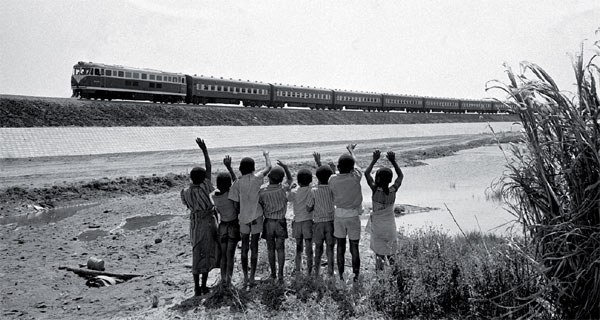
The 1,860 km Tanzam Railway, also known as the Tazara, was financed and built by China in the 1970s. A boom of tourism, mining and agriculture along the railway provides sufficient development space for Tazara. Provided to China Daily |
China eager to help refurbish Tanzam Railway, a lifeline that Beijing financed and built in the 1970s, says Chinese ambassador to tanzania
China is keen to help with upgrades to the Tanzania-Zambia Railway and its management reforms to revitalize what was once an economic lifeline for Southeast Africa, a Chinese diplomat says.
"In contrast to the Chinese high-speed rail, the 40-kilometer-per-hour Tanzam now faces enormous challenges such as in capital and hardware," says Lyu Youqing, China's ambassador to Tanzania.
The 1,860 km Tanzam Railway, also known as the Tazara, was financed and built by China in the 1970s. China then sent many thousands of experts, technicians and workers to build the railway, which gave Zambia and other landlocked areas access to the ocean without having to pass through the former Southern Rhodesia (now Zimbabwe), a British colony at the time dominated by the white minority.
"Today, inland countries like Zambia have multiple transport choices other than Tazara. Its freight volume is shrinking," Lyu told China Daily in Beijing.
Lyu says management problems have also led to the current development bottleneck, and both Tanzania and Zambia are working on management reforms along with the reconstruction.
Last year during a visit to Tanzania, President Xi Jinping announced that China would like to take part in the revamping and operation of the railway.
Tazara that year unveiled a $122 million, five-year plan to buy 10 trains from China to raise the annual cargo transportation to 1.5 million tons by 2018.
The project will include upgrading the existing track, improving telecommunications and signaling systems, and developing trading services and parking lots on earmarked network sections.
Last December, Tazara sealed a contract with the Chinese Civil Engineering and Construction Company for the manufacture and supply of four new locomotives and spare parts.
The locomotives are being delivered this month, adding to six that arrived last year.
Lyu says a boom of tourism, mining and agriculture along the railway provides sufficient development space for Tanzara, which is still playing an indispensable role in the two countries' economic lives.
"As a global leader of infrastructure providers, China can provide technological support and construction teams, but the success of the project hinges on open and transparent financing and bidding through the market," he says.
The ambassador also envisioned the rosy prospect of connecting the transformed railway to the planned Bagamoyo Port, a $10 billion project that China and Tanzania inked last year.
"The strategically located port will complement the reconstruction of the Tazara, which together will further stimulate regional economies," Lyu says.
The port, about 60 km from Tanzania's commercial capital of Dar es Salaam, is expected to have the capacity to handle 20 million containers a year and become the largest in East Africa.
China Merchants Holdings International, one of the world's largest port operators, is the major investor and developer.
The first phase of development, which will start early next year, is centered on building port facilities and an industrial park of 17 square kilometers, Lyu says.
"Through the project, the two countries hope to copy the 'Shenzhen miracle' in Africa," Lyu says.
Shenzhen, a former fishing village in South China's Guangdong province, was transformed into a metropolis that has been on the frontier of China's reform and opening-up since the late 1970s.
Lyu says economic growth, import-export trade and industrialization in Africa will create colossal inflows and outflows of goods, spurring the local logistics industry and calling for improved infrastructure.
Before assuming his diplomatic post in 2012, Lyu served as vice-president of the Aluminum Corporation of China Ltd. Nearly 10 years of business experience has taught him the importance of maintaining a positive image, whether it involves an enterprise or a country, he says.
"All Chinese business executives and enterprises in Africa should watch their words and deeds; for example, improving their product quality, profitability and integrity," Lyu says.
"We also encourage Chinese business people to obey the laws and fulfill social responsibilities, turning local employees into common stakeholders."
puzhendong@chinadaily.com.cn