III. Development Targets and Major Tasks for the Next Five Years
"The Outline of the 11th Five-Year Program for National Economic and Social Development" and "The National Guideline for Medium- and Long-term Plans for Science and Technology Development (2006-2020)" formulated by the Chinese government in 2006 put the space industry in an important position. Based on the above two documents, the Chinese government has drawn up a new development plan for China's space industry, defining development targets and major tasks for the next five years or more. According to this plan, the country will launch and continue key space projects, including manned spaceflight, lunar exploration, high-resolution Earth observation, new-generation carrier rockets, and a group of priority projects in key sectors. It will also strengthen basic research, make arrangements ahead of schedule, develop frontier space technology, and accelerate progress and innovation in space science and technology.
Development Targets
To remarkably improve the country's capabilities and reliability of carrier rockets in space; to build a long-term, stably operated Earth observation system, and a coordinated and complete national satellite remote-sensing application system; to set up a relatively complete satellite telecommunications and broadcasting system, and remarkably enhance the scale and economic efficiency of the satellite telecommunications and broadcasting industry; to establish a satellite navigation and positioning system step by step to meet the demand, and bring into being China's satellite navigation and positioning application industry; and to achieve the initial transformation of applied satellites and satellite application from experimental application type to operational service type.
To enable astronauts to engage in extravehicular activities, and achieve spacecraft rendezvous and docking; to realize the lunar-orbiting probe; and make important and original achievements in space science research.
Major Tasks
-- To develop nontoxic, pollution-free, high-performance, low-cost and powerful thrust carrier rockets of the new generation, eventually increasing the carrying capacity of near-Earth orbiters to 25 tons, and that of geostationary orbiters to 14 tons; develop in an overall way the 120-ton thrust liquid-oxygen/kerosene engine and the 50-ton thrust hydrogen-oxygen engine; and increase the reliability and adaptability of the present "Long March" carrier rockets.
-- To start and implement a high-resolution Earth observation system; develop and launch new-type sun synchronous orbit and geostationary-orbit meteorological satellites, oceanic satellites, Earth resources satellites, small satellites for environmental protection and disaster mitigation monitoring and forecasting; and to start research into key technologies of new-type remote-sensing satellites, including stereo mapping satellites. To form an all-weather, 24-hour, multi-spectral, differential-resolution Earth observation system for stable operation, and achieve stereoscopy and dynamic monitoring of the land, atmosphere and sea.
-- To make an overall plan for the development of a satellite remote-sensing ground system, and an application system; to integrate and improve the present satellite remote-sensing ground system, establish and improve a national satellite remote-sensing data center, and set up and improve supporting facilities for quantitative application, including a remote-sensing satellite radiation calibration station, and preliminarily materialize the common sharing of remote-sensing data to serve the public good; to set up a satellite environmental application institute and a satellite disaster-mitigation institute, forming several important application systems; and to make breakthroughs in major satellite remote-sensing application fields.
-- To develop and launch geostationary orbit telecommunications satellites and direct TV broadcasting satellites with long operating life, high reliability and large capacity; and to develop satellite technologies for live broadcast, broadband multi-media, emergency telecommunications, and telecommunications and broadcasting for public service. To continuously develop and improve the service functions of satellite telecommunications and broadcasting, and increase value-added services in the field of satellite telecommunications and broadcasting. To actively accelerate the commercialization of satellite telecommunications and broadcasting, and expand the industrial scale of telecommunications and broadcasting satellites and applications.
-- To improve the "Beidou" navigation satellite test system, and launch and implement the "Beidou" navigation satellite system project. To develop independently application technologies and products in applying satellite navigation, positioning and timing service, and set up a standard positioning service supporting system and popular application terminus related to satellite navigation and positioning, expanding the application fields and market.
-- To develop and launch new-technology test satellites, conduct more spaceflight experiments of new technologies, materials, apparatus and equipment, enhance the independent research and development level, and increase product quality and reliability.
-- To develop and launch the "breeding" satellite, and promote integration of space technology and agricultural breeding technology and expand the application of space technology in the field of agricultural science research.
-- To develop scientific satellites, including space telescope and new-type recoverable satellites; to conduct basic research in the fields of space astronomy, space physics, micro-gravity science, and space life science, and make important and original achievements in these fields; and to strengthen the ability to monitor the space environment and space debris, and initially set up a space environment monitoring and warning system.
-- To enable astronauts to engage in extravehicular operations and conduct experiments on spacecraft rendezvous and docking; and to carry out research on short-term manned and long-term autonomously orbiting space laboratories, which is of certain application scale, and carry out follow-up work of manned spaceflight.
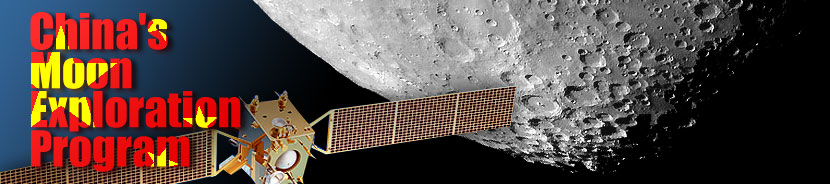
-- To realize lunar-orbiting probe, make breakthroughs in developing basic technologies for lunar exploration, and develop and launch China's first lunar probe satellite "Chang'e I" for lunar science and lunar resources exploration; and to carry out final-period work for the lunar exploration project.
-- To increase the comprehensive experimental ability and returns of spacecraft launching sites, optimize the layout, and enhance the reliability and automation level of the facilities and equipment of the sites.
-- To advance the technology and capability of TT&C network, enlarge the coverage rate of the network, and acquire the ability to satisfy the basic demand for deep-space exploration.