
The China Story
at your Fingertips
OPEN


BEIJING -- China's fiscal policy will place greater emphasis on openness and shared benefits over the next five years, allowing countries worldwide to share in its development opportunities, Minister of Finance Lan Fo'an said on Sunday.
Against a backdrop of subdued global economic momentum, China will pursue a proactive fiscal policy at home while strengthening international financial cooperation to inject greater stability and positive energy into the global economy, Lan said at the China Development Forum 2026, which opened in Beijing on Sunday.
China will deepen bilateral and multilateral financial cooperation and help improve global economic governance, he added, noting that the country will work with others through financial and economic channels to address global challenges and deliver more tangible outcomes.
The country will foster a more fair, transparent and non-discriminatory business environment, enabling all market players, including foreign enterprises, to compete on a level playing field, the minister said.
The China Development Forum 2026 is scheduled for March 22-23, with the theme "China in Its 15th Five-Year Plan Period: Advancing High-Quality Development and Creating New Opportunities Together."
The two-day China Development Forum 2026 that began in Beijing on Sunday offers the global business community a chance to better understand China's proposed economic trajectory over the next five years as outlined in the 15th Five-Year Plan (2026-30) and to assess what that means for the world.
The forum, often dubbed "China's Davos", is a platform for dialogue among Chinese government officials, international executives and scholars, helping businesses explore opportunities for cooperation in technology, green development and innovation-driven growth.
The theme of the forum this year — "China in its 15th Five-Year Plan Period: Advancing High-Quality Development and Creating New Opportunities Together" — underscores the importance of collaboration between Chinese and foreign businesses in navigating the complexities of the global economy.
Premier Li Qiang, in his keynote speech at the opening of the forum, emphasized China's commitment to high-quality development and stable economic growth. He assured the participants that China will persist in creating a favorable business environment and implement national treatment for foreign enterprises. This will allow global companies to continue to thrive and achieve success in China.
The global economy is undergoing a transition: while traditional growth avenues struggle, new sectors such as green technology and artificial intelligence are burgeoning. Amid this duality, China's strategic focus on openness and innovation stands out as a signal for cooperation.
When meeting with representatives of multinational corporations prior to the forum on Saturday, Vice-Premier He Lifeng stressed this as he invited the global giants to increase their investment in China. He highlighted China's steady progress in innovation-led development, which offers vast opportunities.
The latest measures of China to boost travel service exports and expand inbound consumption highlight the country's resolve to continue to invigorate growth. These policies aim to enhance the international appeal of China's tourism and service sectors, crucial components of the nation's foreign trade. By expanding visa-free policy, facilitating international payment systems and raising service standards, China aims to attract more foreign visitors and investors.
In 2025, China's economy grew by 5 percent, surpassing 140 trillion yuan ($20.4 trillion) for the first time. By setting a GDP target between 4.5 and 5 percent this year, China intends to continue that growth trajectory.
In the first two months, the industrial added value of major enterprises grew by 6.3 percent year-on-year; the total value of imports and exports of goods increased by 18.3 percent; and fixed-asset investment grew by 1.8 percent year-on-year, marking a shift to growth. All this indicates that China's economy is moving in a positive direction and progressing steadily.
China's development path is a source of global opportunities. And China's openness to foreign investment, and its initiatives such as the China International Import Expo have been welcomed as they create channels for international cooperation.
Moreover, China is committed to helping build an open world economy. Apple CEO Tim Cook, who is in Beijing to attend the forum, said China is Apple's most important production base and the primary source of its supply chain. He said that Apple is continuously deepening its innovation cooperation, green development and industry chain collaboration in China, which is highly aligned with the country's 15th Five-Year Plan.
The new five-year plan is not only a blueprint for the country's domestic development, but also an answer to how it will contribute to building a stable foundation for global economic growth and provide a platform for foreign companies to thrive.
The plan's focus on innovation, sustainability and openness highlights a path toward inclusive growth and shared prosperity.
The China Development Forum is thus a testament to China's role as an economic powerhouse, offering vast opportunities for international cooperation and growth. As the world navigates an era of uncertainty, China's vision and commitment to high-quality development provide a road map for an interconnected and prosperous future.
Future industries such as quantum technology and embodied intelligence should be a global "concerto" of collaboration rather than a "solo" performance by any single nation, China's Minister of Industry and Information Technology Li Lecheng said on Sunday at the China Development Forum in Beijing.
Li emphasized that China is committed to sharing technological innovations with the world and working jointly to advance future industries for the benefit of all humanity.
He noted that multinational corporations are increasingly integrating into the landscape of these emerging sectors.
The minister outlined a multi-pronged strategy to accelerate the development of future industries. This includes strengthening top-level planning and establishing technology foresight mechanisms, as well as promoting the coordinated development of pilot zones tailored to local advantages.
To boost technological supply, China will intensify efforts in original and groundbreaking research, with a focus on fields such as quantum technology, bio-manufacturing, hydrogen and nuclear fusion energy, brain-computer interfaces, embodied intelligence, and 6G.
He also stressed the importance of leveraging enterprises as key drivers by nurturing leading tech firms with core competencies. The ministry will work to integrate innovation, industry, capital, and talent chains, while refining governance systems to balance development with security.
Li called for deeper international cooperation, greater engagement in global innovation networks, and active participation in setting international standards to foster an open, inclusive, and secure environment for future industrial growth.
Georges Elhedery, group CEO of HSBC Holdings plc, said China is entering a new phase of development that will help shape the next era of global growth, as Chinese companies sharply accelerate their push to expand overseas.
In an interview during the China Development Forum 2026 in Beijing, Elhedery said the country's outbound direct investment continues to gain momentum, underscoring its rapidly growing role as a global investor.
He added that while global trade continued to grow in 2025, increased uncertainties arising from tariffs, geopolitical tensions and military conflicts have been intensifying. Nonetheless, these headwinds, as well as the resulting structural shifts, have created new opportunities, and new trade corridors have emerged.
"Under the current 'new normal' of global trade, Chinese companies are facing new needs and challenges in their journey to 'go global'. Financial institutions should keep up with Chinese companies, as the pattern of their journey has shifted from primarily exporting products to actively building overseas operations," Elhedery said.
To meet these demands, he said banks need to strengthen their global networks and provide customized, one-stop financial solutions.
Elhedery added that, unlike traditional branch-centric models — where overseas subsidiaries of Chinese companies are often managed as independent entities — a vertically client-aligned framework that mirrors a company's organizational structure is essential for delivering seamless and consistent banking services. Such an approach, supported by offerings including holistic global payment solutions, global trade services, emerging market currency risk management and cross-border financing, can give companies real-time visibility over global cash flows, improve working capital efficiency and help mitigate trade-related risks.
He also emphasized that stepping up efforts to reinforce Hong Kong's status as an international financial center, while deepening its role as an offshore renminbi hub, will be key. Greater connectivity between the Chinese mainland and Hong Kong, Elhedery said, would enable international investors to access more efficient and convenient risk management tools.
China's focus on applying artificial intelligence across industries and its broader economic transition toward high-tech sectors are drawing global attention, a foreign expert said.
David Meale, practice head for China at Eurasia Group, said on the sidelines of the China Development Forum 2026 on Sunday that China's approach to artificial intelligence stands out for its emphasis on real-world industrial applications rather than only frontier technology models.
"What strikes me is that what makes China different from the United States is this real focus on AI applications being integrated into almost every part of production processes and business operations, compared with what we are seeing elsewhere, which is more focused on frontier models and their capabilities," he said.
Meale said China's transition toward a more technology-driven economy will be closely watched globally, especially as AI reshapes industries and employment structures worldwide.
"It is very challenging for all countries right now to adjust to a world where AI is displacing workers in some sectors, while new sectors are not creating a lot of new jobs at the same time. China is also thinking about how to navigate that transition," he said.
Looking ahead, he said the global community will pay close attention to how China balances technological innovation, consumption growth and economic restructuring in the coming years.
"Over the next five years, the world will be watching whether there will be more consumption relative to investment and exports, and how China navigates that transition," he said.
Meale also said China has prepared for a more turbulent global environment and is positioning itself as a stabilizing force in the global economy.
"China has planned for a world that is going to be turbulent. By virtue of its vast market, its planning and how it is positioning itself in the world, China wants to communicate a message of pushing global events toward greater stability," he said.
He added that stable China-US relations are important for global supply chain stability.
"Both sides understand that we cannot live in a world where countries are not predictable in their role in supply chains," he said.
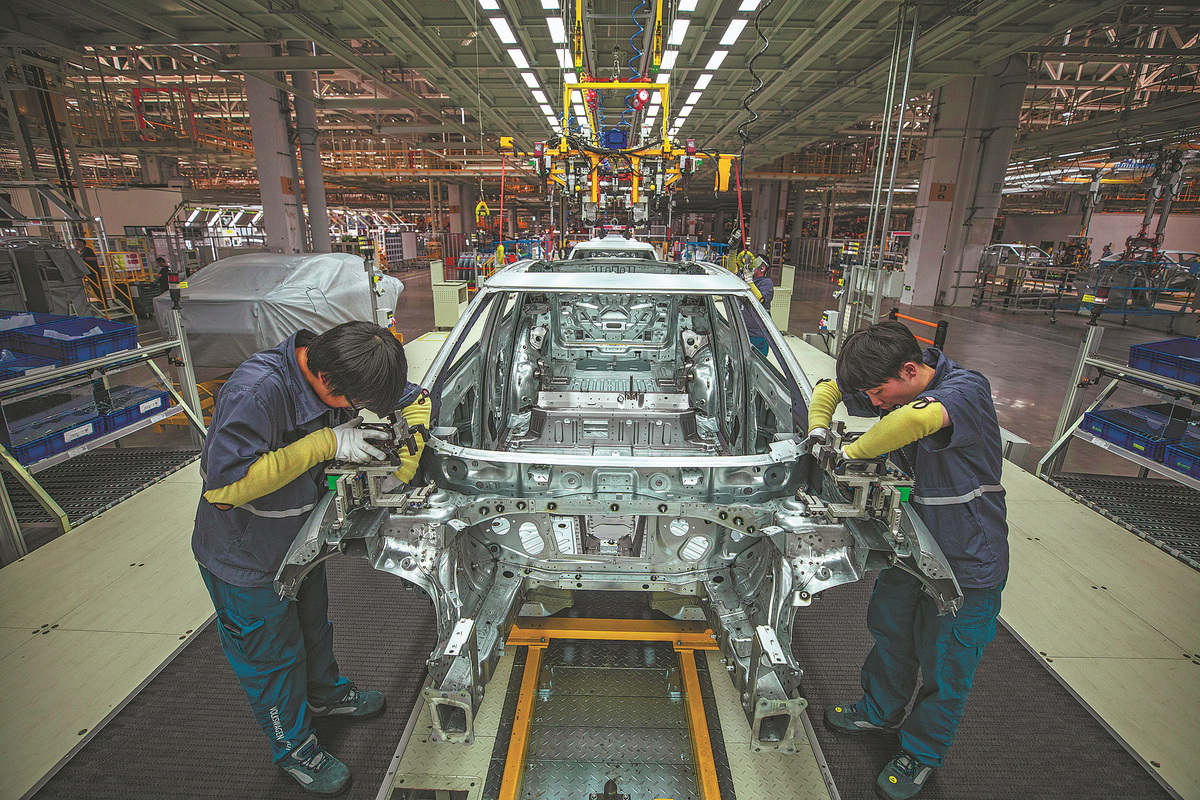
Nearly 40 percent of German companies said they plan to accelerate their localization in China, in the wake of recent trade conflict escalation between the United States and China, a survey by the German Chamber of Commerce in China said on Wednesday.
A report based on a survey of 143 German companies operating in China found that 86 percent of respondents have been affected by the latest US trade measures toward China. In particular, 93 percent of German automotive firms' businesses in China have been affected, according to the survey that was released by the chamber in Beijing.
For industries, 36 percent of the surveyed companies are involved in machinery and industrial equipment, while others are in automotive, mobility, electronics, logistics, and plastic and metal products.
Besides plans to strengthen localization in China, other firms are monitoring the situation or looking into other sourcing markets as an alternative to the US, the survey found.
German firms' investment intentions in China remain solid, however. In the next two years, 7 percent of respondents said they plan to strongly increase their investments in China, up 2 percentage points over last year. Besides, 43 percent of respondents said they plan to somewhat increase their investments in China, down 4 percentage points over last year.
Meanwhile, German election winner Friedrich Merz has been sworn in as Germany's new chancellor. German companies operating in China have called for a more hands-on approach from the new government toward China.
Those approaches include promoting an active and informed engagement with China, and improving China's image in Germany, said Oliver Oehms, executive director and board member of the German Chamber of Commerce in China-North China, during a news conference in Beijing.
China had been Germany's largest trading partner for eight consecutive years until 2024 when US replaced China to become Germany's top trading partner, according to German Federal Statistical Office.
Germany stands as China's largest trading partner in Europe and an important investment destination, the Ministry of Commerce said.
At the annual meeting of the China Development Forum in March, executives from major German companies such as Mercedes Benz, BMW, Bosch, and Deutsche Bank expressed their willingness to increase investment in the Chinese market.
The automotive industry has been a highlight of Sino-German economic and trade cooperation.
China's Commerce Minister Wang Wentao met with Hildegard Muller, president of the German Automotive Industry Association, in late April, and Wang said China and Germany have a solid foundation for cooperation in the automotive industry, with German automakers having served as "witnesses, participants, and beneficiaries" of China's reform and opening-up.
China's door will only open wider, and the country's policies on utilizing foreign investment have not changed and will not change, Wang said.
"Given the pressure of US tariff policies, it is necessary for countries around the world to accelerate economic and trade cooperation with those outside of the United States, and achieve diversified trade layouts," said Zheng Chunrong, director of the German Studies Center at Tongji University.
zhuwenqian@chinadaily.com.cn
Editor's Note: China's top leadership met with more than 40 representatives of the international business community in Beijing on March 28. The key message sent was clear — China has been and will remain an ideal, secure and promising destination for foreign investors, and that investing in China is investing in the future. China Daily reporters interviewed some of the executives of the multinationals who attended the meeting. The following stories tell why the global business leaders firmly believe that China's development is the core driving force of the world's economy, and offers exciting, vast opportunities and stellar growth potential.
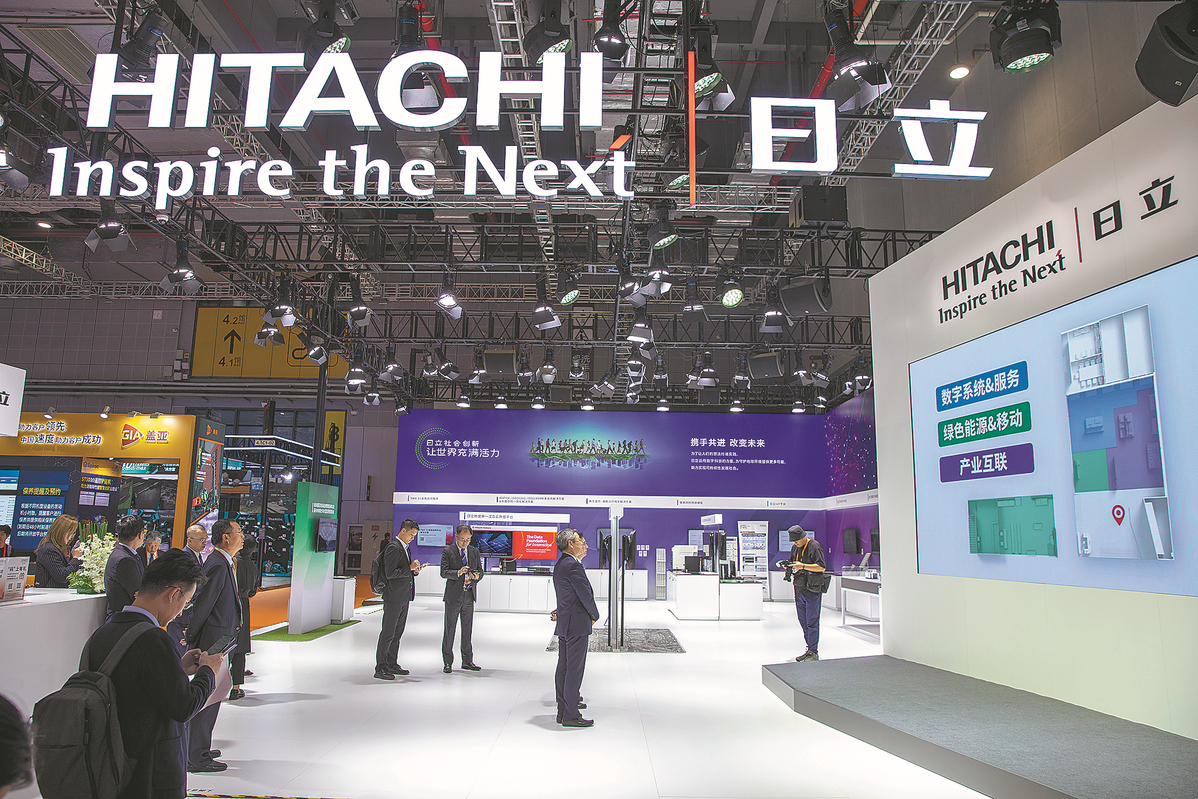
Japanese conglomerate Hitachi Ltd is ramping up efforts to expand its presence in China, and looking to grasp the immense opportunities arising from digital transformation, sustainable development and green transition in the world's second-largest economy.
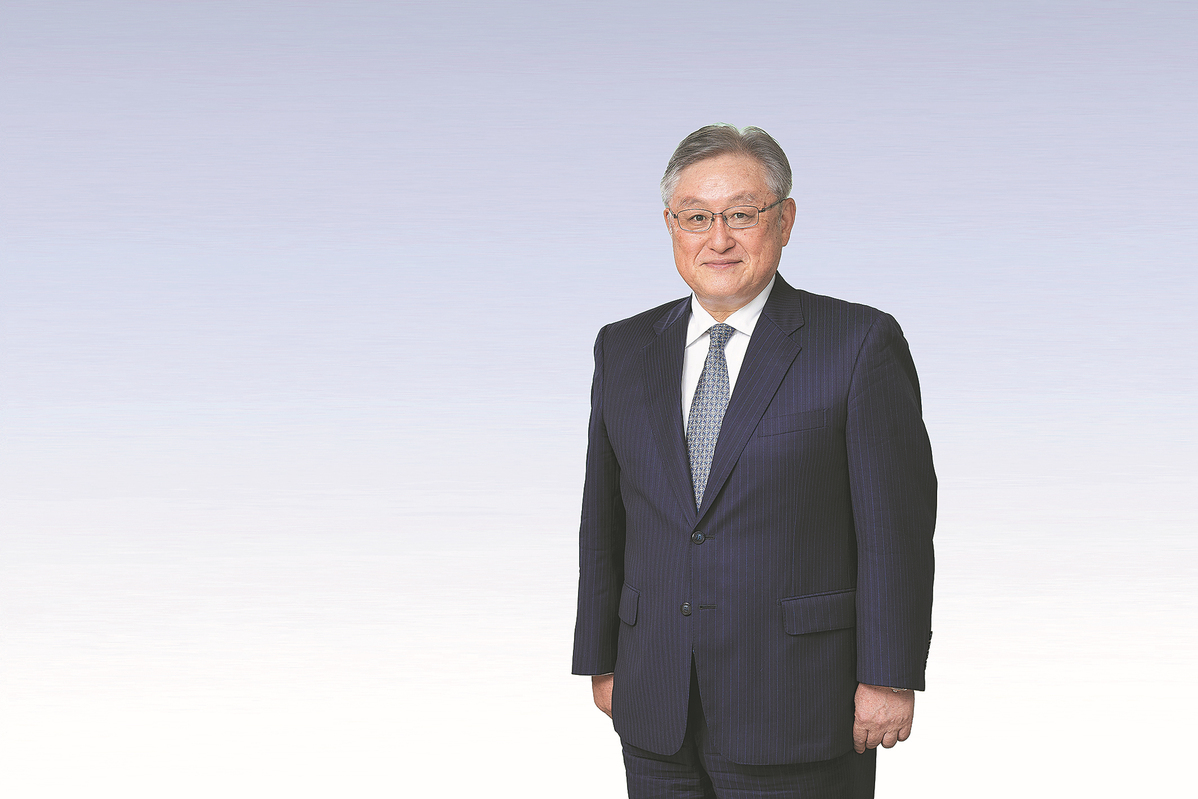
Toshiaki Higashihara, executive chairman of the company, said Hitachi has expanded its business in line with China's development direction since it entered the Chinese mainland market more than 40 years ago, and today it is actively developing business in China in a wide range of fields, ranging from social infrastructure to information technology.
Higashihara said China is one of Hitachi's most important markets, and the company will promote solutions to address social issues with "digital, green and innovation" as the driving forces for growth.
In 1979, Hitachi established its office in Beijing and established Fujian Hitachi Television Co Ltd in 1981, the first manufacturing joint venture of a Japanese company in China.
"Through IT, control and operation technologies — and products that we have cultivated over the years — we will continue to focus on our business in China, building on our ties with our good old friend, China," he said.
For instance, the company actively cooperates with Tsinghua University to promote research and development and innovation activities in fields such as environmental protection and healthcare.
Looking forward, Hitachi will make greater efforts to improve energy supply, enhance people's quality of life and revitalize local economies, while contributing to China's regional development, industrial transformation and upgrading, as well as exchanges and cooperation between China and Japan, he added.
Currently, the Japanese company mainly focuses on three business segments globally — digital systems and services, green energy and mobility, and connective industries.
Revenue from the three segments in the Chinese market accounted for about 11 percent of the company's total top line in fiscal year 2023. Its business in China includes power transmission and distribution, grid equipment, as well as elevators. It is also actively expanding its footprint in the healthcare sector.
Higashihara attended the recently concluded China Development Forum, which he said serves as a bridge between Chinese leaders and global leaders.
"We recognize that this is a very valuable platform for understanding China's important measures and sharing efforts to solve global issues through open dialogue," he said, adding, "Through exchanges with high-level leaders, we have gained many insights and strengthened our belief in China's prospects."
Zhou Mi, a senior researcher at the Chinese Academy of International Trade and Economic Cooperation, said that China has not only lowered the threshold for foreign investment, but also introduced favorable policies for key industries as well as R&D and innovation, in order to guide and support foreign capital to flow into high-tech manufacturing.
Chinese enterprises could learn advanced technologies and management experience from their foreign counterparts and improve innovation capacity and competitiveness, thereby injecting impetus into economic transformation and upgrading, Zhou added.
China's heightened efforts to promote high-standard opening-up and stabilize foreign trade and investment — such as the shortened negative list for market entry and pilot free trade zones — have created favorable conditions for foreign businesses to invest in China, said Zhang Jianping, deputy director of the academic committee at the CAITEC.
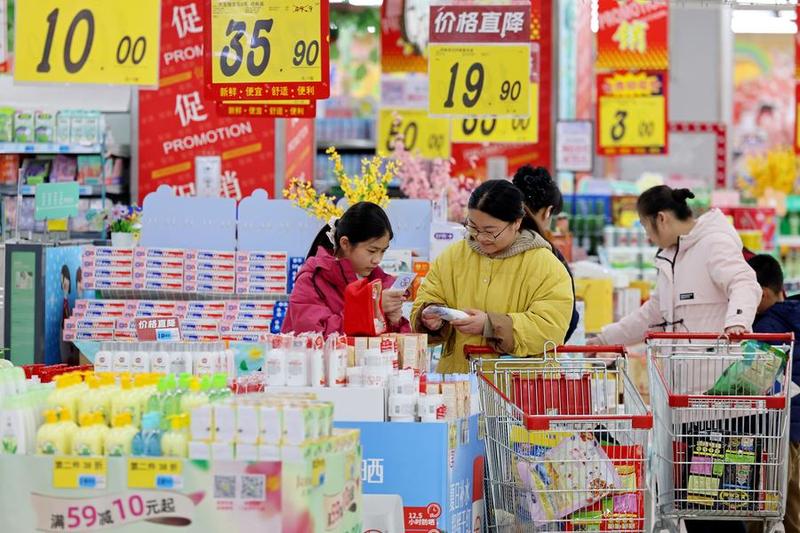
During an interview at the guest room of a home appliances store in China World Mall in Beijing in mid-March, Hubert de Haan, senior vice-president for China of Germany's BSH Home Appliances Group, sipped his coffee thoughtfully, while stressing that China "is still worth it".
His words may sound simple, but they echo a sentiment that is far more nuanced.
After tracking China's economic policies for years, I have learned that understanding this market takes more than just reading headlines — it requires diving into the details, including the numbers, the policies, and, perhaps most importantly, the momentum foreign business executives feel when they are actually here on the ground.
That momentum is driven by powerful fundamentals that continue to matter to global investors.
At the center is China's vast consumer market.
Its massive population powers a consumption engine that is constantly evolving. As the middle-income group expands, so does demand for better products, smarter services and improved experiences. Foreign businesses aligned with this shift are discovering more opportunities and more discerning customers.
Fueling this demand is a manufacturing ecosystem unmatched in scale and integration. From raw materials to finished goods, China's industrial chain enables end-to-end production. This efficiency lowers costs and boosts responsiveness, a critical advantage in today's volatile global environment.
Enabling it all is world-class infrastructure. High-speed railway networks, expressways, ports and airports form a logistics network built for speed and volume. For firms managing complex supply chains, China offers rare reliability and often outperforms global peers.
The talent pool is another strength.
Beyond sheer numbers, China's workforce is increasingly skilled. Advances in education and training have elevated its human capital. Today, it is not just labor, its engineers, designers and digital specialists are ready to scale with demand.
Digitally, China has leapt ahead. From mobile payments to artificial intelligence labs, it is now one of the world's most dynamic digital economies. For companies in e-commerce and fintech, opportunity here is not abstract, it is immediate and immense.
Moreover, I can tell that the value proposition is evolving. It is no longer just about scale or speed. It is about strategic alignment with China's innovation agenda. As supply chains reconfigure and consumption matures, the country is prioritizing high-tech, knowledge-driven investment.
As foreign direct investment in China is shifting away from labor-intensive operations toward research and development hubs, innovation centers and green tech, it brings new opportunities and higher expectations. Market entry thresholds are rising, and success requires more than capital.
Today, investment means adaptability, foresight and trust. Only global players with the right products, services and market approaches have the capability and confidence to compete here.
These messages were not just confined to individual interviews. It echoed throughout the China Development Forum 2025, held in Beijing in late March. In a world facing rising protectionism and economic uncertainty, top executives of leading multinational corporations believe openness and collaboration have never been more essential — for countries to keep markets accessible, and for businesses to work together toward shared solutions and sustainable growth.
Among them was Georges Elhedery, group chief executive of HSBC Group, who said his company expects China to remain an engine for global growth in 2025 and across this decade. In the long run, China will remain a thriving, sustainable economy, firmly at the center of global trade and investment, and at the forefront of innovation.
In this new landscape, it is no longer about which multinational corporations can enter. It is about who can last, and who can lead.
So yes, as de Haan from BSH China said, China is still worth it. But success here demands more than just showing up. It requires clarity, long-term commitment and the agility to grow with China, not just in it.

Despite operating in different industry sectors, several multinational corporations — such as Germany's Siemens AG, Tapestry Inc of the United States and Japan's Takeda Pharmaceutical Co — share a common goal of stepping up investment in China's high-tech and supply chain sectors to stay competitive.
Their top executives, who attended the China Development Forum 2025 in Beijing in March, noted that the Chinese government's proactive efforts — from expanding domestic demand to fostering emerging and future industries, and deepening international cooperation through greater openness — are sending out strong signals and continuously boosting the confidence of foreign businesses in the Chinese market, despite rising global trade protectionism, unilateralism and geopolitical tensions.
One such company is Mercedes-Benz.
The German automotive group will begin producing the long-wheelbase electric CLA, a compact luxury model, in China this year, followed by the long-wheelbase GLE SUV and an all-new electric van in the coming years.
Ola Kaellenius, chairman of the board of management at Mercedes-Benz, said the company has made significant strides in research and development in China. Powered by its innovation centers in Beijing and Shanghai and supported by 2,000 local experts, the group has advanced its development of connectivity, digitalization, autonomous driving features and electric vehicle transformation.
"Just like other European automotive companies, we have been among the biggest foreign beneficiaries of China's rapid economic growth," said Kaellenius.
"At the same time, our industry has been one of the largest recipients of foreign direct investment in China. There is a strong interdependence between China and the European Union. Both sides want to protect jobs in their home markets while reaping the benefits of free international trade," he added.
Noting that China's growing focus on boosting domestic consumption is giving global companies greater confidence to invest in the world's second-largest economy, Joanne Crevoiserat, CEO of Tapestry, said the company is keen to contribute to the country's consumption upgrade and expansion by bringing more innovative products to this market.
Tapestry is a New York-based luxury goods maker and the parent company of brands like Coach and Kate Spade.
"China is our largest market outside the US, and it is a major source of inspiration for us globally. Many of the innovations we develop here — through partnerships with Chinese companies to serve Chinese consumers — are later introduced to other markets around the world," Crevoiserat said.
The company, she added, is on track to achieve its goal of opening 100 stores in China between 2022 and 2025, with the milestone set to be reached by the end of this year.
"In addition to investing in physical stores, or brick-and-mortar retail, we will also invest in digital, particularly with the advancements in the Chinese market, as local consumers are fairly digitally engaged," she said. "So, we have been making investments into our digital capabilities and meeting the consumer demand in an omnichannel way."
Christophe Weber, president, CEO and representative director of Takeda Pharmaceutical Co, expressed a similar opinion.
Takeda will make targeted investments in data and digital solutions in China to unleash the power of new technology for the future of healthcare, he said.
In January, the Japanese company announced the signing of an investment cooperation agreement to establish its China innovation center in Chengdu, Sichuan province. The new facility will focus on digital healthcare innovation and leverage big data and artificial intelligence technologies to develop solutions.
Eager to stabilize its appeal to global investors in 2025, China will further open up internet-related, cultural and other sectors in a well-regulated manner and expand pilot programs to open fields such as telecommunications, medical services and education, according to this year's Government Work Report.
The country will encourage foreign investors to increase reinvestment and support collaboration among upstream and downstream enterprises along industrial chains.
The report said national treatment will be ensured for foreign-funded enterprises in areas such as access to production factors, licensing, standards setting and government procurement.
Sang Baichuan, dean of the University of International Business and Economics' Institute of International Economy in Beijing, said that China enjoys a stable political, economic and social environment when compared to several other countries.
Amid mounting global economic headwinds, China's steadfast commitment to opening-up, backed by consistent government support and a more level playing field, is encouraging, Sang said.
As China's innovation capabilities grow, foreign investors are increasingly shifting from "a manufacturingonly focus to collaborative research and development", he added.
Noting that high-tech, high-efficiency and high-quality growth have become key drivers of China's economic transformation, aligning with its focus on new quality productive forces, Roland Busch, president and CEO of Siemens AG, said the country has made rapid advancements in artificial intelligence.
First introduced in 2023, new quality productive forces refer to advanced productivity freed from the traditional economic growth mode and productivity development paths.
Busch said innovations such as the open-source foundational model R1 by Chinese AI startup Deep-Seek are examples of how "China surprises us with innovations".
This momentum is not limited to the private sector.
China's centrally administered State-owned enterprises, such as State Grid Corp of China and China Mobile Ltd, have deployed AI technologies across more than 500 scenarios in key sectors such as manufacturing, smart vehicles, energy and power, according to information released by the State-owned Assets Supervision and Administration Commission of the State Council, the country's top State assets regulator, in late March.
These solutions have significantly reduced costs for central SOEs and their partners as well as improved efficiency in research and development, production and customer service.
Seeing more opportunities in areas such as healthcare, consumption, advanced manufacturing and innovation-driven development, a total of 7,574 foreign-invested enterprises were newly established in China in the first two months of this year, representing a year-on-year growth of 5.8 percent, said the Ministry of Commerce.
Investment from the United Kingdom, Germany and South Korea climbed by 87.9 percent, 54.7 percent and 45.2 percent year-on-year, respectively, in the first two months, according to the ministry.
During separate meetings with several US business leaders, including Apple CEO Tim Cook and Wendell Weeks, chairman and CEO of Corning Inc, in Beijing in March, Minister of Commerce Wang Wentao said that China's economy continues to consolidate and expand its recovery momentum even though it faces growing external uncertainties.
Wang said ongoing policy measures will strongly support economic growth. China will continue to create favorable conditions for foreign companies to increase their investments within its market.
The minister stressed that trade wars produce no winners and protectionism offers no solutions. As the world's two largest economies, stronger China-US economic and trade cooperation is consistent with economic principles, while decoupling and supply chain disruptions would harm all parties involved, he said.

Miguel Lopez, CEO of German industrial conglomerate Thyssenkrupp AG, said China is not only one of the largest markets for many foreign companies, but also home to the world's most comprehensive industrial and supply chains, supported by a well-developed logistics system.
Thyssenkrupp will continue to strengthen supply chain management in China and establish closer relationships with local suppliers. This will not only improve risk resilience and lower costs, but also benefit its global markets, Lopez said.
"Looking ahead, only through open collaboration, technological innovation and sustainable development can we collectively build a more stable and efficient global supply chain," he said.
Antoine de Saint-Affrique, CEO of Danone SA, a French multinational food products company, said that given China's economic significance, a healthy and growing China benefits the entire world.
"Growth in China contributes to the expansion of the global economy, and a thriving global economy, in turn, supports shared prosperity and peace," he added.
Between January and February, foreign-invested businesses in China saw their export value grow 6.9 percent year-on-year to 1.08 trillion yuan ($148.9 billion), according to the General Administration of Customs.
zhongnan@chinadaily.com.cn
China's leadership is pursuing a "charm offensive" domestically and internationally, while the United States remains focused on tariffs, an approach that US economist Stephen Roach described as "a tariff offensive".
Roach, a senior fellow at Yale University's Jackson Institute of Global Affairs and a senior lecturer at the Yale School of Management, said his firsthand experience in China reinforced that view.
"China's senior leadership is engaged in a fairly aggressive charm offensive, both domestically and internationally," he said.
Speaking at the 11th annual Yale US-China Forum on Sunday, Roach said the approach "stands in contrast to the US approach", which he characterized as focused on tariffs.
He shared insights from his recent trip to China, where he attended the China Development Forum and the Boao Forum for Asia.
China's charm offensive started with the stimulus actions of September, when China's central bank announced a stimulus package to boost the stock market, leading to a quick initial rebound before settling within a stable range since the post-Sept 24 rebound, Roach said.
The charm offensive also targeted domestic tech executives with a widely publicized meeting on Feb 17, where President Xi Jinping sought to bolster business sentiment within China, he said.
In terms of the foreign-facing charm offensive, Xi also met with more than 40 representatives of the international business community in Beijing on Friday, he added.
"Unlike past meetings, this one was not dominated by US CEOs. There were 12 US CEOs, but by my count, close to 20 European CEOs. The composition of this group tells you something about where China sees potential opportunities — possibly more in Europe than in the US," Roach said.
The contrast is also reflected in how leaders speak about their respective economies, he said.
Xi is optimistic about China's future, while US President Donald Trump acknowledges the disruptions caused by tariffs, which is "uncharacteristic of the way the president usually deals with the common prospects in the US", he added.
Susan Thornton, former acting assistant secretary for East Asian and Pacific affairs at the US State Department, affirmed the importance of communication between the US and China and spoke about leader-to-leader diplomacy.
Throughout the history of US-China relations, the most important stabilizer has been communication, especially at the leadership level, Thornton said.
"There have always been major areas of difference between the US and China, yet cooperation is also necessary.
"This complex dynamic makes it essential for the two leaders to meet and send signals to their governments about the need to balance these competing tendencies. Without communication backed by political will, problems arise.
"For now, we are in a state of suspended animation, waiting for a signal on Trump's intentions for US-China relations."
Meanwhile, a new round of US tariffs is set to be announced on Wednesday, which could "further escalate tensions", she added.
"The more strained the situation becomes, the harder it will be to arrange a leader-level meeting, though such a meeting is very much needed at this time."
'Polar opposite'
David Firestein, president and CEO of the George H.W. Bush Foundation for US-China Relations, discussed the "clearly radically changed" US policies toward China, that "in many cases, or most of these cases, are the polar opposite of what we used to assume".
The first assumption is the transition from viewing China as a partner to considering it an enemy, Firestein said. He also pointed out the shift in perception of China, from a major player within the international system to a country seeking to supplant the US as the world's top superpower.
Other changes include a move away from engagement with China, with some in Washington advocating for disengagement or even decoupling.
Mutual dependency, once seen as stabilizing, is now regarded as destabilizing. Similarly, the US once believed in collaborative efforts with China on issues such as the Korean Peninsula and trade, but now views the relationship through a zero-sum lens.
"Every one of the new assumptions that we're making about China is dead wrong," Firestein said.
"And that's why our policies are failing to achieve the results that our leaders, the implementers of these policies, want them to achieve."
Artificial intelligence can reshape every industry in China, but only if it enhances productivity, said Gao Xuefeng, founder and CEO of Chinese tech firm Fabarta Co Ltd, at the 2025 Zhongguancun Forum in Beijing on Monday.
Gao said: "China's AI momentum, spurred by government support and market demand, is emerging as a key engine of economic growth. But AI must be transformed into productivity to have real vitality."
Fabarta, a proprietary multimodal knowledge engine and an industry-wide intelligent agent platform, aims to build a robust data infrastructure for the coming AI era.
Highlighting how past cycles of AI enthusiasm have faded when the technology failed to integrate deeply into real-world industries, he emphasized that the current wave of AI — driven by deep learning — is more resilient due to its increasing relevance with industrial operations.
To embrace such opportunities, Gao said the company is focused on a data-centric AI architecture rather than the traditional model-centric approach, which can better mitigate issues like model hallucinations and data security risks.
Model hallucinations are tendencies by large language models to sometimes concoct facts, invent unsolicited fictions or produce confident responses that belie an underlying falsehood.
Gao made the comments as Fabarta teamed up with Sinochem Information Technology Co Ltd and the College of Computer Science and Technology at Jilin University to establish a joint laboratory for AI and new materials.
The partnership, announced at the Zhongguancun Forum on Saturday, aims to embed AI into the full research and development cycle of new materials.
The lab will focus on four key areas — developing AI-powered vertical domain models to boost efficiency in materials research, building industry-specific data assets, enhancing intelligent tool platforms and integrating fundamental theoretical research with talent development.
Ge Shuang, Fabarta's co-founder and chief operating officer, said: "This joint lab is a testament to our commitment to using AI to drive industrial upgrades. Such a cooperation among three parties is expected to unlock AI's vast potential in materials science, foster an open and cooperative AI ecosystem and accelerate the transition to a smarter economy."
At this year's Zhongguancun Forum, several AI panels drew a packed house over the weekend, with attendees filling every seat and standing along the walls to listen. The overwhelming interest mirrored the prominence AI commanded, which could also be seen at the recently concluded Boao Forum for Asia Annual Conference 2025 and the China Development Forum.
As DeepSeek has become a popular topic at this year's forum, Gao said that after DeepSeek's breakthrough, many Chinese companies no longer hesitate to invest in AI.
"Every few months, new technological advances emerge. Companies can't afford to wait — they must integrate AI into their business and industry now," Gao said. "Every sector can be reimagined through AI in the years to come."
Gao added that in China's industrial AI landscape, large model deployment will likely begin with State-owned enterprises and major industry players, which have the necessary scale, infrastructure and data resources to invest in AI innovation.
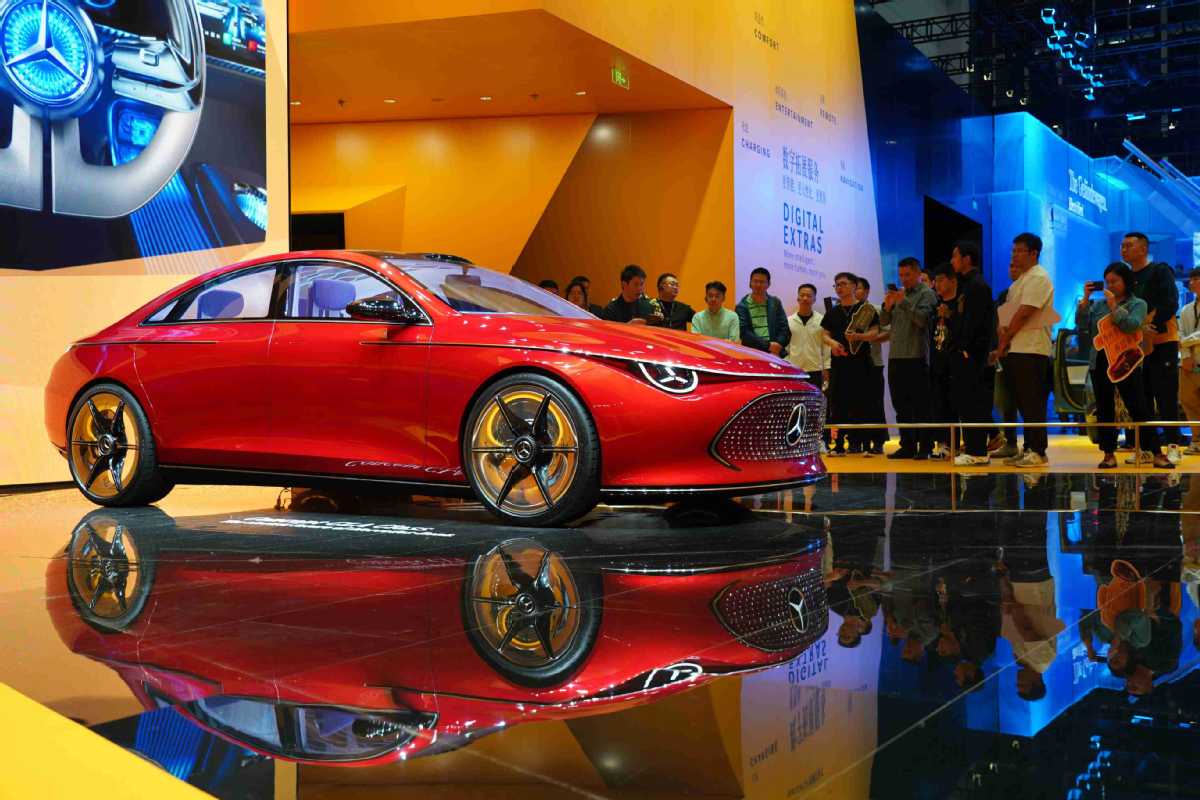
Global automotive executives have reaffirmed their commitment to China through sustained investments, underscoring the nation's role as a hub for technological innovation and industrial progress.
Just like other European automotive companies, Mercedes-Benz has been among the biggest foreign beneficiaries of China's rapid economic growth, said Ola Kaellenius, chairman of the board of management of Mercedes-Benz, at the China Development Forum earlier this month.
"We remain committed to long-term investment in China, which is a main pillar of our global strategy and a key driver of our electric and digital transformation," Kaellenius said.
This year marks the 20th anniversary of Mercedes-Benz's research and development in China, and its production collaboration with BAIC, resulting in more than 5 million vehicles delivered.
Over the last five years, the German automaker has invested 10.5 billion yuan ($1.44 billion) in China to accelerate the localization of advanced technologies and products at "Chinese speed".
Kaellenius said the automaker continues to increase localization efforts and is investing more than 14 billion yuan with local partners to enrich localized portfolios, including the long-wheelbase electric CLA sedan, followed by the long-wheelbase GLE SUV and an all-new electric van in the coming years in China.
Leveraging its R&D centers in Beijing and Shanghai, Mercedes-Benz has enhanced connectivity, digitization, automated driving features and EV transformation. An illustration of the efforts is the development of the MB.OS operating system, set to debut in China with the new CLA.
In addition, Mercedes-Benz has become the first international automaker to obtain approval for the testing of Level 4 automated driving for designated urban roads and highways in Beijing.
For BMW Group, another German automotive powerhouse, its strategic alignment with China's technological and industrial evolution underscores its role as both a beneficiary and contributor to the nation's automotive transformation.
Since establishing its joint venture in 1994, the company has embedded itself into China's supply chain, R&D ecosystem and consumer culture — an approach epitomized by its "In China, For China" philosophy.
"For more than three decades, China has been more than a market for the BMW Group: we feel at home in China. Not only do we produce and develop vehicles locally, but we also actively take part in Chinese society," said Oliver Zipse, chairman of the board of management of BMW AG.
He added that China's technological and industrial advancements set global benchmarks and BMW will seize this momentum to drive high-quality development with its partners in China.
The automaker has invested 116 billion yuan in its production base in Shenyang, Liaoning province, since 2010. Its R&D network in China is the largest outside Germany, spanning Beijing, Shanghai, Shenyang and Nanjing in Jiangsu province.
The company's Shanghai design team is leading the development of the Neue Klasse vehicles tailored for the Chinese market, blending local aesthetics with cutting-edge technologies.
The battery for Neue Klasse vehicles has been developed in collaboration with Chinese battery giant CATL. The two sides have joined hands since 2012, when BMW became CATL's first customer among automakers, as a trailblazer in Sino-foreign cooperation.
Holger Klein, CEO of ZF Group, delivered a speech about AI at the forum, saying that "China has long been at the forefront of AI innovation, with leading technology firms and dynamic startups setting impressive standards. Recent breakthroughs — such as the DeepSeek model — demonstrate China's ability to push the boundaries of AI development.
"At ZF, we embrace the opportunities that AI provides and are proud to be part of this progressive journey," he said.
ZF's Chinese team has made strides with AI-based off-road recognition software, which uses chassis data to enhance vehicle control on rough terrain, thereby improving safety and performance under challenging conditions, Klein said.
In its smart factories across China, AI-powered predictive maintenance minimizes downtime and ensures maximum production line efficiency. AI also plays a crucial role in the visual quality inspection of products, identifying even the smallest deviations to maintain high reliability.
The integration of AI spans various functions, including R&D, production and operations, with more than 20 AI-driven projects across ZF's operations in China.
"China, as the world's largest auto market, has always been strategic for the ZF Group. Many of our new products and cutting-edge technologies have made their world premieres in China in recent years," said Klein.
Another auto supplier, Bosch, positions China as both a manufacturing and R&D hub. Stefan Hartung, chairman of the board of management at Bosch, said they have witnessed tremendous changes in China, with an increasing emergence of innovative economies, including the fast-evolving AI sector.
Bosch has collaborated with Chinese AI companies, such as autonomous driving startup WeRide. The company has also partnered with Tencent in areas of public clouds, autonomous driving and intelligent cockpits.
China is fostering its own vision for the development of artificial intelligence through reliable and efficient applications of AI tools across a wide range of industries, a wise path that differs from that of the United States, said industry experts and company executives at the ongoing Zhongguancun Forum.
They made the comments as several AI-related panel discussions saw packed houses over the weekend, with attendees filling every seat and some even standing along the walls. The overwhelming interest mirrored the prominence that AI has commanded across the nation, which was also seen at the recently concluded Boao Forum for Asia Annual Conference and the China Development Forum.
Turing Award winner Joseph Sifakis said at the Zhongguancun Forum that China is crafting its own AI vision, distinct from that of the US. "China has a solid and extensive industrial base and a unified domestic market. This enables the country to develop more reliable AI solutions that better align with the needs of the real economy, especially in the long-awaited transition to autonomous driving," he said.
Sifakis noted that China's strong industrial foundation, in particular, gives it an edge while industries such as self-driving vehicles, smart cities, smart factories and intelligent farms present more opportunities. "If developed well, (all these) will give China a dominant position in industrial AI," he said.
Kai-Fu Lee, a prominent AI expert and chairman and CEO of investment company Sinovation Ventures, said that China has reached its "DeepSeek moment". He predicted that 2025 would mark a breakout year for AI applications and large-scale model deployment in China.
Lee recalled that about nine months ago, he had expressed frustration over China's lack of a "ChatGPT moment", as promising Chinese AI models at the time failed to stand out and spark nationwide adoption.
"However, DeepSeek has changed that landscape. Its success has awakened the Chinese market, ushering in a new AI era for the country," he said.
According to Lee, DeepSeek's rise proves that "closed-source AI has no future", and only open-source development will drive greater progress.
"As AI scaling laws shift from the pretraining stage to the inference stage, AI applications will accelerate exponentially this year," he said.
Gao Xuefeng, founder and CEO of AI data infrastructure company Fabarta, said that after DeepSeek's breakthrough, many Chinese companies no longer hesitate to invest in AI.
"Every few months, new technological advancements emerge. Companies can't afford to wait; they must integrate AI into their business and industry now," Gao said, adding that in China, every sector can be reimagined through AI in the years to come.
Wang Zhongyuan, head of the Beijing Academy of Artificial Intelligence, a leading nonprofit AI institute, said that DeepSeek has indeed delivered impressive results, proving that China can train large-scale AI models parallel to ChatGPT 4 despite limited computing power.
"Such technologies could also be adopted by international institutions and other nations, accelerating the global development of AI," he said.
Regarding artificial general intelligence, in which an AI system can match or exceed the cognitive abilities of humans in any real-world task, Wang said the industry is still far from achieving such capabilities. "I think we are still at least five to 10 years, or even longer, from reaching that level," he added.
China has an enormous potential to have another great year in 2025 and Vale is very excited to be part of it and continue to work with clients in this growing market. China is super important for Vale, who has been doing business here for more than 50 years, even before Brazil and China had a diplomatic relationship. Vale is committed and will continue to be committed to Chinese clients and to the China market.
Rio Tinto is confident that China's economic growth is on course to achieve its annual target of around 5 percent for 2025, as the property sector is in a better shape than in previous years, while the green transition is really happening in the country, with the whole development of solar, wind, grid extensions, stationary power, and electrical vehicles, becoming a bigger and bigger business and having more and more impact on the GDP. Thanks to the ever-improving business environment for foreign companies to form partnerships, Rio Tinto had a record level of sourcing in China last year, creating win-win in trade.
China's commitment to a green energy transition is fueling optimism among multinational mining companies like BHP, which believes the shift will drive substantial long-term demand for commodities such as copper, its CEO said during the China Development Forum held recently in Beijing.
Mike Henry, CEO of the world's largest listed miner, said China's robust manufacturing base, scientific prowess and ongoing urbanization positioned the country to remain a global economic powerhouse. He highlighted the nation's shift toward sustainable growth as a significant opportunity for the mining industry.
"With its strong foundations in manufacturing, scientific research and urbanization, China is poised to continue its role as a global economic powerhouse," he said.
"As China transitions to more sustainable growth models, there is an opportunity for industries, including mining, to contribute to that effort."
The mining company expressed strong confidence in continued growth, driven by China's commitment to high-quality development and its energy transition initiatives.
While acknowledging China's broader economic transition, Henry highlighted a new demand driver: the explosive growth of data centers required to power the global AI ecosystem. He stressed copper's critical role in these facilities, particularly for power networks, circuit boards and cooling systems.
"Lesser known is the essential role copper will play in the development of the global AI ecosystem, which is attracting so much attention and investment around the world," Henry said.
BHP estimates that copper demand from data centers alone will balloon sixfold by 2050, reaching nearly 3 million metric tons annually from around half a million tons currently. At current prices, this represents a market worth approximately 200 billion yuan ($27.54 billion), it said.
Many think tanks and academic institutes believe copper has an essential role in the expansion of data centers, and in the expansion of electrical grids to meet new demand. Its usage includes electric connectors, busbars and heat exchangers.
Morgan Stanley forecasts demand from data centers will grow rapidly, accounting for up to 3.3 percent of copper demand by 2027, while BloombergNEF estimates approximately 427 million tons of copper will be needed by 2050, accounting for more than a third of global copper demand by mid-century.
Henry expressed optimism about the opportunities for collaboration between investors, governments, refiners and miners. He highlighted BHP's commitment to working with Chinese partners like China Baowu Steel Group Corp and HBIS Group on technologies to reduce emissions in steelmaking, and with copper customers to ensure reliable supply.
Chinese steelmakers have been showing deep commitment to reducing their carbon intensity, pursuing opportunities like hydrogen injection, as well as applying technology measures like carbon capture, utilization and storage.
"At BHP, we are optimistic this can be done. Working alongside our refining partners in China and other parts of the world, we can find new ways to get copper supply heading in the right direction again," he said.
zhengxin@chinadaily.com.cn
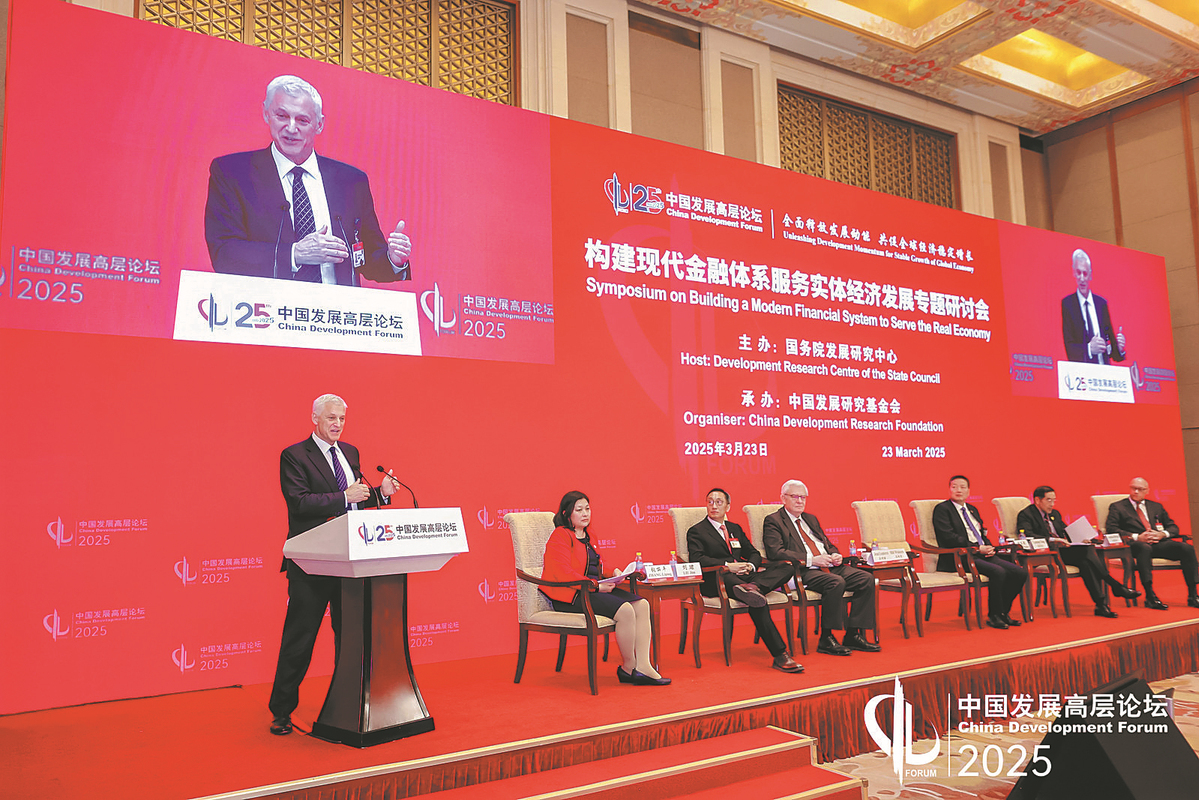
Standard Chartered PLC is firmly optimistic about China's economic prospects and has actively aligned its business strategies with economic trends, such as the high-quality development of the private economy and the rapid application of artificial intelligence technologies, in the world's second-largest economy, its top executive said.
"It's entirely possible for China to hit the economic targets that it has set as it had in recent years," Bill Winters, group chief executive of the bank, said in an exclusive interview with China Daily, pointing to the positive advancements in China while analyzing the challenges.
"We know that consumer confidence has been relatively weak, but we see very concrete actions that are being taken to support confidence and encourage consumers to spend more freely," Winters said.
"We also know that the source of some of this lack of confidence has had to do with the weak property market. But there are signs of stabilization certainly in the tier-1 and tier-2 cities and support coming from the government and the banking sector and elsewhere, which I think will help support this confidence."
Winters highlighted the "outstanding growth" made by China's private sector, in particular, the significant advancements made by private companies in climate-related new technologies and AI. China's leading positions in these new and emerging sectors, he said, "will provide an ongoing source of growth in the foreseeable future".
"China is extremely advanced in the development of these large language models and the AI tools that are built around them," he observed. "The pace with which those tools are being embedded into everyday life, whether it's a consumer life or business life, is very rapid."
Winters said the bank uses cloud applications and partners with leading Chinese tech companies. Additionally, Standard Chartered provides financial services to these companies, including lending and support for their international expansion.
He pointed out the opportunities for Chinese companies to distribute their products and technologies globally, making more contributions to world economic development.
"We've seen some pushback in the EV sector, for example, out of the United States and Europe. But through clever management of the various stakeholders around the world, I think China can take its technical lead and really make that a great basis for distribution of Chinese intellectual property around the world in a way that benefits its customers outside of China and benefits companies back home as well."
Standard Chartered, with a long history in China, has actively aligned its business strategies with the country's economic trends, he said, citing the bank's focus on cross-border businesses and its ability to support Chinese companies in their international expansion.
As for the prospects of tariffs and trade disputes that could perhaps prompt a global growth slowdown, he believes many of the tariffs that have been suggested around the world will not happen because everybody loses from tariffs.
Even if there are very substantial tariffs applied by the United States on Chinese imports, that would have a "noticeable but not overwhelming "impact on Chinese economic growth, he said, adding that is because China has tools at its disposal, like targeted fiscal stimulus and monetary stimulus, to offset such an impact.
Winters expressed support for the Chinese government's efforts to promote the high-quality development of the private sector. He emphasized the importance of policy consistency and predictability for private companies to thrive. "The messages are very supportive of the private sector," he said, "I'm very encouraged about the opportunities for private sector growth in China.
"We are very confident in the Chinese economy and in the private sector."
liuzhihua@chinadaily.com.cn
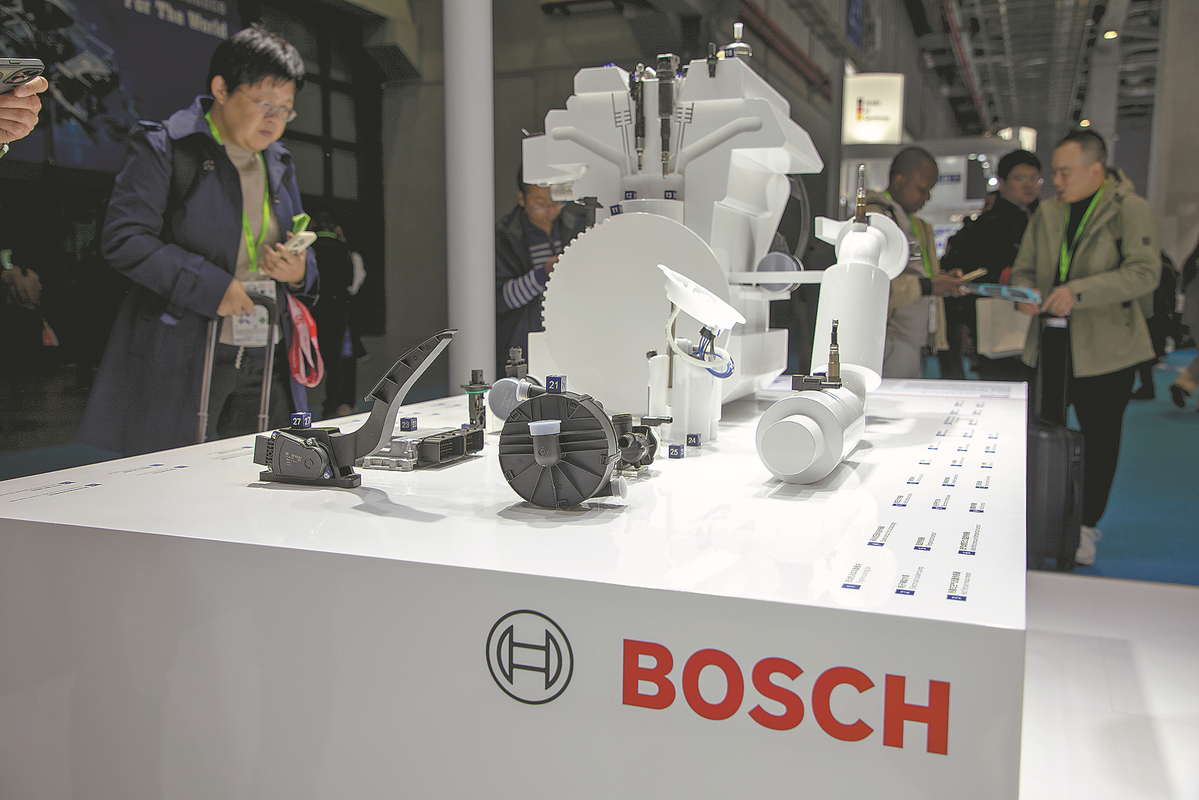
German industrial conglomerate Robert Bosch GmbH is bullish on prospects for applications of cutting-edge artificial intelligence technology and is actively expanding its research and development investment in the Chinese market, its top executive said.
Stefan Hartung, chairman of the board of management at Robert Bosch, said, "We have to see that China becomes not only a manufacturing location, but that it's also very much a research and development location, so about 10,000 of our 56,000 people are now engineers, mathematicians, physicists and people developing software that is made in China, for China."
He said in an interview with China Daily that the Chinese market is very research-intensive and Chinese consumers have very specific needs. Therefore companies need to also have R&D on the ground in China, and then the people can directly work with customers on the professional side to fit products with needs.
Hartung hailed China's recent achievements in the fast-evolving AI sector, such as the meteoric rise of Chinese AI startup DeepSeek, which has stunned the world with its latest reasoning models.

"That's a good contribution to the world because an open-source model always is a contribution for many people who do research like we do on AI. China definitely has a lot of potential in using AI, and I think going forward, we will also see a lot of applications, maybe in robotics, but maybe in automotives, maybe also core manufacturing operations. So I think there are a lot of opportunities."
He said the company has leveraged the state-of-the-art AI technology in autonomous driving, home appliance products and factories in China, adding, "Our Chinese colleagues are very good at that, so they are taking the newest technologies, applying them and inventing new ones, which is a good thing."
Hartung said Bosch has collaborated with many Chinese AI companies, such as autonomous driving startup WeRide.
"There are many other cooperation arrangements we have with AI companies in China, so it makes perfect sense to do this in cooperation."
As for China's emphasis on fostering new growth drivers, Hartung highlighted that the most important drivers include high-quality talents, which come out of schools, and technological innovation.
He said that a raft of policy measures boosting consumption unveiled by Chinese authorities — such as the consumer goods trade-in programs — have benefited the company in businesses of home appliances and auto parts in the world's second-largest economy, while showing optimism about the huge growth potential of China's consumer market.
Moreover, the company is promoting the development of low-carbon supply chains, and contributing to China's circular economy.
"We appreciate the efforts of the Chinese government in driving low-carbon development. Through forward-looking policies and initiatives, China is making remarkable progress and efforts to promote sustainable manufacturing, enhance resource efficiency and advance low-carbon supply chains," Hartung said.
Bosch has taken proactive steps to reduce emissions, enhance resource efficiency and integrate low-carbon technologies across its operations, he added. Last year alone, its facilities in China generated and consumed more than 60,000 megawatt-hours of green electricity from self-installed solar power systems — more than three times the level of 2020.
Noting that green hydrogen is a key technology in helping China achieve its dual carbon goals, he suggested further improving related support policies for the hydrogen industry, particularly in areas like incentivizing the purchase and operation of hydrogen fuel cell vehicles, and improving the hydrogen refueling infrastructure.
China has instilled global enterprises with greater confidence as the world's second-largest economy has placed a high premium on technological innovation and opening-up at a time when the world is grappling with a confluence of challenges, said a senior executive.
"We see that the Chinese government's sustained emphasis is on transforming the country toward high-quality growth driven by new quality productive forces," Marc Horn, president of Merck China, told China Daily during the recently concluded China Development Forum 2025.
China has been focused on driving innovation through open collaboration, bringing in foreign direct investments and creating a playing field where multinational firms can bring their global expertise to China while also learning from the innovations coming out of the country, Horn said.
"What is so unique about China's innovation ecosystem is the speed at which customer-focused technological solutions are being commercialized and scaled up, thanks to a well-integrated network of local partners along the industrial chain," Horn said.
The recent success of Chinese artificial intelligence startup Deep-Seek, which has captured global attention, is just one example of the country's thriving tech companies that are poised to shape the digital and AI landscape, Horn noted.
"We believe that AI will have a big impact on our R&D, innovation and production processes," Horn said. "If you're trying to find the best potential combination of many chemicals and molecules to generate a new product, that's where AI can help us a lot."
Over the past decade, Merck has deeply integrated itself into the country's innovation ecosystem through partnerships and investments, establishing manufacturing, technical services and R&D facilities mainly in Shanghai, Beijing and Jiangsu province.
"When we talk about investment now, it's not only about traditional capital expenditures. What we really try to do is to invest in people, talent and local partnerships, tapping into the wealth of knowledge and creativity within China," Horn said.
China's ongoing efforts to advance high-standard opening-up and foster a more enabling business climate have also anchored the confidence of global firms like Merck amid rising external uncertainties.
Regardless of how the international landscape may evolve, China will unwaveringly push forward with high-standard opening-up, and create a world-class, market-oriented and law-based business environment, said Han Wenxiu, executive deputy director of the Office of the Central Commission for Financial and Economic Affairs.
"Fair and equitable competition" is most important for foreign companies to have success, Horn said. "We really appreciate what the government has been doing over the last couple of years."
"China is now looking at opening-up in sectors such as telecommunication, healthcare and hospitals. I do think that will encourage more companies to come to China and collaborate with local companies," he said.

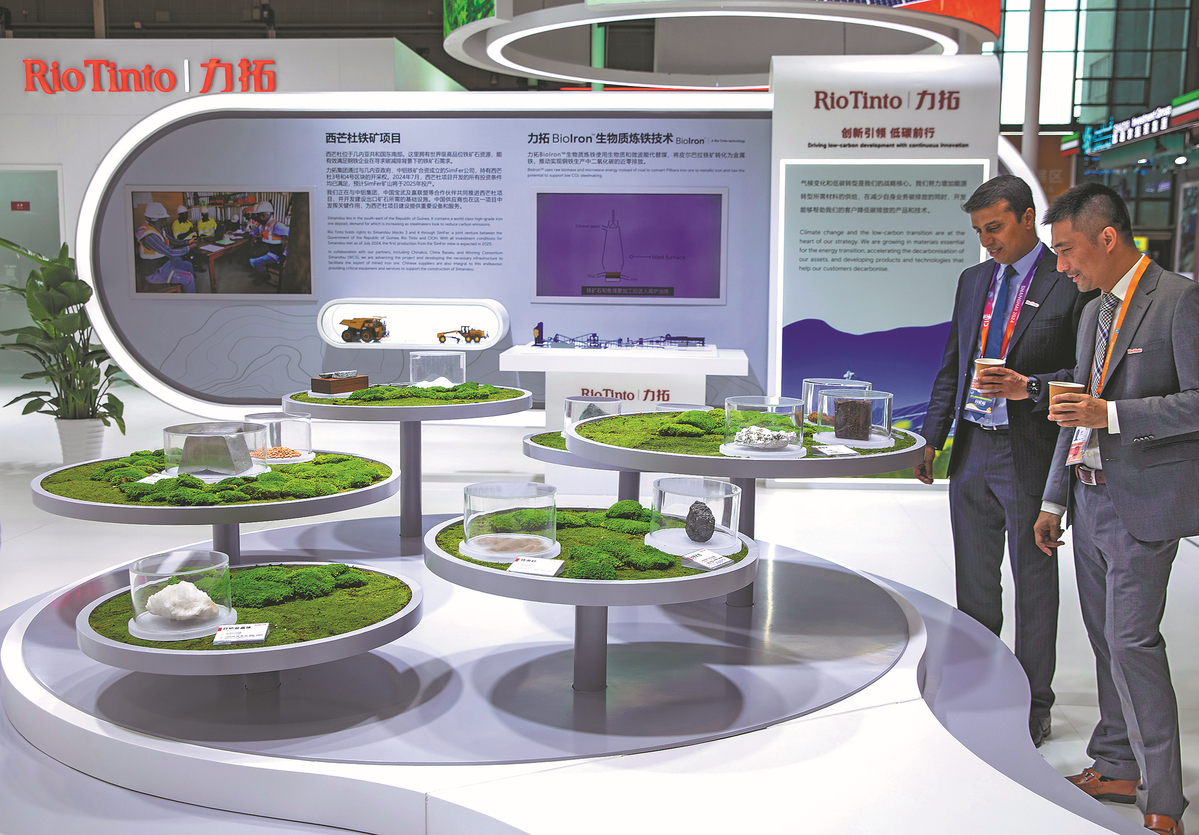
China's ambitious shift toward green energy is set to fuel significant demand for commodities like copper, aluminum and lithium, creating substantial opportunities for multinational mining giants such as Rio Tinto, its top executive said on Monday.
Speaking in Beijing, Jakob Stausholm, CEO of Rio Tinto, underscored China's indispensable role as the world's major manufacturing powerhouse and a cornerstone market for the Anglo-Australian miner.
"China, the manufacturing hub of the world, is fundamental for us and accounts for a commanding 57 percent of our total revenue, solidifying its position as our largest customer," said Stausholm.
Beyond just a market for the company, China has been rapidly evolving into a crucial sourcing partner, with procurement from the country exceeding $4.2 billion in the past year alone, reflecting a deepening economic interdependence, Stausholm said.
He emphasized the country's resolute drive toward a sustainable future through massive investments in solar and wind energy infrastructure, the expansion of sophisticated grid networks, cutting-edge battery production facilities, and the burgeoning electric vehicle industry.
"China is amazing in terms of energy transition, starting from rollouts of solar energy and onshore wind, expanding the grid network, and EVs. It all leads to more demand for our commodities, providing massive opportunities for multinational corporations like Rio Tinto," he said.
Industry experts believe China's rapidly expanding green energy sector represents an unprecedented market opportunity for international energy companies.
China's dual drivers of ambitious carbon neutrality targets and massive renewable energy investments make it a highly compelling destination for global firms, said Wang Lining, director of the oil market department under the economics and technology research institute of China National Petroleum Corp.
Participation in this dynamic market allows companies to tap into the world's largest energy consumer base, diversify their global operations away from traditional fossil fuels and secure a strategic foothold in the vanguard of the global energy transformation, he said.
Stausholm articulated strong confidence in China's economic trajectory, citing the government's recent reaffirmation of its ambitious 5 percent growth target for the current year amidst a complex global economic landscape.
"China is growing strongly and has just reconfirmed a 5 percent growth target for this year. I see increased confidence from the government in its growth target," he said.
"I do think that there is a tremendous number of opportunities for innovative growth in China and beyond. It seems that the growth in innovation seems to accelerate."
To effectively meet this anticipated surge in commodity demand, Rio Tinto is strategically ramping up its global production capabilities.
A cornerstone of this strategy, according to Stausholm, is the imminent commencement of production at two major projects, the world-class Simandou iron ore project in Guinea and the strategically vital Western Range project in Australia, both slated to begin operations this year.
These projects are crucial for ensuring a consistent and reliable supply of high-quality iron ore to China's steel industry and the superior grade of iron ore from Simandou will be particularly beneficial for Chinese steelmakers as they intensify their efforts to reduce carbon emissions within their energy-intensive operations, he said.
Beyond the critical role of iron ore, Rio Tinto is strategically positioned to become a key supplier of a broader spectrum of essential materials vital for China's ambitious energy transition, including lithium, a critical component in batteries powering EVs and energy storage solutions; copper, indispensable for expanding and upgrading electricity grids and renewable energy infrastructure; and aluminum, crucial for light-weighting vehicles and constructing renewable energy systems.
"We are excited to support this innovative growth in China and supplying lithium, copper and aluminum to Chinese industry," Stausholm said.
While acknowledging the prevailing global economic uncertainties and simmering trade tensions that cast a shadow over international commerce, Stausholm emphatically reiterated Rio Tinto's unwavering long-term investment strategy and steadfast commitment to the Chinese market.
China's ambitious energy transition is not merely a regional phenomenon but a global megatrend, said Stausholm.
This will act as a significant and sustained growth driver for Rio Tinto and the broader commodities sector in the foreseeable years to come, positioning the company to benefit from the evolving global economic order, he said.