Vigilance urged as global risks evolve









Global risks are evolving and converging at a pace that is outstripping corporate response capacity, posing growing challenges to employee safety and business continuity, according to the Risk Outlook 2026 report released by International SOS.
The report, released for the 10th consecutive year, warns that geopolitical tensions, extreme weather, misinformation and mental health risks are no longer isolated threats. Instead, they increasingly overlap, forcing companies to prepare earlier and move faster.
"Global uncertainty is reshaping how companies must think about preparedness," said John Williams, managing director of International SOS China. "Risks today are interconnected, dynamic and constantly evolving."
Survey data cited in the report show that 57 percent of managers believe new risks are emerging faster than their organizations can respond, while 74 percent said the window for making critical decisions is shrinking. Yet only 35 percent said they are confident in their ability to mobilize teams and resources in a coordinated way, highlighting what the report describes as a widening preparedness gap.
Geopolitical instability remains the most immediate concern for companies operating abroad. Zhang Yingyan, senior travel risk manager at International SOS China, said armed conflicts and violent incidents rose markedly in 2025 and are expected to remain elevated into 2026.
She cited the Russia-Ukraine conflict, hostilities in the Middle East, and growing unrest in parts of Africa, Asia-Pacific and Latin America, noting that security risks are increasingly spilling into locations once considered relatively stable.
"These developments have become one of the biggest safety concerns for Chinese companies overseas," Zhang said, adding that geopolitical tensions are also disrupting trade relations, supply chains and talent mobility.
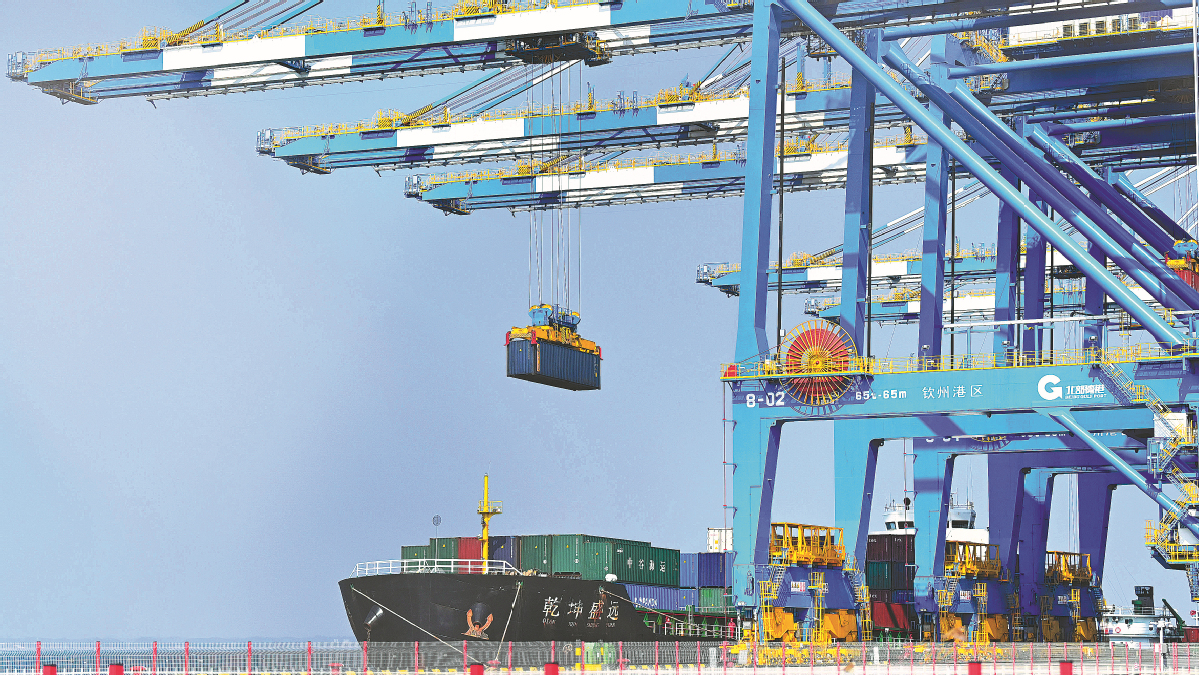
The stakes are particularly high for Chinese enterprises going global. Data from China's Ministry of Commerce show that by the end of 2024, China had about 52,000 overseas enterprises operating across 190 countries and regions, with outward foreign direct investment reaching $192.2 billion in 2024, accounting for roughly 12 percent of global flows.
Zhang added Chinese companies can no longer rely solely on country-level risk ratings when making decisions. Instead, she urged firms to obtain hyper-local intelligence, down to the city or district level, to understand security dynamics and social sentiment.
The report highlights misinformation and artificial intelligence as emerging risk multipliers. Zhang said the rapid spread of AI-generated content has made it increasingly difficult for companies to distinguish credible intelligence from noise.
"About half of online information today is machine-generated," she said, warning that false or misleading information is no longer just a challenge in crisis management but is becoming a catalyst for risk itself.
International SOS advised companies to use AI and digital platforms as filters rather than decision-makers, combining automated monitoring with professional analysis to identify high-value risk signals from large volumes of online noise.
The report also points to a significant gap in corporate attention to employee mental health, particularly for staff working overseas. Li Xia, medical director of assistance services at International SOS China, said while global data show that more than 1 billion people worldwide are affected by mental health conditions, only 17 percent of surveyed companies rank mental health among their top three concerns.
"Burnout, anxiety and stress directly affect productivity, absenteeism and staff retention," Li said, warning that psychological risks often intensify during periods of geopolitical tension and extreme weather.
International SOS urged companies to move away from reactive crisis management toward early detection, scenario planning and regular drills, supported by technology and expert analysis.
"Preparedness is not a document, but a capability that must be practiced," Williams said, adding companies should treat investment in safety, health and intelligence systems as a strategic asset, not a cost.
"In today's environment," he said, "waiting for the next crisis before acting is no longer an option."