Tripartite transition push
COP30 presented an opportunity for participants to advance global climate cooperation in the wake of the US' withdrawal from the Paris Agreement










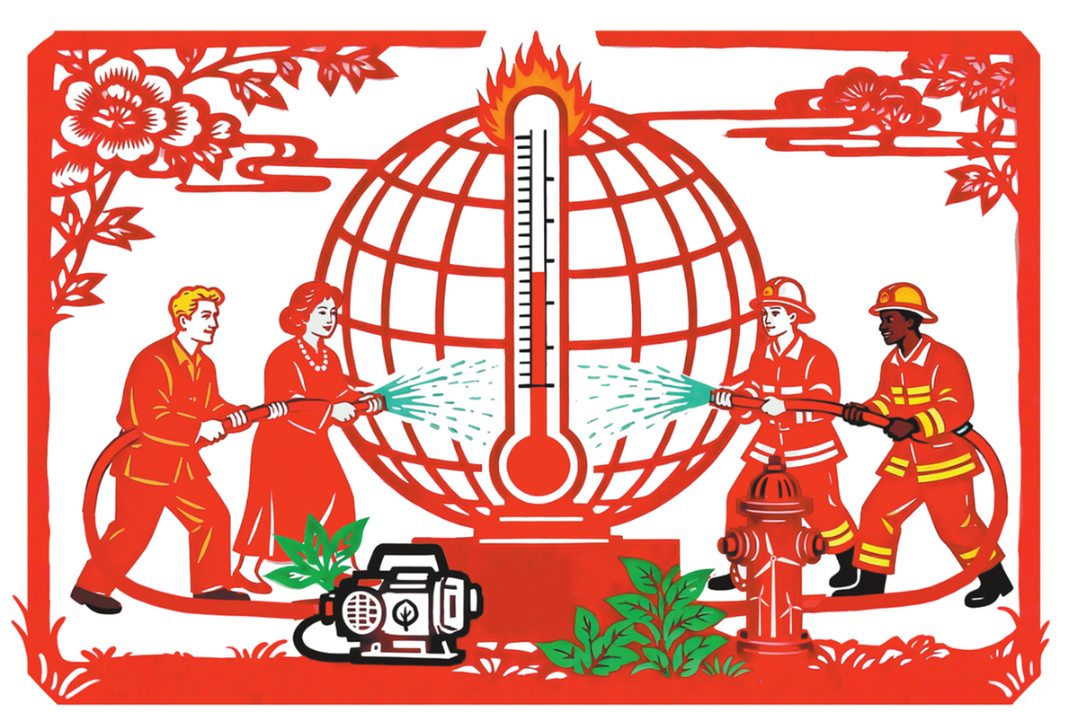
The world enters a decade that demands more trust, cooperation and coordinated action. China and the European Union shape much of the global climate agenda, yet they still move along their own paths. Suppose they find ways to work together, particularly with emerging economies. In that case, they can build a new foundation for climate governance.
China has stabilized its emissions over the past 18 months and expanded renewable energy faster than any other major economy.Europe strengthened its carbon market, which now trades above 60 euros ($69) per metric ton. The World Bank's State and Trends of Carbon Pricing 2025 report notes that there are now 80 carbon pricing instruments in operation worldwide, a net increase of five over the past year. The report shows that all large middle-income economies have now either implemented or are considering direct carbon pricing. These trends signal institutional maturity and a clear commitment to climate goals.
However, Europe's carbon border adjustment mechanism, industrial competition measures and regulatory differences have put pressure on China-EU relations. These tensions influence the broader multilateral system. As a result, global climate governance shows apparent shortcomings.
Brazil, which hosted the recently concluded 30th United Nations Climate Change Conference (COP30) in Belém, is in a unique position to act as a bridge, encourage dialogue and promote convergence.
Brazil and China have built a partnership that is delivering meaningful results. Brazil brings biodiversity, environmental leadership and stewardship of the Amazon. China brings technology, scale and the world's largest renewable energy ecosystem. Together, they hold the capacity to shape global climate action over the next decade.
China is playing a pivotal role in Brazil's clean-energy transition. Chinese companies supply much of the solar and battery technology that is accelerating Brazil's expansion of renewables. Distributed solar power, for example, has grown quickly because falling equipment costs have opened access to millions of consumers.
Environmental monitoring has also gained strength through their cooperation. Joint work on satellite observation, georeferencing and advanced analytics has improved Brazil's ability to track deforestation and illegal activities. These tools support Brazil's environmental governance while enabling China to advance its green technology capabilities.
Scientific cooperation between the two countries continues to expand. Researchers in both countries are exploring low-carbon agriculture, forest management, artificial intelligence for ecosystem monitoring and new materials with lower carbon footprints. The dialogue on electric mobility has also intensified as Chinese manufacturers increase their investments in Brazil. Hydrogen, green industry and innovation now appear in bilateral conversations with growing frequency. This set of initiatives forms the first phase of a broader climate partnership: practical, technological and aligned with global mitigation goals.
To keep the Paris Agreement credible, countries need broader coverage, stronger ambition and a more profound commitment to a just transition. Without support for vulnerable populations, climate policy loses direction.
COP30 created space for the world to adopt more operational and inclusive cooperation. The conference highlighted new ways for China, Europe, Brazil and other Global South countries to work together. Three areas offer concrete potential, especially with strong Brazil-China-EU engagement.
First, China, the EU and Brazil can explore technical coordination among their carbon markets. China operates the world's most extensive emissions-trading system; the EU manages the most established one; and Brazil is advancing toward its own regulated market. A shared platform would encourage methodological convergence, facilitate interoperability and direct finance to forest restoration and just-transition projects. The Amazon can stand as the natural hub for this cooperation.
Second, major economies can create a coalition to support transition efforts in carbon-intensive sectors such as steel, cement and heavy transport. China, the EU, Brazil, along with partners in Africa and Asia, can combine financing, technology and workforce-training programs. Such initiatives align development needs with climate goals and strengthen social stability during the transition.
Third, countries can design a global pact for adaptation, nature protection and forest management.The Amazon offers a unique platform for collaboration that brings together Chinese technology, European finance and Brazilian ecological expertise. Pilot projects in the region can later support vulnerable ecosystems elsewhere.
Looking ahead, Brazil and China can establish a joint mechanism for green innovation. This mechanism can support startups, research centers and pilot projects in fields such as renewable energy, biodiversity, low-carbon agriculture and environmental monitoring. Both countries can also adopt a five-year plan for climate cooperation. This plan can coordinate targets in electric mobility, hydrogen, forest protection and industrial emissions. A structured framework brings predictability and encourages long-term investment.
Finally, Brazil can integrate more deeply into Chinese green-industry supply chains. It can expand local production of batteries, solar panels and electric-mobility equipment, especially in its northern and northeastern regions. This strategy would reinforce climate goals while generating jobs and regional development.
COP30 offered Brazil a rare chance to turn diplomatic ambition into tangible action. If Brazil continues to act as a constructive mediator, the conference would mark the beginning of a new phase in global climate cooperation. Belém could stand as a turning point. The necessary technology already exists.Financial tools already operate at scale. Scientific knowledge already guides solutions. Countries now need political coordination and shared responsibility. If they reach this level of cooperation, COP30 will become the milestone that shapes the climate agenda for the next decade — and strengthens Brazil's role in global governance.
The author is the director of the China-Brazil Center for Research and Business. The author contributed this article to China Watch, a think tank powered by China Daily.
The views do not necessarily reflect those of China Daily.
Contact the editor at editor@chinawatch.cn.