Juncao tech transforms many lives in Rwanda









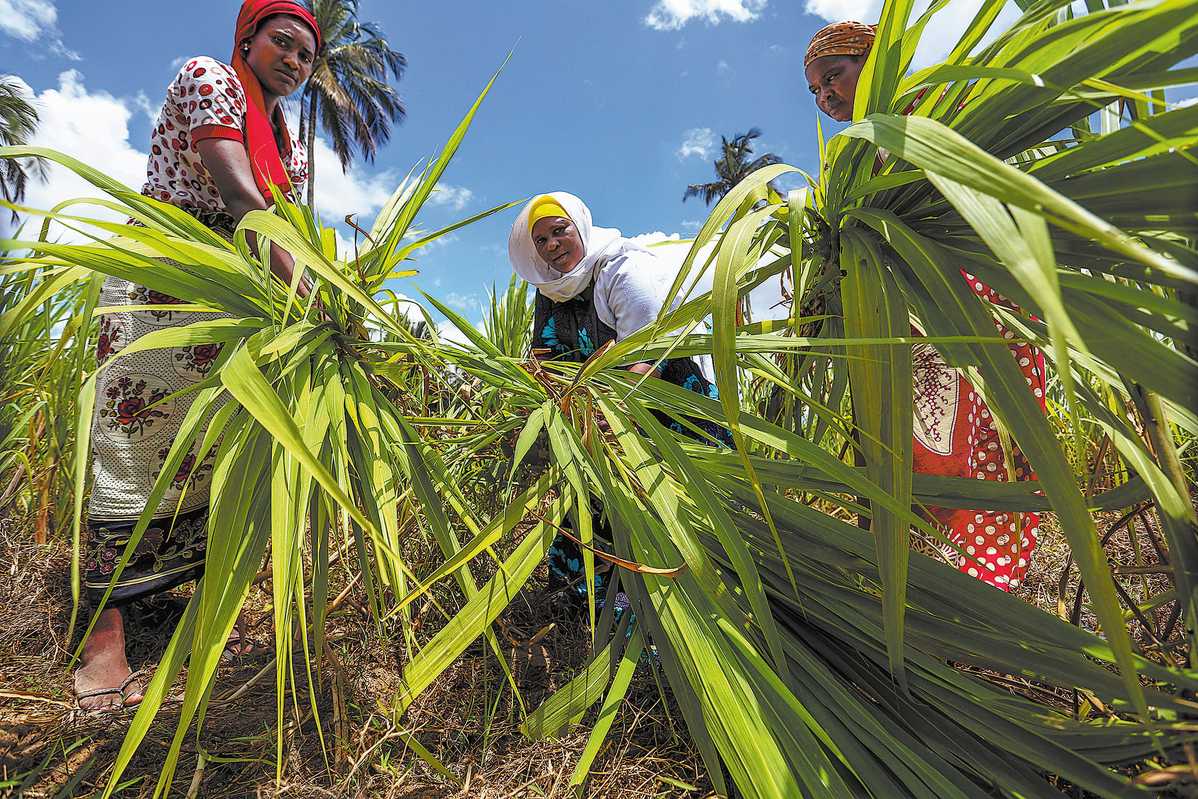
Suzanne Nikuze has come a long way. From a modest experiment in her backyard in the Rwandan capital of Kigali's Gasabo district, to a thriving agribusiness that is transforming lives, promoting sustainable agriculture and combating malnutrition, Nikuze's curiosity about mushroom farming has reaped rich dividends.
After undergoing training at the China-Rwanda Agriculture Technology Demonstration Center in 2018, Nikuze founded an enterprise to train local farmers — mostly women — to grow mushrooms, a lucrative crop in the East African country.
"Other than growing mushrooms, I chose to use my farm to train women to embrace mushroom farming as a path to self-reliance because they often carry the heaviest household burdens," she said.
Once viewed with skepticism, mushroom cultivation is today a mainstream business that is proving to be an economical and environmentally friendly path to poverty alleviation in Rwanda.
Launched in 2006, following a bilateral agreement made at the Forum on China-Africa Cooperation, a scientific exchange program on the promotion of Juncao technology between Rwandan experts and Chinese experts from Fujian Agriculture and Forestry University has since expanded into a nationwide movement.
The introduction of Juncao — a Chinese technology that uses specially cultivated grass to grow edible and medicinal mushrooms — has not only boosted production, but also empowered a new generation of women entrepreneurs and environmental champions in Rwanda.
Juncao offers a sustainable alternative to traditional wood-based mushroom cultivation. It is fast-growing, cost-effective, renewable and nutrient-rich, allowing higher yields while reducing pressure on forest resources.
The locally dubbed "miracle grass" has benefited more than 100 countries and regions by increasing employment, addressing poverty and enhancing ecological conservation. Training and demonstration centers of the technology have been established in Asian, African and Pacific countries.
Empowering youth
In Kigali, Nikuze's workshop offers short-term farming courses. So far, more than 400 young people, most of them women, have been trained. Of the more than 30 employees in the company, 80 percent are women, she said.
Her work has gained support from the Rwandan government, which offers full scholarships to students who join her workshop as part of a broader initiative to promote the adoption of the "miracle grass".
In 2011, China and Rwanda jointly established the China-Rwanda Agriculture Technology Demonstration Center in Huye district, Southern Rwanda, which introduced Juncao technology that was engineered in China in the 1980s.
Bellancile Uzayisenga, the coordinator of the plant and microbial biotechnology program at the Rwanda Agriculture and Animal Resources Development Board, said the center has since trained over 40,000 local farmers.
"Through the center, we introduced 12 mushroom species, both edible and medicinal, as well as the Juncao grass," Uzayisenga said.
The training, organized by the board and Chinese experts, has not only improved local farming practices, but also inspired an entrepreneurial movement among women, she said.
The increasing incorporation of mushrooms into Rwanda's school feeding programs as a nutritious, locally produced food source that supports both child health and local agricultural development has created a surge in demand.
To meet the growing demand, Uzayisenga said the Rwanda Agriculture and Animal Resources Development Board has begun training primary school students, equipping them with the skills to cultivate mushrooms themselves.
"This initiative not only enhances the supply of the nutritious commodity, but also promotes agricultural education and self-reliance among the young pupils," she said.
Uzayisenga said the government agency distributes about 10,000 mushroom tubes per month in an effort to collaborate with more farmers to further expand the technology's reach.
She highlighted that international collaboration has enabled over 2,000 Rwandans to receive handson training and expertise in Juncao technology in China, including two to pursue PhDs in this field.
Innovative drive
After completing his training at Fujian Agriculture and Forestry University and returning to Rwanda in 2013, Leonidas Mushimiyimana established a mushroom cultivation workshop that can produce up to 600 kilograms a week at Kabuye village on the outskirts of Kigali.
In order to reduce post-harvest losses, earn more and extend the shelf life of mushrooms, Mushimiyimana said that 40 percent of his harvest is dried and processed into mushroom powder.
His workshop, Deyi Ltd, is awaiting approval from the Rwanda Standards Board for supplying its products to local retail stores and for exporting to regional markets such as the Democratic Republic of Congo, Kenya and Uganda.
As one of the early adopters of Juncao technology in Rwanda, Mushimiyimana, who is also the chairman of the Mushroom Producers and Exporters Organization in Rwanda, said Deyi works with over 3,500 mushroom growers, from whom he purchases mushrooms for processing and distribution.
Beyond providing food and livestock pasture, Mushimiyimana uses innovative ways to maximize the benefits of Juncao technology by repurposing spent mushroom tubes to produce green charcoal, offering a cleaner, eco-friendly alternative to traditional firewood.
The innovation, which involves carbonizing used tubes and mixing them with cassava flour, helps reduce deforestation and household pollution.
"This charcoal not only reduces emissions and saves trees; it also provides women with a cleaner, safer cooking option," Mushimiyimana said.
The use of green charcoal is helping women who once depended on cutting trees for firewood and supporting Rwanda's innovative drive to manage waste sustainably by turning it into valuable resources.
victor@chinadailyafrica.com