



Decision to promote education of county-level senior high schools timely









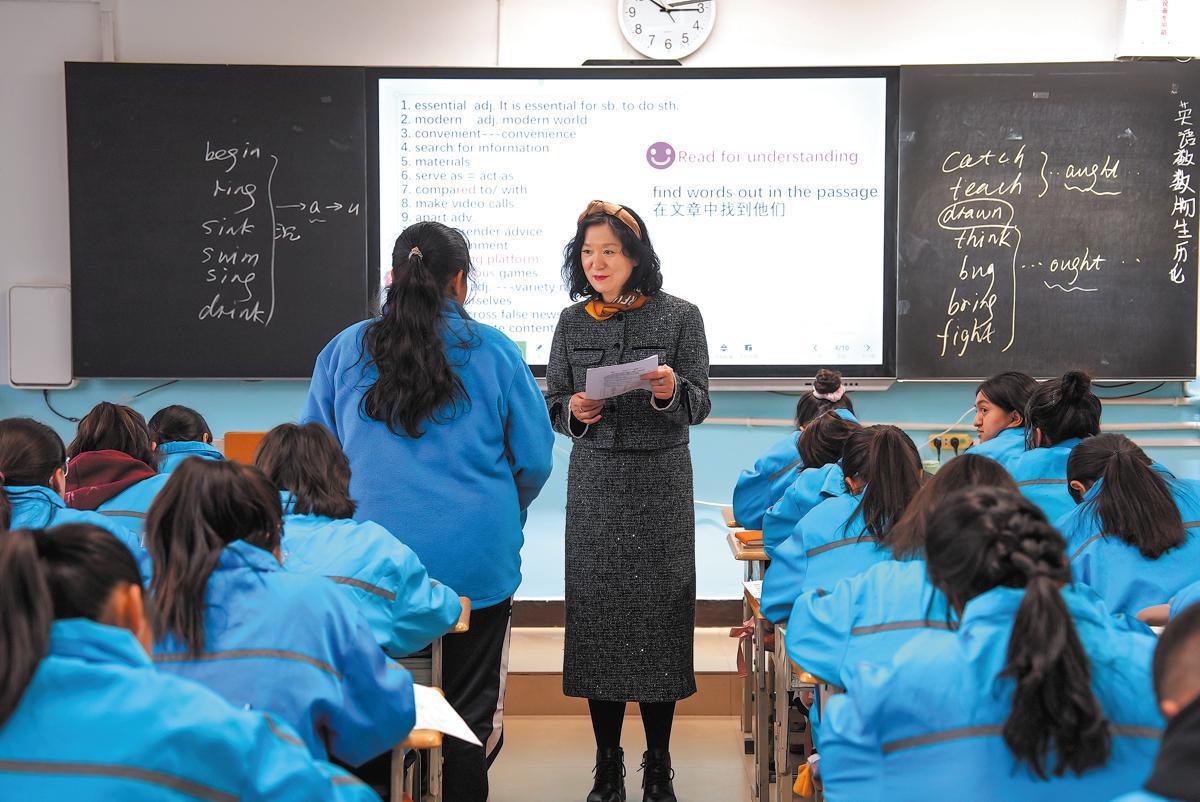
In an executive meeting in late August, the State Council, China's Cabinet, decided to further promote education of county-level senior high schools. The news briefing on the issue, however, was largely neglected by the media which were then busy covering the preparations for the Shanghai Cooperation Organization Summit in Tianjin and the Sept 3 military parade in Beijing.
Media outlets failed to realize not only the significance of the news for millions of rural youngsters but also the strategic importance of the decision in furthering education reform.
According to data, by the end of 2020, there were over 7,200 county-level senior high schools that have recruited many students from rural areas, making up about 51 percent of the national total.
A big part of the financial support for the county-level schools comes from their county governments whose financial state largely decides the condition of these schools.
As a result, some county-level senior high schools in the better-developed coastal areas boast advanced labs, well-equipped libraries, comfortable dorms and excellent gyms.
But in the less-developed areas, where counties are usually short of money, even the best senior high schools may lack necessary teaching facilities and quality teachers.
The proportion of urban high school teachers with a master's degree is much higher than that of county-level schools.
Teachers in urban areas also have three-time more opportunities for participating in professional knowledge-refreshing training than their county-level counterparts.
And only some of the graduates from county-level senior high schools can advance to universities after clearing the college entrance examination.
Although the details of the State Council's new arrangement are not yet known, we hope the central government will provide more monetary support for county-level senior high schools in less-developed areas while urging the local governments to invest more in such schools.
Increased investment by the central, provincial and county governments will allow county-level senior high schools to create more seats for students and enjoy better facilities.
China has been pursuing urbanization, encouraging people in rural areas to work and live in towns and cities. Greater education opportunities, better education facilities and qualified teachers attract new immigrants to an urban area.
Improved education quality in county-level senior high schools should play a big role in ensuring both rural and urban students receive quality education.
Now that the central government has decided to promote education of county-level senior high schools, I'm sure education facilities in the senior high schools will be greatly improved in a few years.
What is difficult, though, is improving teaching and managing staff. Hence, special arrangements should be made to encourage teachers' exchange programs between rural and urban schools.
In fact, such exchanges are already taking place in some regions, though they're not as regular or popular as they should be.
Attractive preferential policies, including better pay, more promotion opportunities, and housing and other subsidies, should be offered to encourage teachers with higher qualification to teach in county-level senior high schools in remote areas.
Some regions have already implemented some of the above-mentioned policies. But such policies need to be applied nationwide to make them more authoritative and attractive.
The central government can also consider extending its compulsory education program from the present nine years to 12 years, because it will help reduce the financial burden of many rural families that want their children to receive education at least up to the senior high school level.
Since most of the county-level senior high schools are boarding schools, students' parents have to pay for not only tuition but also accommodation, food, textbooks, uniforms, transportation, and miscellaneous expenses.
The yearly expenditure on a senior high school student could be anything between 15,000 yuan and 25,000 yuan.
The inclusion of the three-year senior high school education in the compulsory education program will help millions of rural youngsters to continue their academic pursuit after completing junior high school education, thus enlarging our pool of potential talents.
The author is former deputy editor-in-chief of China Daily.
The views don't necessarily represent those of China Daily.
If you have a specific expertise, or would like to share your thought about our stories, then send us your writings at opinion@chinadaily.com.cn, and comment@chinadaily.com.cn.





