'Coffee tourism' aims at integrated development










KUNMING — In early autumn, as the morning mist lingers, workers in Shuangjiang county, Southwest China's Yunnan province, are busy pruning branches and weeding in the coffee fields of the Nest Coffee Estate. Meters away, visitors learn to brew coffee by hand. The scent drifts downhill like soft music, and the first sip tastes of velvet, fresh fruits and a village's new beginning.
In recent years, trendy estate-style "village cafes" have not only infused the countryside with a touch of modern chic, but also become beacons of urban-rural integration and rural vitalization.
Once, the estate's only goal was to grow beans. Now it blends farming, roasting and guesthouses into a single cup, said Wang Xuxuan, head of the Nest Coffee Estate. Last year alone, it sold 25 million yuan ($3.5 million) worth of coffee and put an extra 3,000 yuan into each coffee bean farmer's pocket.
Across Yunnan, home to 98 percent of China's coffee, coffee bean plantings exceed 80,000 hectares and annual output tops 140,000 metric tons. The bean has become the province's quiet engine.
Harnessing its unparalleled coffee cultivation strengths and rich tourism offerings, Yunnan has forged a comprehensive value enhancement pathway for the coffee industry, spanning from field to plate, production to consumption, and product to culture.
As consumer trends evolve, both coffee lovers and tourists are increasingly seeking out immersive experiences and picture-perfect moments.
In Pu'er city, renowned for its eponymous tea, coffee has emerged as another shining calling card. The city has actively integrated coffee and tourism, creating a variety of vibrant scenes such as coffee estates, coffee-themed streets, and coffee culture fairs, all of which have become popular with visitors from near and far.
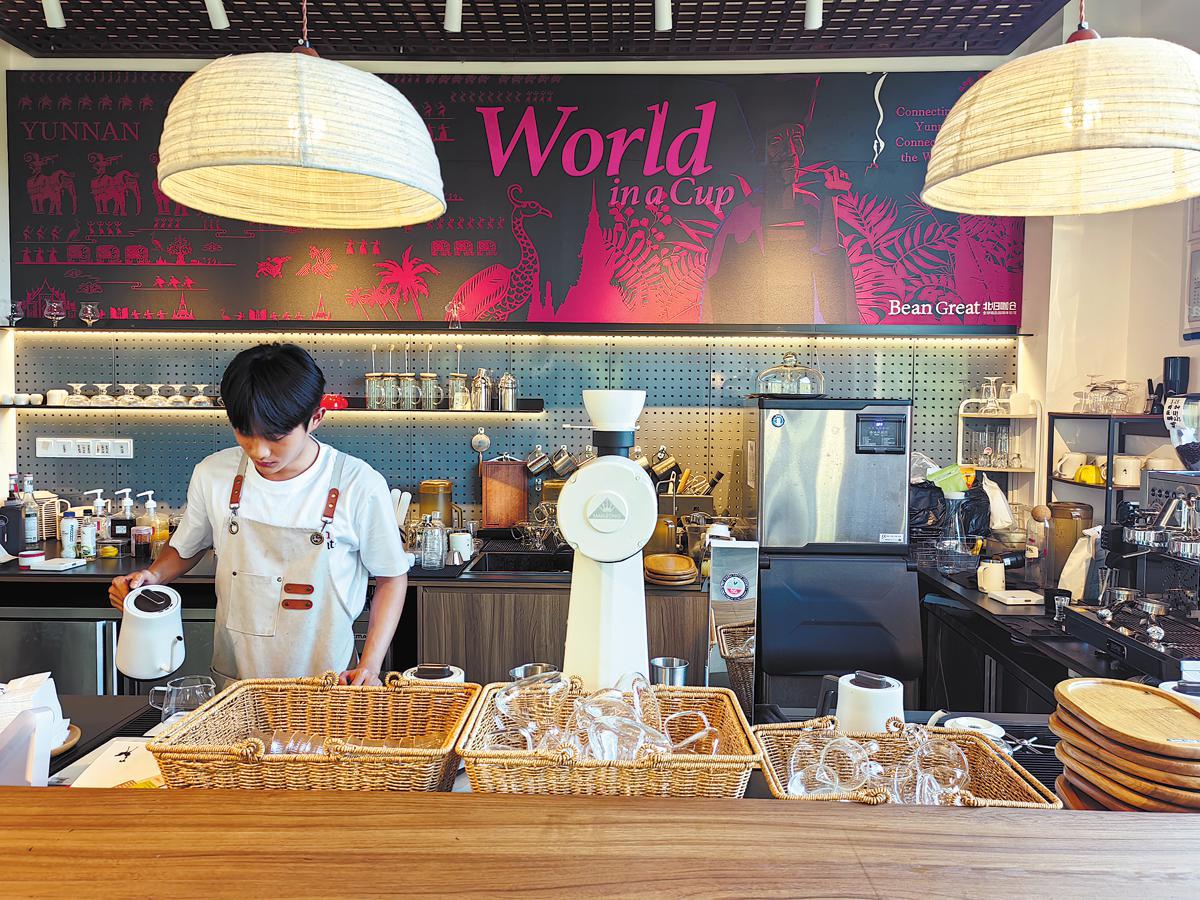
In Nanping town of Pu'er, the humble coffee bean has given rise to a substantial "estate economy". Nanping has completed the construction and upgrade of seven boutique coffee estates, attracting over 1 million visitors annually.
Data indicates that during this year's Chinese New Year holiday, Pu'er city received more than 3.25 million visitors, marking a year-on-year increase of 13.71 percent, while their tourism spending reached 3.44 billion yuan, up 13.21 percent year-on-year.
Visitors to Xinzhai village in Longyang district, Baoshan city, acclaimed as "China's first coffee village", are enveloped in a rich coffee atmosphere, from the coffee trees lining the roadsides to the coffee-themed cartoons adorning house walls. Here, coffee is more than just a beverage; it's a daily staple intricately woven into the lives of the locals.
Each year, Xinzhai hosts coffee tourism festivals, coffee brewing competitions and international expert forums, offering visitors a one-stop coffee cultural experience service. To date, the village has established five boutique coffee estates and attracted 13 coffee companies, receiving 200,000 visitors annually and earning its reputation as a famous tourist village in Yunnan. "From coffee bean roasting to coffee brewing, there's always something new to learn at every step," said Ye Xiaojun, a coffee enthusiast from East China's Jiangsu province, who brought his daughter here for a study tour in July and enjoyed a fulfilling summer vacation.
Technology and culture go hand in hand. Today, mobile apps can track soil moisture while drones spray organic nutrients in the coffee fields. For consumers, QR codes on every bag help them easily trace the journey from seed to cup. Cloud-backed livestreaming allows city dwellers to watch the beans dry and crackle, then click to instantly purchase the product. Thanks to modern logistics, warehouses in Beijing, Shanghai and other cities across the country now can dispatch orders overnight.
From misty ridges to neon cafes, Yunnan's coffee story has become a recipe for rural revival.
Through technological empowerment, premium transformation, business innovation, cluster development and cultural integration, Yunnan's "coffee tourism" has gradually achieved value enhancement across all links of the industrial chain, said local authorities.
Xinhua





- China hits 469m motor vehicles in 2025 amid drop in dangerous driving cases
- Fujian deepens cross-Strait integration with Taiwan through infrastructure and cultural initiatives
- Winter sports push tourism in NE China's Jilin
- 'Beijing Rocket Street': A launchpad for accelerated development
- Capital city targets 5% GDP growth for 2026
- 17 rescued Filipino sailors handed over