Wartime theater returns as beacon of resistance










Kangjiantang, translated to "a theater built during the War of Resistance" in Chinese, has reopened to the public in Chongqing after seven years of restoration. The opening marks the 80th anniversary of the victory in the Chinese People's War of Resistance Against Japanese Aggression (1931-45) and the World Anti-Fascist War.
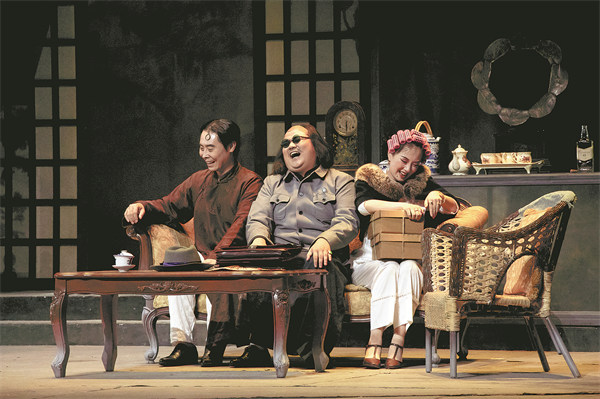
On Aug 15, The Monkeys, a cornerstone of satirical comedy in China, began its weekly performances at the theater to mark the official launch of the Kangjiantang cultural brand.
The show, penned by renowned playwright Song Zhidi (1914-56) in 1946, is set during the period when the Kuomintang held elections in areas under its control, claiming to implement "democratic constitutionalism".
However, the election turned into a farce of political rivalry filled with vote-buying, violence, and factional infighting.
Song used the microcosm of county mayor Sun Weiben's cramped living room to reveal the absurdities of political opportunism.
With sharp dialogue and biting humor, the play mirrors the chaos of its time.
To give the audience a more immersive experience, each performance ends with an interactive segment in which viewers step into the role of the drama's police officer.
"During rehearsals, I focused on helping today's young audiences understand the style and performance of satirical comedy from over 60 years ago," says Liang Donghua, director of the show.
This over-80-year-old historical building stands in Chongqing's Yuzhong district and takes its name from a well-known Chinese wartime slogan: "Victory in the War of Resistance, success in nation-building".
In 1937, the Kuomintang government established Chongqing as China's temporary capital and the southwestern city began to play a crucial role in the Asian theater of World War II.
Established in 1941 with the support of leading figures such as Zhou Enlai, who later became premier of the People's Republic of China, Guo Moruo, former president of the Chinese Academy of Sciences, and renowned Chinese playwright Yang Hansheng, the theater served as a hub of dramatic creation and performance in the war's rear areas.
Back then, the theater was also a cultural landmark that embodied the golden era of Chinese drama — having staged more than 70 plays, with 33 premieres. Among them were Beijingers by Cao Yu (1910-96) and Returning Home on a Snowy Night by Wu Zuguang (1917-2003).
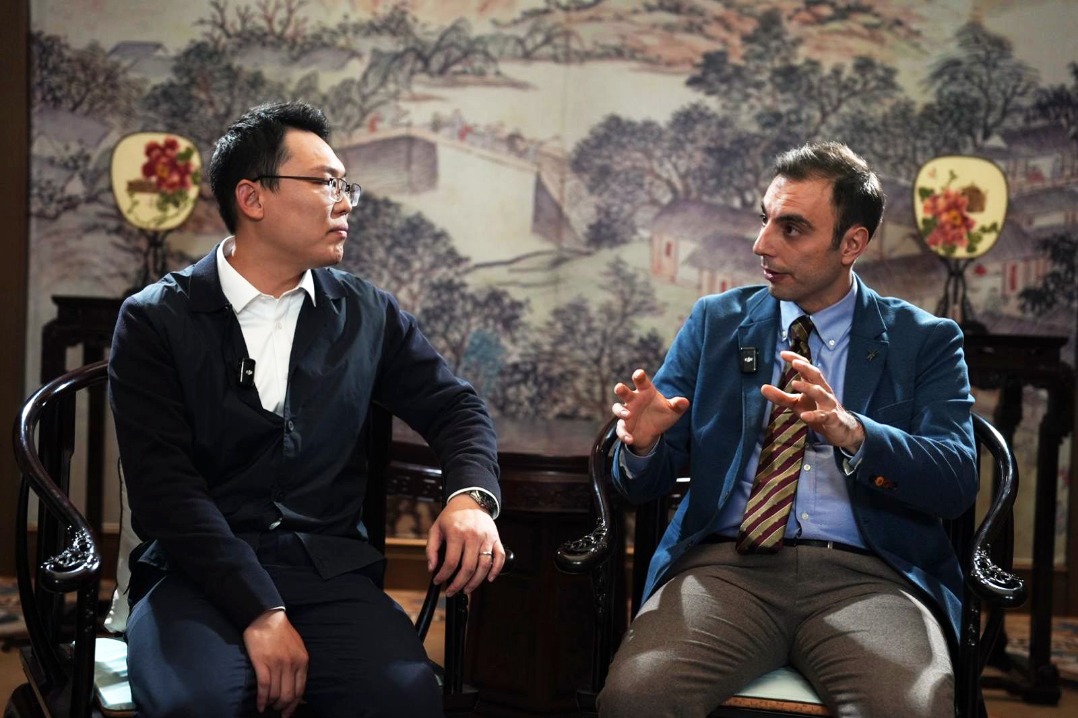
"The theater was not only a place of artistic innovation but also a symbol of the nation's resistance against Japanese aggression," says Zhang Jian, chairman of the Chongqing Drama Arts Center, which operates the theater.
After years of decline, the company embarked on a seven-year renovation to revive the building and reposition it as a center for cultural life. Today, it combines exhibitions, performances, and interactive programs.
"If you haven't been to Kangjiantang, you've only seen half of Chongqing," Zhang adds.
The revitalization project goes beyond bricks and mortar. The restored building now houses a museum dedicated to wartime dramas, highlighting how theater helped sustain morale and strengthen national unity.
It also anchors a new cultural district, with programs designed to revive classic plays and promote creative exchange.
"The museum holds great significance," Zhang says. "It allows people across the country to learn about the history of using theater to commemorate the War of Resistance, showcasing the spirit of unity and collective effort during the war. This history is crucial for the development of Chinese theater, providing us with inspiration and nourishment."
Despite the momentum, challenges remain. Nestled in a dense residential area of downtown Chongqing, the theater must carefully balance its active programming with the daily lives of its neighbors.
Its small scale and modest revenue also pose long-term hurdles, Zhang notes.
Liang Jue contributed to this story.