



Lessons from green factories for developing countries









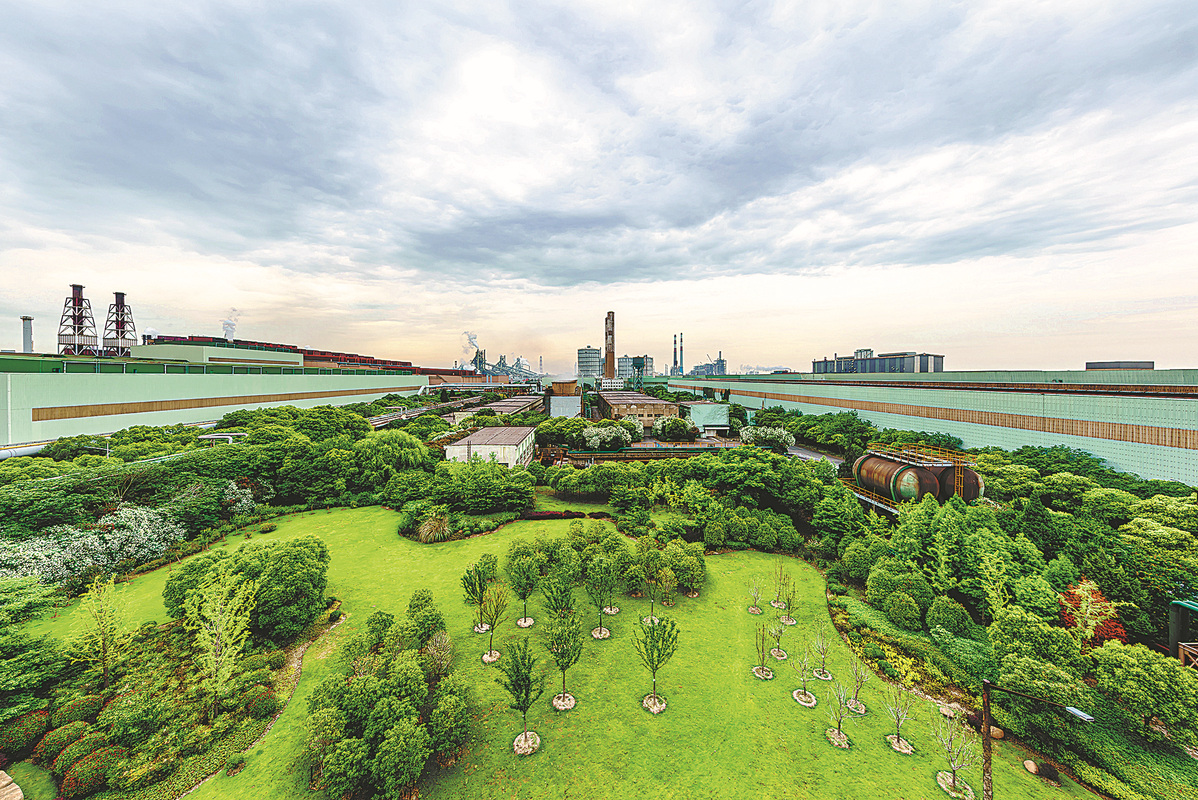
Editor's Note: Brazilian media Forum Magazine recently published an article stating that for decades, industrial growth and sustainability seemed at odds with each other, but now, China's green factories are striving to prove that the two can go hand in hand and even transform sustainability into a source of strength. In an interview with People's Daily Overseas Edition, Xu Yingming, a senior researcher of green trade at the Chinese Academy of International Trade and Economic Cooperation, expounded on China's experience in this regard. Below are excerpts from the interview. The views don't necessarily represent those of China Daily.
This year marks the 20th anniversary of the concept of "lucid waters and lush mountains are invaluable assets". For two decades, this scientific philosophy has guided China's continuous exploration of ways to achieve coordinated progress of ecological protection and economic development. By 2024, China's energy consumption per unit of GDP had decreased by 11.6 percent compared to 2020, equivalent to a reduction of 1.1 billion metric tons of CO2 emissions.
Focusing on core objectives such as intensive land use, harmless raw materials, clean production, waste resource utilization and low-carbon energy, green factories continuously promote intensive utilization of infrastructure, management systems, energy and resource inputs and products. This makes them a key vehicle for green development throughout the product life cycle and manufacturing industry chain.
Over the past decade, green factories, as the core implementation unit of green manufacturing, have been a major driving force in China's efforts to build an efficient, clean, low-carbon and circular green manufacturing system. Since the launch of a national green factory selection program in 2017, China now has over 6,400 national-level green factories, whose output value accounts for 20 percent of China's total manufacturing output. By 2030, the output value of green factories nationwide is expected to exceed 40 percent of the total manufacturing output value.
Cognitive shifts, policy support and improved standards are key initiatives in China's efforts to promote the development of green factories. On a conceptual level, China is shifting from its past extensive development model to green development, transforming the concept of green development into a quantifiable, replicable, and sustainable closed-loop system of "strategy-management-technology-culture".
On the policy level, China provides substantial policy and financial support for the green transformation of enterprises through multifaceted support, including direct financial incentives, tax incentives, energy conservation and emissions reduction subsidies, green product certification incentives, and green investment guidance funds.
In terms of the standardization system, by implementing and updating a series of policies, standards and regulations for industries such as steel, nonferrous metals, chemicals, and rare earths, a "general principles+ guidelines+ detailed rules" implementation system has been established.
In accordance with the dynamic management requirements of the interim measures for the undertaking, the country plans to annually remove noncompliant green factories, green industry parks and green supply chain management companies from the green manufacturing list.
This ensures that green factories serve as role models, continuously improve green manufacturing standards and promote the green transformation and upgrading of the manufacturing industry. Except for green factories' contribution to environmental protection, the high-value-added green products they produce can also better meet the demand for sustainable consumption in both domestic and international markets. This helps break down green trade barriers, significantly enhance companies' market competitiveness and brand image, foster new drivers of green economic growth and achieve a seamless integration of environmental and economic benefits.
China provides developing countries with a green development plan that deeply embeds green elements throughout the entire industrial process. The country has achieved systematic technological breakthroughs which can provide developing countries with a systematic, intelligent and green menu-style technical support solution.





