Preparatory consensus a good start to stabilize Sino-Indian relations









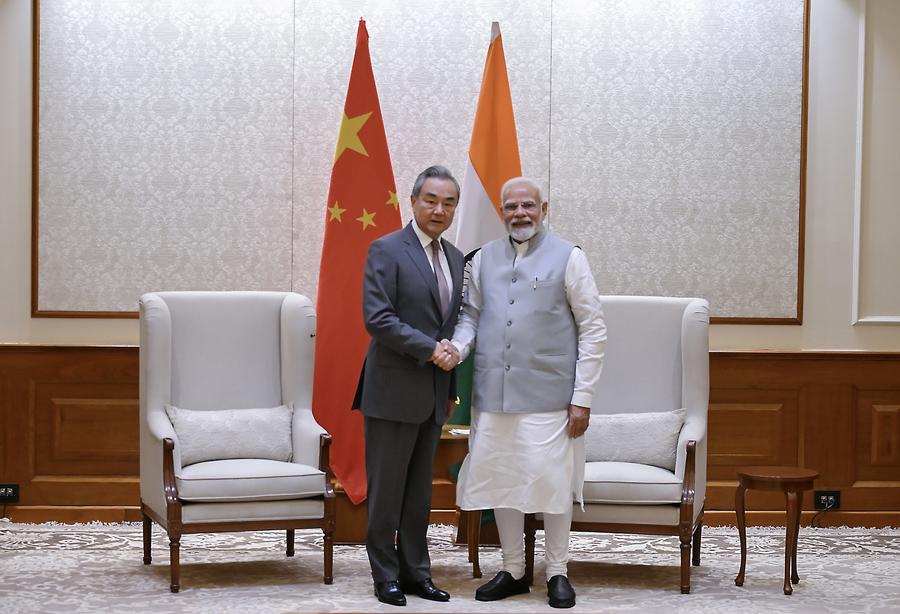
Chinese Foreign Minister Wang Yi described his just-concluded visit to India as preparation for high-level exchanges between the two countries. His trip saw the two sides reach a broad consensus on restarting dialogue mechanisms in various fields, deepening mutually beneficial cooperation, upholding multilateralism, jointly addressing global challenges, and opposing unilateral bullying.
Transforming that consensus into concrete results will likely be on the agenda of Indian Prime Minister Narendra Modi during his forthcoming visit to China starting Aug 31.
Although attending the Shanghai Cooperation Organization Summit in Tianjin has been cited as the main purpose of Modi's visit, the series of outcomes of Wang's talks with his hosts-Wang met with his Indian counterpart, India's national security advisor and Modi during his stay — suggests that during Modi's first visit to China in seven years the Indian leader will also focus on promoting the healthy development of Sino-Indian ties.
While some attribute the improving Sino-Indian relations to the United States' recent pressure on India over trade issues, it should be noted that the two neighbors started mending ties — strained following the border clash in 2020 — long before the US-Indian economic relations soured. The meeting between the leaders of the two countries during the BRICS summit in Kazan, Russia, in October last year was widely perceived to be the turning point for the improvement in bilateral relations.
China's relations with any other country, including India, do not target any third party. And China's stance on its ties with India and its foreign policy toward the important neighbor have been consistent. It is not subject to changes in the external environment.
The improvement in Sino-Indian ties should not be regarded as simply a result of the pressure from the US' tariff onslaught, but a deliberate choice they have made for the common good of the two nations.
New Delhi knows that the series of ill-advised and restrictive policies it has rolled out against China since 2020, in trade, investment and people-to-people exchanges, have harmed India as well as China. It is good to see the Indian side accelerating efforts to resume exchanges and cooperation with its neighbor.
Two time-honored civilizations, large developing countries and important members of the Global South, China and India both stand at a crucial phase in their respective modernization endeavors. China-India relations are essentially a question of how the two large developing countries and neighbors, each with a 1.4-billion-strong population, treat each other. It is in the fundamental interests of both countries to maintain the positive momentum in their relations.
Development being the biggest shared goal, China and India have no reason to let their border issue stand in the way of their otherwise mutually beneficial collaboration. It is thus important that the Indian side embraces what the Chinese side has long maintained — that the two countries are each other's development opportunity rather than threat, and cooperation partner rather than competitor.
Maintaining a sound strategic perception of China is necessary for India to meet China halfway so they can achieve the common goal of keeping Sino-Indian ties on the right track. That way the two neighbors can avoid a third party driving a wedge between them. To that end, New Delhi should ensure its China policy is consistent.
Bilateral ties have experienced ups and downs, and the lesson that no matter what happens, the two neighbors should maintain the correct perception of each other, should be learned from the past, as Wang noted.
Working together to find the right path to live side by side in harmony serves the common interests of the two neighbors. China and India should shoulder their responsibility, manage their differences and set an example in boosting the strength and unity of the Global South. In doing so, they will make a shared contribution toward promoting a multipolar world and greater democracy in international relations.