



Countryside an open-air classroom for youths









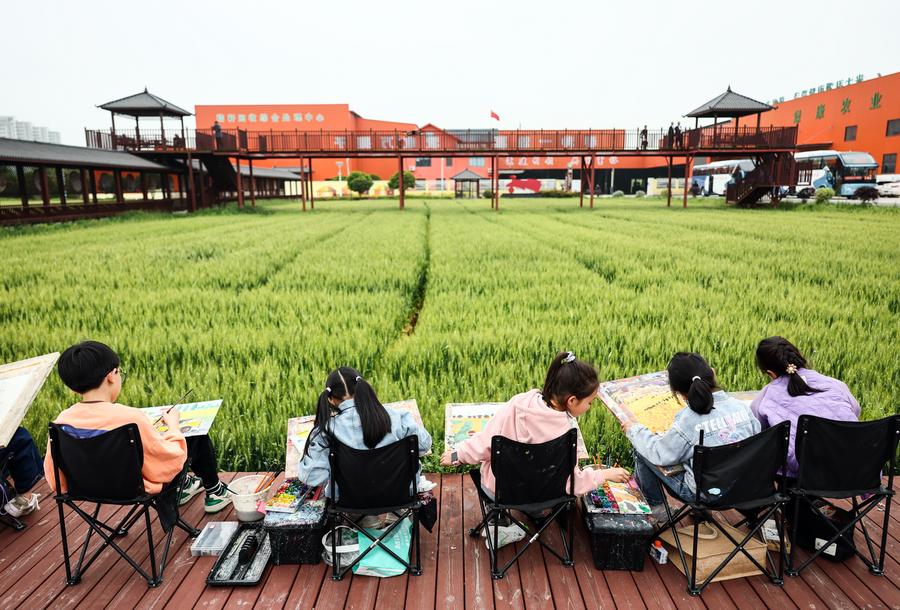
Editor's Note: The integration of education with rural tourism has become one of the driving forces of local economic growth. While talking to People's Daily Overseas Edition, Jin Zhun, secretary-general of the Chinese Academy of Social Sciences' Tourism Research Center, emphasized the role of study tours in rural vitalization and how they can be further developed. Below are excerpts from the interview. The views don't necessarily represent those of China Daily.
In recent years, study tours have shifted from cities to the countryside because rural areas provide an irreplaceable form of "living" learning that urban settings cannot offer. The countryside is a vast open-air classroom that puts abstract knowledge into real-life contexts. Through multisensory experiences, young people gain a deeper understanding of ecological cycles, the value of labor and cultural inheritance. With the healing power of nature and its cultural richness, the countryside has become an important destination for their growth and cultural identity.
This trend reflects China's growing emphasis on quality-oriented education. Schools do not evaluate students on scores alone. Learning is shifting from passive knowledge infusion to active inquiry and project-based exploration. Rural study tours provide an ideal setting for integrated education in morality, intellect, physical fitness, aesthetics and labor. In the countryside, students encounter problems and work hands-on to solve them, an essential path to cultivate independent thinking and innovation. Collective living and social interaction strengthen in them principles such as social responsibility and teamwork.
The increase in study tours has changed the business model of rural tourism. Unlike traditional rural tourism, which focused on leisure with concentrated flows on weekends, student visitors from schools and institutions travel mainly on weekdays, filling market gaps and improving resource efficiency.
More importantly, study tours have transformed rural offerings from homogenized "food, lodging and sightseeing" into structured curriculum experiences. These courses, developed from unique local resources, carry higher value, offer stronger appeal and differentiation and help villages build competitive advantages.
Study-oriented tourism activates not only the landscape but also people and culture. Villagers can serve as labor mentors, cultural heritage bearers can run workshops and agricultural products gain added value through educational stories. This extends the industry chain from tourism services to knowledge, culture and creative agriculture, fostering diverse business models and shared prosperity. The goal is not only short-term economic gains but also sustainable development by tapping into culture, cultivating talent and shaping brands.
To make study tours a true engine for sustainability, rural areas must move beyond superficial displays and transform resources into themed curricula. A mountain and river should become a course on water conservation. Fruit-picking can evolve into a full-chain project from sowing to branding. Traditional crafts and old houses can be turned into interactive scripts.
Today, more overseas youth are joining rural study tours. This is a unique window for the world to see the real China. By working alongside Chinese farmers, stereotypes give way to vivid stories and authentic village life. This immersive, two-way dialogue plants seeds of understanding and friendship across cultures, serving as an effective "people-to-people diplomacy". Every successful overseas study tour becomes a calling card of China's soft power and may help in rural vitalization.
To make the most of this trend, villages must prepare systematically. Their infrastructure must meet international standards, with bilingual signage, proper sanitation and convenient payment channels. Service capacity should include multilingual mentors and tailored courses that reflect diverse cultural backgrounds. Most importantly, cultural expression should be communicated in ways that enable international youth to truly appreciate the charm of rural China.





