Huitong Bridge spirit still inspires









In June 1932, the head of Longling county went to Burma asking Liang to endow the bridge. Liang agreed. He sold two businesses and one factory, and donated the proceeds to the bridge construction.
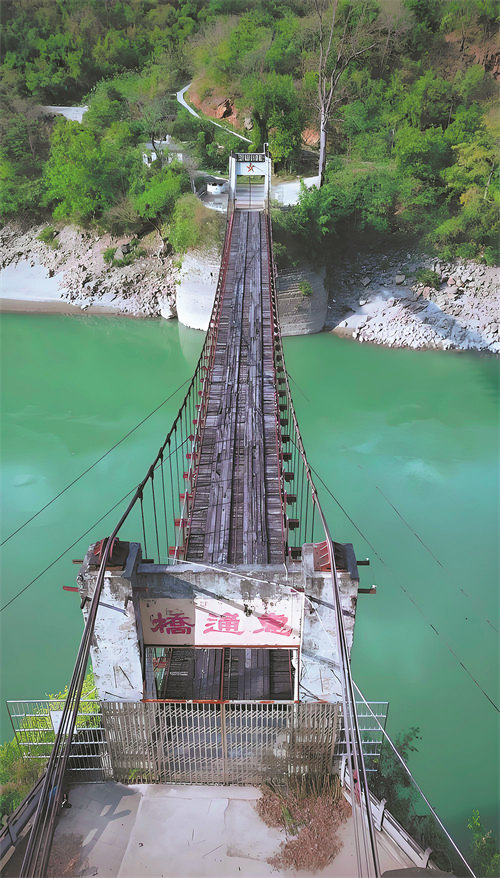
After three years of hard work, the bridge, 123 meters long and 5.67 meters wide, was completed in 1935.At the inauguration ceremony, rejecting the proposal to name the bridge after him, Liang Jinshan named it Huitong Bridge, meaning "the connection brings benefits and prosperity".
In 1937, when the Chinese government decided to build a highway connecting Kunming to Burma to transport strategic supplies purchased abroad and received as international aid, the Huitong Bridge became the "throat" of the route.
Between December 1938 and May 1942, a total of 452,000 metric tons of supplies passed over the highway as well as the bridge, accounting for more than 90 percent of all international aid. Ninety percent of the strategic supplies were transported by more than 3,200 overseas Chinese from Southeast Asia who volunteered to do the work.
Over 100,000 tons of supplies were transported from Rangoon using 200 Dodge T-234 trucks that Liang generously provided.
In addition to this, he donated an aircraft and purchased half of the National Salvation Public Debt allocated to Yunnan. Furthermore, Liang contributed a fixed sum of money each month to support resistance efforts until the war's conclusion.
Due to his contributions and active role as the leader of overseas Chinese to fight the aggression, the Japanese army put a price on his head, but he evaded capture.
Liang abandoned all his businesses and estates in Burma and returned to China.
In May 1942, hearing of the decision to detonate Huitong Bridge, Liang was emotional but agreed, saying that he believed that, after winning the war, it would be restored.
Huitong Bridge became a legend during China's resistance against Japanese aggression. Yu Ge, author of Huitongqiao Zhizhan (The Battle of the Huitong Bridge), compares the critical battle around the bridge in 1942 as China's "Dunkirk".
"In the history of the resistance war, the Battle of Huitong Bridge held a unique and irreplaceable value — much like the Dunkirk evacuation in the European theater. It preserved forces for the great counteroffensive two years later and planted the seeds of ultimate victory," said Yu at the book launch ceremony last year.
Historians see the demolition of the bridge as "one minute that changed history".
The Nujiang Grand Canyon, where Huitong Bridge stands, has long been dubbed "Nature's Impenetrable Moat".
In 1935, when Liang built the modern cable bridge, the steel cables, manufactured under British supervision in Burma, were transported from Lashio to the banks of the Nujiang River.
At that time, Burma Road had not yet been constructed. According to an article by Lin Wenqiao, a professor from Guangdong University of Finance and Economics, the Eight Great Caravans of Western Yunnan linked 50 horses into a continuous line, securing sections of steel cables on both sides of each horse's back. Guided by two or three caravan masters per animal, the horses moved in unison under coordinated commands. Their path descended from Songshan Mountain to the Nujiang River — a narrow, winding trail with gradients exceeding 30 degrees — where the slightest misstep by any horse, whether too fast or too slow, risked catastrophe.
In October 1938, to integrate with the Burma Road project, the original Huitong Bridge — which could previously only accommodate packhorses — was reinforced and reconstructed into a steel-cable suspension bridge capable of carrying 10-ton trucks, with 1,000 chestnut timbers used for the bridge deck sourced from remote virgin forests — a seven-to-eight-day trek on foot — and then hauled by hand to the construction site.
While German forces swept through Europe, Japanese troops remained bogged down in the Chinese theater, unable to advance their "Southern Expansion Policy "into Southeast Asia. The Japanese government believed that only by severing international aid to China could they force its capitulation.