Breakthrough could aid brain disease diagnosis, treatment









Chinese scientists and their global partners have achieved a milestone in brain mapping, successfully charting not only rodent but also primate brains in a move they say will advance global brain science and bring humanity closer to creating a high-precision map of the human brain.
Led by the Center for Excellence in Brain Science and Intelligence Technology at the Chinese Academy of Sciences, the collaboration involved more than 30 research institutions in China and other nations, including France, Sweden and the United Kingdom.
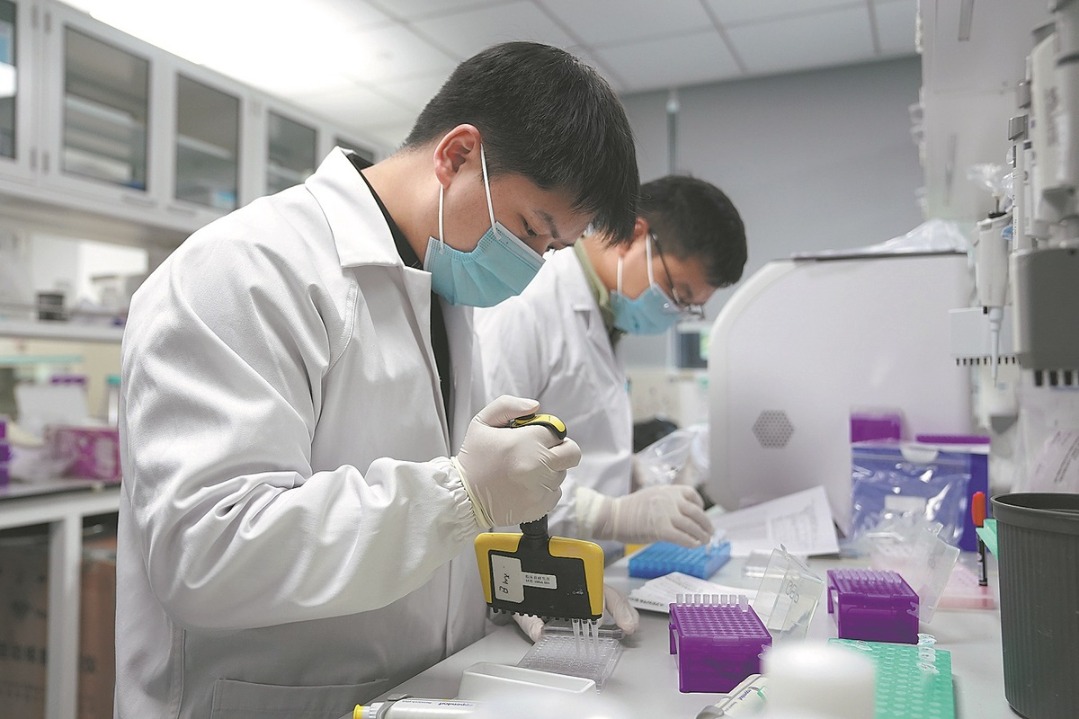
Using high-resolution three-dimensional whole-brain imaging, spatial transcriptomics and artificial intelligence, the team analyzed the diversity of brain cell types, connectivity patterns, developmental and evolutionary changes, and molecular mechanisms underlying brain disorders.
The research, detailed in 10 papers published on Thursday in the journal Cell and its sister publications Neuron and Developmental Cell, could aid early diagnosis and precise treatment of brain diseases while also advancing brain-inspired AI, scientists said. Two of the papers were selected as cover stories.
Brain intelligence originates from the diversity of nerve cells and the complexity of neural connections, researchers said. With nearly 100 billion neurons and trillions of connections in the human brain, mapping the primate brain is key to understanding how the brain handles perception, movement, learning, memory, decision-making and consciousness.
The research covered key species, including reptiles, birds, rodents, non-human primates and humans, enriching international efforts in brain mapping across species and over time.
Unlike previous studies, these breakthroughs were driven by "autonomous mapping technologies" and established a framework focusing on circuit analysis, evolutionary decoding and disease research, researchers said.
Shi Yongyong, acting director of the CAS center, said the team achieved several firsts, including the automated reconstruction of macaque neurons, large-scale collaborative proofreading, and obtaining the projectome of more than 2,200 macaque neurons. They also discovered a "refined and efficient" neural connectivity pattern in macaques, challenging the idea that higher species have more complex neurons.
The studies identified four subregions in the macaque claustrum, each with specific cell types connecting to different brain regions, providing insight into the claustrum's evolution and specialization. The research also uncovered evolutionary conservation in the mammalian hypothalamus, identifying features of human hypothalamic neurons that may advance understanding of development, function, and disease.
In work targeting human brain disease mechanisms, researchers used BGI's Stereo-seq spatial transcriptomics technology to map, for the first time, the single-cell resolution spatial transcriptome of the hippocampus in both healthy individuals and people with Alzheimer's disease. They found that in Alzheimer's patients, certain cell types were enriched in specific hippocampal areas, with enhanced cell communication that could deepen understanding of Alzheimer's pathology and support early diagnosis.
After more than five years of preparation, the CAS center will establish an international mesoscopic brain mapping consortium focusing on primate and human brain mapping, said Poo Muming, an academician at CAS and scientific director at the center. Poo said scientists from more than 20 countries, including many in Europe and some from the United States participating as individual members, have joined the consortium to advance the next frontier in brain mapping research.
zhouwenting@chinadaily.com.cn