



Citizens' voices growing louder across Japan: Invest in people, not war









On a February evening in Tokyo, I raised my hand during the Q&A session at a public lecture hosted by a Japanese civic group.
The theme was resolute — opposing Japan's military expansion. The main speaker, Akira Yamada, a professor of Meiji University, is known for his research into Japan's modern national strategy, military history, war responsibility and historical memory. The audience sat attentively at a modest venue.
My question was about reports that Japan would increase military spending even further under pressure from the United States. And, while people worry that Japan may return to the path of militarism, how should the society engage people, especially the younger generation, in the movement to protect peace?
Yamada responded thoughtfully and patiently, emphasizing that there is still room for citizens and civic groups to keep pushing forward.
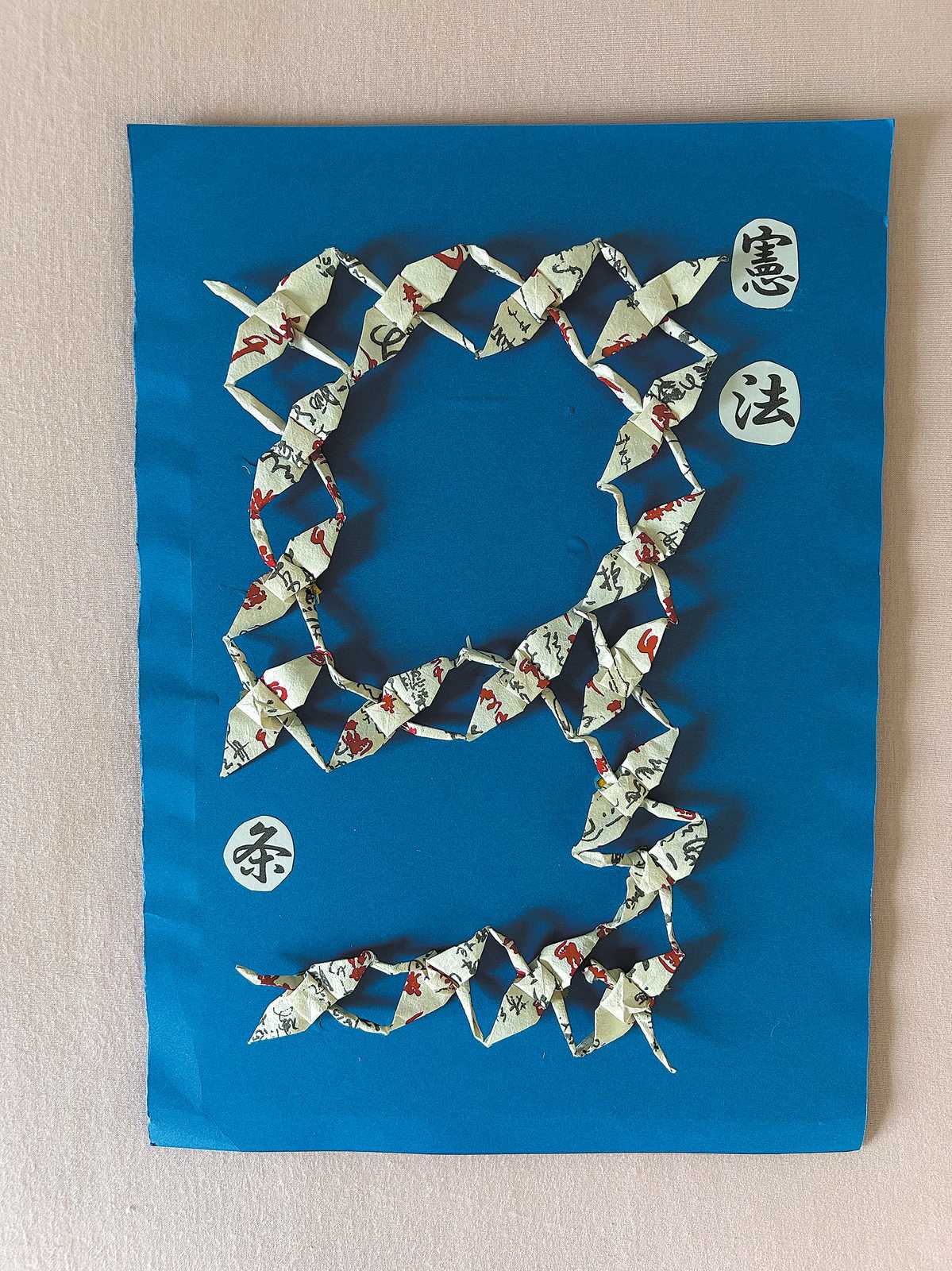
After the lecture, an elderly Japanese woman approached me with a small gift. It was a blue foam board, with the Japanese word for "constitution" affixed in the upper right corner. At its center, 18 carefully folded paper cranes formed the number "9", symbolizing Article 9 of Japan's Constitution — the peace clause.
She turned the board over to reveal a handwritten message: "Article 9 is a treasure for the world."
With sincere eyes, she handed it to me as a present — a handmade token of her desire for peace and opposition to war. I was deeply moved.
Japan's postwar Constitution came into effect on May 3, 1947. Article 9 stipulates that the Japanese people forever renounce war as a sovereign right of the nation and the threat or use of force as a means of settling international disputes. To that end, it does not maintain armed forces or recognize the right of belligerency of the state. This is why the Japanese Constitution is widely known as the "Pacifist Constitution".
Every year on May 3, Japan marks its Constitution Memorial Day. Across the country, citizens gather at rallies to commemorate the Constitution. In Tokyo alone, tens of thousands often turn out, holding banners that read "No to constitutional revision" and "No to military expansion", as they listen to speeches by guest speakers. After the rallies, they take to the streets in powerful marches, signaling to the government their unwavering commitment to peace.
I have seen young people in Tokyo joining these marches, too.
Last year, on June 30, nearly 300 young people from all over Japan staged a protest march in Tokyo, opposing the government's massive military buildup and attempts to revise the Constitution.
After the speeches, the crowd moved into Ginza, Tokyo's bustling heart. They chanted slogans in unison, drawing the attention of passersby, with some pausing to cheer them on with claps of encouragement.
Yet, while the Japanese government has steadily ramped up its military budget — with defense and related expenditures for fiscal 2025 projected to hit 9.9 trillion yen ($67.71 billion), or 1.8 percent of GDP three years earlier — the public outcry shows no sign of fading.
According to reports, the US has informally urged Japan to push defense spending even higher, setting a target of 3.5 percent of GDP, excluding related costs — a request that the Asahi Shimbun condemned in a June 30 editorial as "outrageous".
Amid these rising pressures, many ordinary citizens continue to push back. Their message is clear: invest in people, not war. Across the country, voices are growing louder in protest, demanding that taxpayers' money be directed toward healthcare, education and social support — not the machinery of conflict.
As mainstream Japanese media often echo government policies rather than reflect the true sentiments of the public, civic-led lectures, forums, rallies and protests have become vital platforms for antiwar expression. They bring together individuals who share the same hopes and contribute their efforts to the cause of peace.
What struck me most deeply were the determined actions of ordinary people — standing in the rain after work on a weekday evening, or marching beneath the sweltering sun on a weekend afternoon. Whether or not their voices ultimately shape national policy, the sheer act of caring and participating left a lasting impression that real peace begins with people who refuse to remain silent.
That same spirit of engagement also extends to Japanese citizens who have chosen to confront their own nation's past. In recent years, there has been a growing public realization of Japan's actions during World War II — one marked by reflection, remorse and a desire to make amends.
On May 18, advocates of Japan-China friendship gathered in the quiet town of Inawashiro, Fukushima Prefecture, to honor a painful chapter of history — and to renew their hopes for a future built on peace and mutual understanding.
The occasion marked the completion of major renovations to a monument dedicated to Chinese laborers who perished in Japan during World War II. The ceremony, which included a solemn tree-planting, served as both remembrance and reaffirmation — a gesture of mourning, reconciliation and enduring commitment.
Historical records reveal that in the final years of the war, around 40,000 Chinese nationals were forcibly brought to Japan and subjected to brutal, inhumane labor conditions. Nearly 7,000 died. About 1,000 laborers were sent to Fukushima.
To honor those victims and to stand in defiance of militarism, a 5.2-meter-tall stone monument was first erected in 1971. It was expanded in 1988, and in 2023, a second major renovation began — a project that was recently completed with the support of Japan-China friendship organizations.
At the ceremony, participants bowed before the monument. They placed incense in the stone vessel at its base, offering quiet and sincere prayers to the memory of the fallen.
"Japan and China must not only walk their own paths of development, but also move together — for Asia, for the world, and for all humanity," said Itsuo Hashimoto, vice-president of the Japan-China Friendship Association. "We must learn from the histories of both countries."
Among those present at the Inawashiro event was Shinji Oguma, a member of Japan's House of Representatives. Together with others, he helped plant young plum trees — a symbol, he noted, of perseverance, patience, and truth.
Contact the writer at jiangxueqing@chinadaily.com.cn
The author is the China Daily Tokyo Bureau Chief Correspondent.










