



Explainer: How CPC is shaping China's modernization roadmap through five-year plans









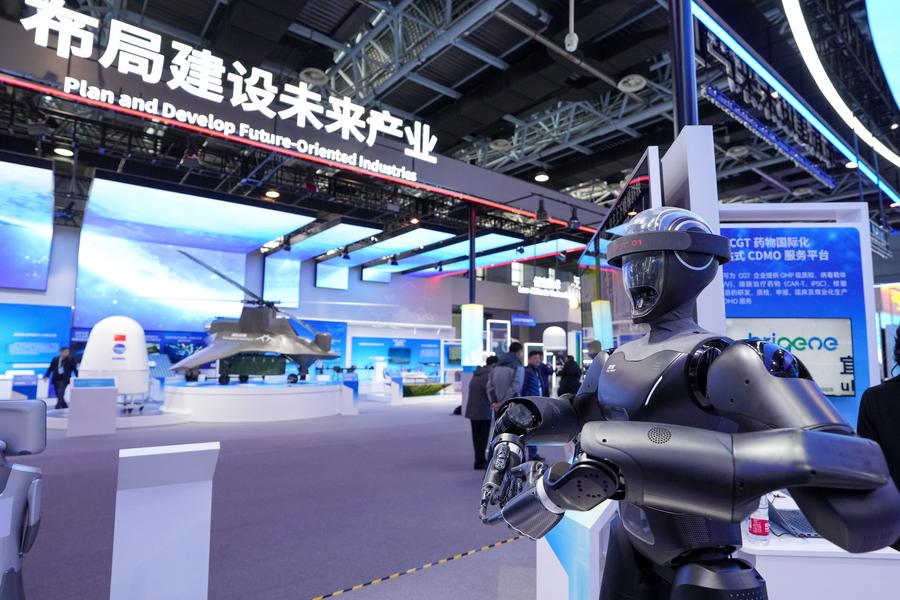
BEIJING -- As the Communist Party of China (CPC) celebrates the 104th anniversary of its founding this week, the Party's signature five-year plans continue to serve as a roadmap for China's modernization drive.
This year, China is set to complete its 14th Five-Year Plan (2021-2025) and is formulating the blueprint for the next one, marking a pivotal moment in the country's long-term strategy for national rejuvenation.
From transforming an agrarian society into the world's second-largest economy to charting a path toward becoming a great modern socialist country in all respects by mid-century, these plans reflect the CPC's enduring commitment to long-term strategic vision and collective prosperity.
Through this cyclical yet ever-evolving roadmap, China sets strategic goals, defines government priorities, regulates business operations, and mobilizes national resources -- all in pursuit of its overarching objective of building a modern socialist nation.
The country's first plan in 1953 marked its initial push toward industrialization with the establishment of the nation's first major steel and automobile plants. Fast-forward to the 13th (2016-2020), and it saw the completion of the world's largest high-speed rail network.
"Five-year plans are to China's development what construction drawings are to building a house," said Ran Hao, a professor at the Party School of the CPC Central Committee. "It tells the government and society which 'floor' to focus on and which 'road' to build over the next five years, helping avoid a piecemeal approach."
A FRAMEWORK, NOT A DOGMA
Although China's five-year plans include quantitative targets, such as the GDP growth goal, first introduced in the seventh five-year plan, it does not mean the CPC is running a centralized planned economy.
"It's not about the government dictating everything; rather, the plans set the direction and priorities," Ran said.
Since 2006, targets have been divided into two types: binding targets, which reflect government commitments, such as reducing energy consumption per unit of GDP, and anticipatory targets, which represent desired outcomes like GDP growth, to be pursued primarily through market mechanisms.
In a break from tradition, the 14th Five-Year Plan did not set a quantitative target for GDP growth; instead, it described expected growth in broader terms, in part to emphasize quality over speed.
"Five-year plans are suited to the Chinese mentality and the Chinese idea of thinking long-term," said British scholar Martin Jacques. For millennia, Confucian classics have taught that those who plan ahead are more likely to succeed.
China's five-year plans set clear goals but give regions the leeway needed to tailor their own pathways. National plans are broad frameworks that guide local governments in creating their own action plans, explained Yin Jun, a researcher with the Peking University.
At present, the CPC is drafting proposals for the country's 15th Five-Year Plan (2026-2030).
Observers said the upcoming plan will emphasize a future-oriented approach to global challenges, foster new quality productive forces, and strengthen the social safety net to improve public well-being.
PLANNING WITH COLLECTIVE EFFORTS
Given their far-reaching impact, China's five-year plans are developed over several years, and informed by research, expert reviews, inter-agency coordination and public consultation. For example, work on the current 14th Five-Year Plan began as early as 2018.
While drafting the five-year plan, the CPC highly values public inputs, which reflect society's needs and help foster consensus. In 2020, for the first time, public advice was collected online, with suggestions like mutual-aid elderly care included in the final plan.
Over three months that year, seven symposiums were held with the Party's leader meeting with entrepreneurs, experts, local officials, and representatives from the grassroots level to listen to their suggestions.
The combination of top-level planning with public participation continued this year. In May, major media platforms invited public feedback, and netizens proposed improvements such as enhancing rural express delivery infrastructure and installing elevators in older communities, among other ideas.
An old saying from Sun Tzu's "The Art of War" offers insight into the success of China's five-year plans: Triumph comes when the leaders and the people share the same goal.
IMPACT BEYOND BORDERS
China's five-year plans not only guide national development but also offer opportunities for global investors.
Madiyar Tukpatov, chairman of a public transport company in Astana, Kazakhstan, visited China earlier this year to research electric buses. His company began using Chinese electric buses in 2020 and plans to further integrate Chinese EV technology into Astana's transport system.
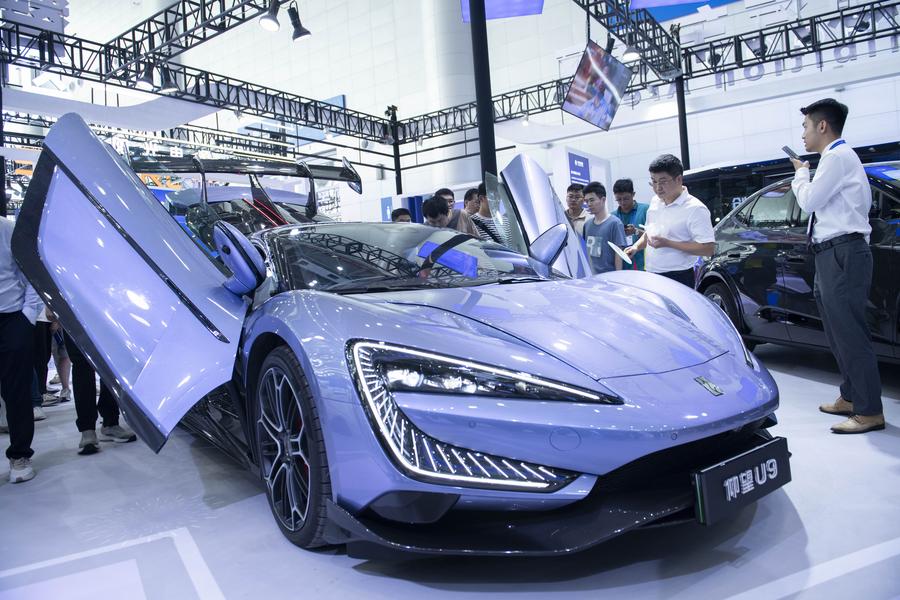
New energy vehicles (NEVs) have been developed as a strategic industry over several five-year plans. Their production and sales each exceeded 12.8 million units in 2024, maintaining China's position as the global leader in this sector for 10 consecutive years. Chinese NEVs can be found in over 70 countries and regions.
Benjamin Mgana, chief editor of foreign news at The Guardian newspaper in Tanzania, praised China's approach to planning, saying it demonstrates that developing countries can create workable strategies based on their own realities, rather than copying Western models.
Inspired by China's success, a growing number of countries have adopted their own medium- to long-term strategies. Poland, Ethiopia and Tanzania have sought support from Chinese institutions to assist in their planning process.


- Beijing internet court stresses need for stronger oversight in online food and drug sectors
- China sees steady rise in copyright registrations
- 2026 WIC Asia-Pacific Summit to focus on digital technologies in Hong Kong
- Gansu vice-governor under investigation for suspected Party discipline violations
- China's spring job drive creates 23 million openings
- Former Heilongjiang official gets life for bribe taking





