


Weight of early poetry felt through the ages










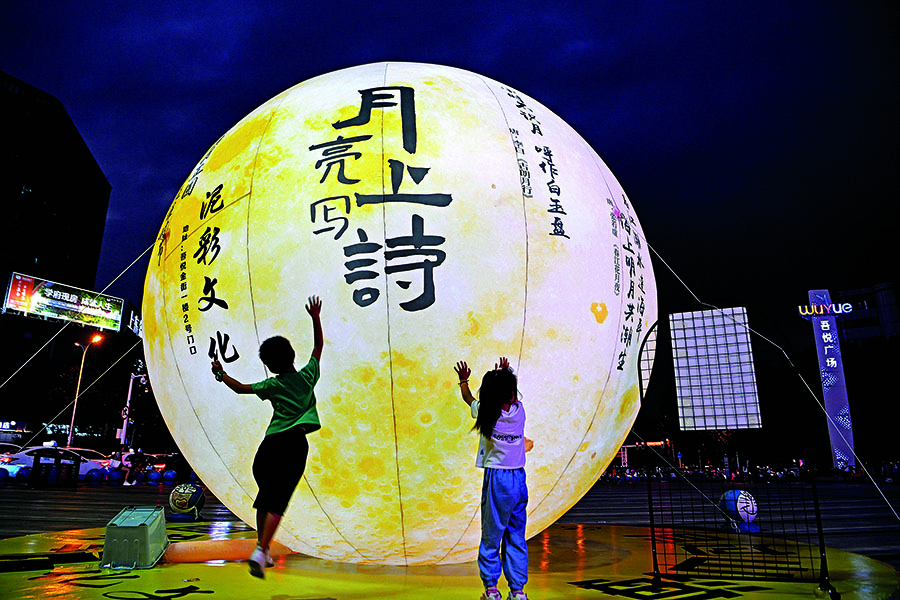
Bureaucrats in ancient China had to have knowledge of verse as reflection of their soul, Zhao Xu reports.
What did poetry mean to the ancient Chinese? Confucius (551-479 BC) offered an answer. "Poetry can inspire the mind, offer insight, foster social connection, and give voice to discontent," he declared in The Analects, a philosophical text composed of sayings and ideas attributed to Confucius and his disciples.
As ancient China's foremost moral guide, Confucius was referring to a specific collection of poems: the Shi Jing (literally Classics of Poetry, more commonly translated as the Book of Songs), the oldest surviving anthology of Chinese poetry, containing 305 works dating from the 11th to 6th centuries BC. Alongside The Analects (Lunyu in Chinese), the Book of Songs has long been regarded as a cornerstone of Confucian thought. For over two millennia, it was essential reading for aspiring bureaucrats, who were required to demonstrate their understanding of its verses in the rigorous civil service examinations.
"To select officials based on their knowledge of poetry — though it may seem slightly odd at first — rests on a deeper logic: that writing, and poetry in particular, is a reflection of the soul," says Zhang Yinan, a researcher from the National Library of China.
"A poet remains a poet even when not writing verse, for being a poet is an existential state of mind: One that fosters heightened sensitivity and the ability to see from a broader, more historical perspective. Those lacking such depth were deemed unfit to govern."
In other words, the act of writing poetry, as an often idiosyncratic if not entirely whimsical pursuit, was deeply entwined with politics in ancient China. That tradition was set by Shi Jing, says Tan Zuowen, who teaches ancient Chinese literature at Beijing's Capital Normal University.





