Saving the golden orchid
Scientist revels in growing rare, once-endangered species in the lab and replanting it in the wild, Li Yingxue reports.









The challenge
In 2015, the first traces of wild Calanthe striata were discovered in Jiangxi. Yang was thrilled: It was the first time he had ever seen the golden orchid in person. There were only about a dozen plants, growing quietly in a farmer's field. He quickly collected specimens with his students and brought them back to the lab, where they began experiments on biotechnological propagation.
That was their first major hurdle. As an endangered orchid, Calanthe striata is notoriously difficult to reproduce. "Out of 10,000 orchid seeds, maybe two or three will sprout," Yang says. The species has a low germination rate and depends heavily on a specific symbiotic fungus to survive.
Its pollinators are few and far between, resulting in a low pollination success rate. Only about 10 to 15 percent of flowers produce fruit. And even then, its seeds, among the tiniest and lightest of all flowering plants, contain no endosperm and cannot germinate on their own. "They must form a partnership with just the right fungi," Yang explains. "But not every fungus in nature can do that."
Faced with this challenge, Yang turned to symbiotic fungi. But finding the right match among tens of thousands of fungal species was like searching for a needle in a haystack. Over five years and thousands of experiments, Yang's team isolated more than 160 fungal strains and ultimately identified four that could promote seed germination. With that breakthrough, they established a sterile and symbiotic cultivation system, secured a national invention patent, and began large-scale propagation of Calanthe striata.
Reintroducing them to the wild proved even harder. "The year 2022 was extremely dry; and the survival rates were low," Yang recalls. "And then there were wild boars and rabbits, that most of the orchids we planted that year were destroyed. It was heartbreaking."
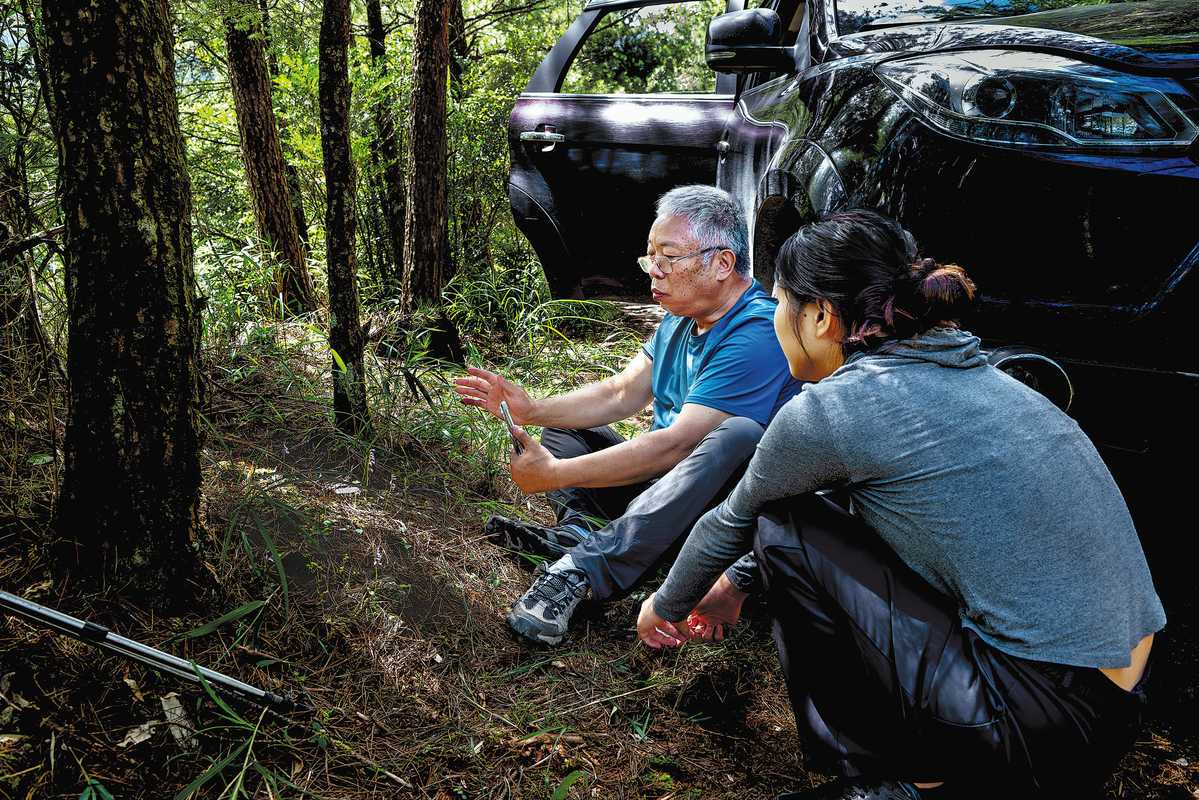
Fieldwork came with its own trials, with leech bites, swarming mosquitoes, vehicles stuck in mud, sudden encounters with wild boars and venomous snakes. But Yang and his team ploughed on.